

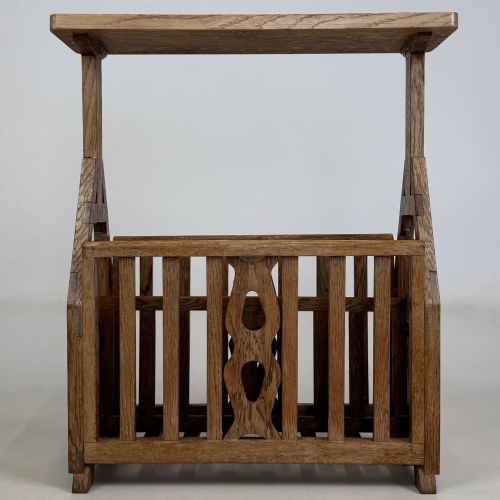


Vintage Magazine Trough
These vintage magazine trough options combine practical book and periodical storage with refined period furniture forms.
Vintage Magazine Trough
A vintage magazine trough provides compact storage for periodicals, newspapers, and books within domestic living spaces and libraries. Buyers searching for a vintage magazine trough encounter items that frequently double as side tables, bookstands, and Canterbury stands. These functional items originate from distinct historic periods including the Edwardian era, the nineteenth century, and the nineteen-twenties.
The predominant styles appearing on this page span Edwardian elegance, Arts and Crafts utility, and revival aesthetics such as Regency, Italian Rococo, and Georgian Revival. Many examples integrate structural divisions, drawers, or tiered shelving to separate reading materials while maintaining a decorative presence in a room. The most common manifestations merge standard side table proportions with dedicated vertical compartments.
Materials and construction
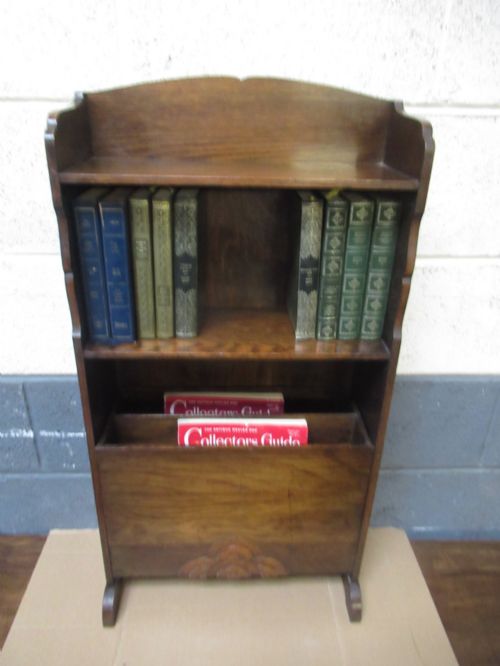
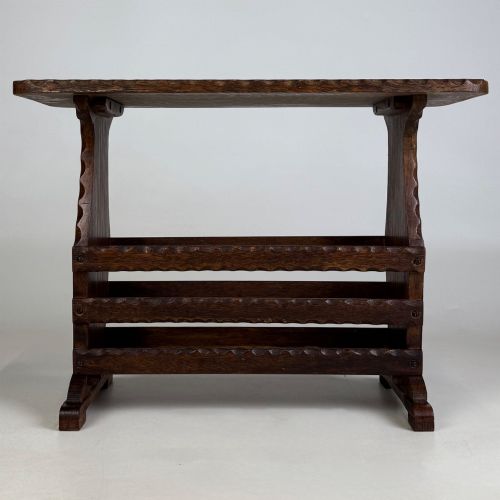
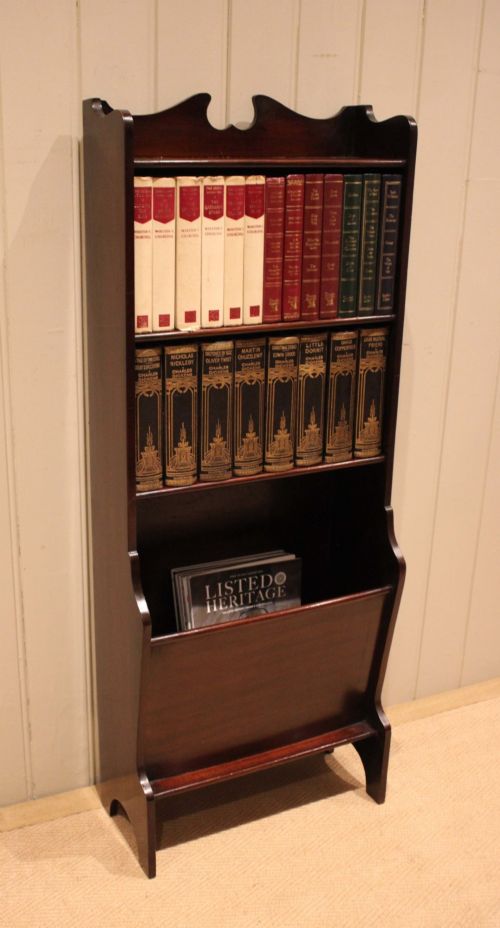
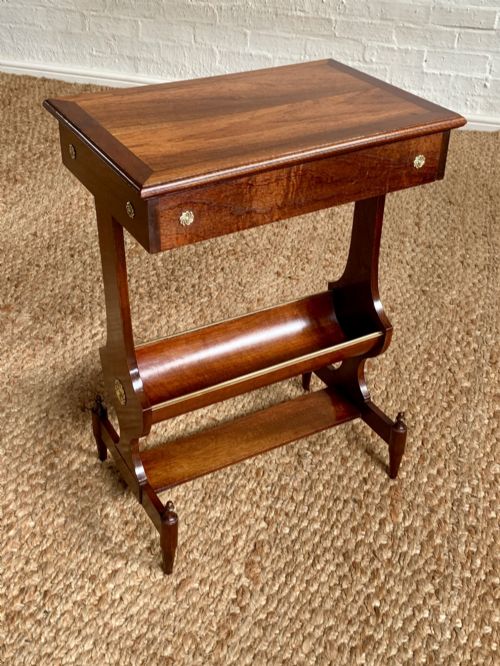
Cabinetmakers utilised rich timber species, predominantly mahogany and oak, alongside satinwood and painted wood surfaces. Flame mahogany veneer and inlaid details often define the primary visible planes of Edwardian and early twentieth-century examples, while solid oak serves robust Arts and Crafts designs.
Metal and fabric elements complement the wooden structures through brass fittings and velvet accents. Gilded wood and gilt finishes appear on Italian Rococo and revival pieces, applying ornamental brightness to the carved framework of the troughs.
Vintage Magazine Trough Retail Price Guide 2026
Typical asking prices for vintage magazine trough among the pieces listed under this phrase on Sellingantiques today, from the lower quarter to the upper quarter. They describe what is for sale here now, not the wider market.
Listings feature items built from mahogany, oak, satinwood, and painted wood, with styles spanning Edwardian, Arts and Crafts, and Italian Rococo.
Assessing craftsmanship
The distinction between standard utility items and finer pieces lies in the sophistication of the timber selection and decorative detailing. Flame mahogany grain and precise inlaid marquetry elevate the visual weight of Edwardian bookstands above plain utilitarian equivalents.
Structural complexity also separates basic troughs from superior examples, particularly metamorphic designs and pieces incorporating integrated drawers or multi-tiered library stands. The integration of brass hardware and the crispness of carved ornamentation, such as Rococo scrolls, indicate higher standards of workshop execution.
The Vintage Magazine Trough Glossary
- Canterbury stand
- A low multi-partitioned piece of furniture designed for holding sheet music, books, or periodicals, often featuring a base drawer. This form evolved during the eighteenth century and remained popular through the Edwardian period.
- Book trough
- An open-topped wooden receptacle designed to hold books upright on a tabletop or floor. These vessels often feature sectioned interiors to keep volumes organised.
- Inlay
- A decorative technique where contrasting woods, shells, or metals are inserted into recessed portions of a base timber surface. Edwardian makers utilised this to create geometric or floral motifs.
- Arts and Crafts
- A design movement valuing traditional craftsmanship, simple forms, and visible material qualities. Pieces from this tradition avoid excessive factory ornamentation in favour of honest structural expression.
- Metamorphic furniture
- Pieces engineered to transform from one functional form into another, such as a stand altering its configuration to accommodate different storage needs. These designs showcase clever mechanical joinery.
Vintage Magazine Trough: Frequently Asked Questions
What is a vintage magazine trough?
A vintage magazine trough is a piece of occasional furniture designed to hold periodicals and books in an upright or sectioned position. These items often combine the function of a side table or bookstand with dedicated storage partitions.
Originating largely from the Edwardian era and the early twentieth century, they serve both practical organisational roles and decorative functions within domestic interiors.
How were these troughs used?
These pieces were positioned beside armchairs, sofas, or within home libraries to keep daily reading materials tidy and accessible. The integrated compartments prevented magazines and newspapers from sliding.
Many designs incorporated drawers for small accessories or tiered shelves for display, functioning simultaneously as compact side tables.
How do I date an Edwardian magazine trough?
Edwardian pieces generally date from the reign of King Edward VII between nineteen hundred and nineteen ten. Stylistic clues include inlaid satinwood decoration, light mahogany frames, and revival motifs.
Construction methods from this era often balance machine precision with hand-finishing, distinguishing them from later twentieth-century mass production.
What woods were used in these pieces?
Makers predominantly employed mahogany, oak, and satinwood for the primary structural framework and visible panels. Flame mahogany provided striking grain patterns on higher-end Edwardian and library items.
Oak was favoured for sturdy Arts and Crafts designs, while gilded wood and painted surfaces appeared on Italian Rococo and revival pieces.