




Vintage Lustre Bowl
A vintage lustre bowl catches the light with iridescent metallic glazes that bring rich colour and depth to any room.
Vintage Lustre Bowl
A vintage lustre bowl brings together the shimmering metallic finishes of early twentieth century ceramics and traditional forms like decorative bowls, octagonal shapes, and miniature vessels. You will frequently encounter Edwardian and 1930s pieces decorated with imaginative motifs that reflect the popular aesthetic movements of the era.
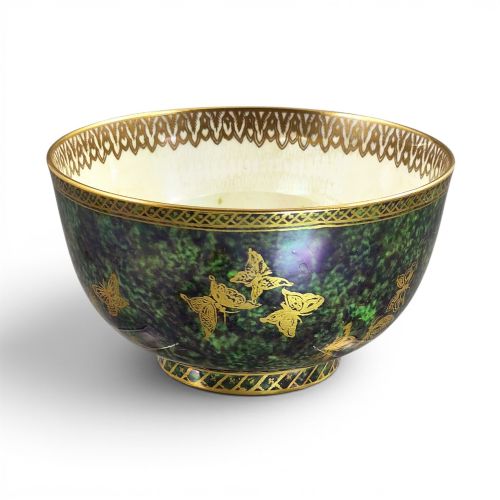
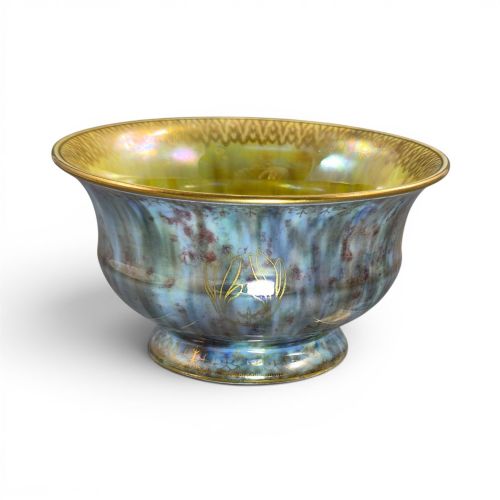
The selection ranges from intricate Fairyland designs by major ceramic artists to bold patterned earthenware and large nineteenth century sailors arms pieces. Collectors prize these items for their luminous glaze effects, which shift tone depending on the ambient light and viewing angle.
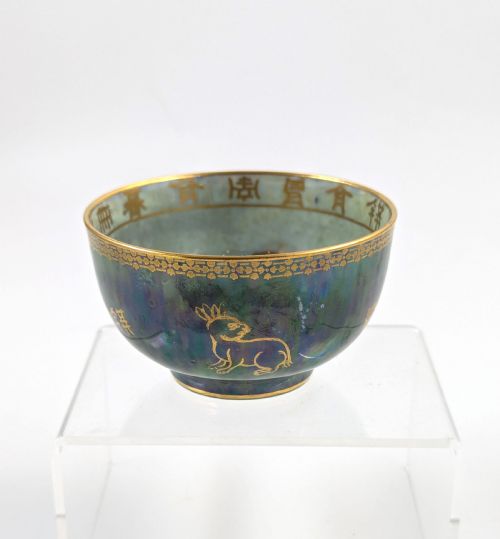
Most examples originate from renowned potteries working in England during the late Victorian, Edwardian, and Art Deco periods. These vessels function primarily as decorative centrepieces, though smaller cups and bowl sets also appear within the selection.
How they were made
Potters applied metallic salt solutions or thin gold leaf over a fired glaze before subjecting the earthenware, bone china, or porcelain to a specialist reduction kiln firing. This chemical process left behind an iridescent metallic film that produced the characteristic shimmering surface sheen.
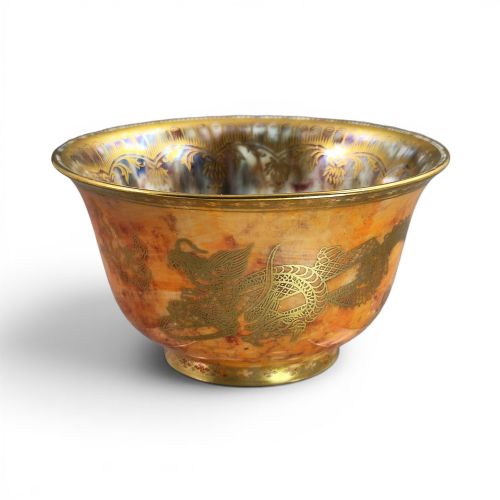
Painters then added intricate enamel details by hand, often incorporating complex motifs such as dragons, butterflies, and phoenixes across the curved and octagonal surfaces. Gilding was frequently applied to rims and borders to frame the vibrant colours of the central design.
Listings feature earthenware and bone china bodies finished with gold leaf, enamel, and iridescent lustre glaze.
What varies in quality
The sophistication of the hand-painted enamel work and the complexity of the transfer-printed motifs dictate the distinction between standard production and exceptional studio pieces. Richly layered designs featuring multiple metallic tones and extensive gilding demonstrate superior artistry.
The depth and uniformity of the lustre glaze itself also determine the visual impact of each vessel, with deeper iridescent sheens commanding greater visual presence. Condition of the delicate enamel surface and the crispness of the underlying form further distinguish finer examples.
Wedgwood·Maling·Shelley
The Vintage Lustre Bowl Glossary
- Lustre Glaze
- A ceramic finish containing metallic elements that creates a reflective, iridescent sheen upon firing. This technique produces the characteristic rainbow or metallic glow seen on these bowls.
- Bone China
- A type of soft-paste porcelain incorporating animal bone ash, resulting in a strong, milky-white body. It allows for thinner walls and delicate forms while retaining durability.
- Enamel
- Opaque glass-like paint applied over the fired glaze and fixed with a low-temperature heat treatment. It provides the vibrant colours found in pictorial bowl designs.
- Earthenware
- Porous pottery fired at lower temperatures, commonly used as the base body for many twentieth century decorative vessels. It requires a complete glaze coating to become completely watertight.
- Octagonal
- Having eight sides and angles, forming a geometric shape often utilised in decorative bowls to catch the light at different angles. This form adds structural definition to flowing lustre patterns.
Vintage Lustre Bowl: Frequently Asked Questions
How do you clean a lustre bowl?
Clean a lustre bowl gently using a soft, dry cloth or a slightly damp sponge with mild soap when necessary. Avoid harsh abrasives or soaking, as the delicate metallic glaze and enamel work can wear away over time.
Because the iridescent sheen sits on top of the fired glaze, careful handling preserves the historical surface finish. Displaying the bowl away from direct, prolonged heat sources also helps protect the materials.
How can I date my bowl?
Dating involves examining the maker marks, registration numbers, and stylistic cues present on the base of the ceramic piece. Edwardian and 1930s designs often incorporate specific pattern codes that link back to the producing pottery.
Comparing the decorative style, such as Art Nouveau or Art Deco motifs, provides further context for the period of manufacture. Different glaze colours and forms also correspond to distinct decades of production.
Were these bowls used for food?
Most of these decorative vessels served primarily as display items or centrepieces rather than practical tableware for daily dining. The metallic glazes and delicate enamel decorations were intended to catch the light in a drawing room or cabinet.
Miniature cups and smaller bowl sets were similarly produced as decorative ornaments or cabinet pieces rather than functional kitchenware. Their value lies in their artistic design and the specialised kiln techniques used to create them.