

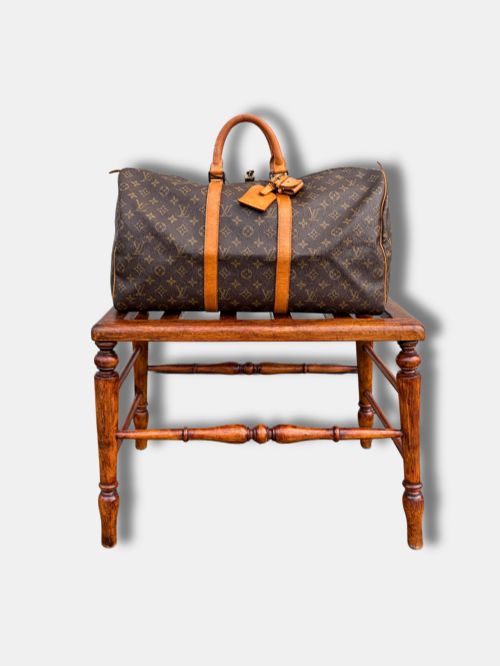
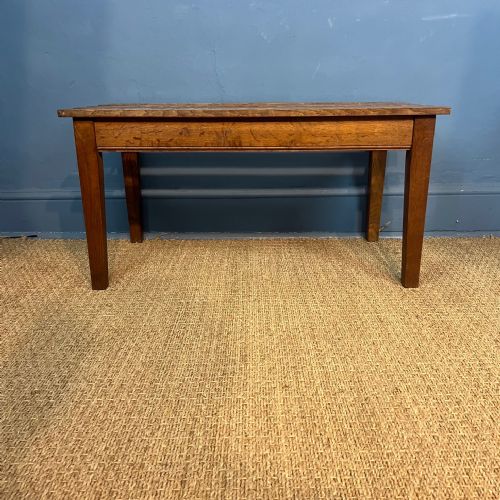
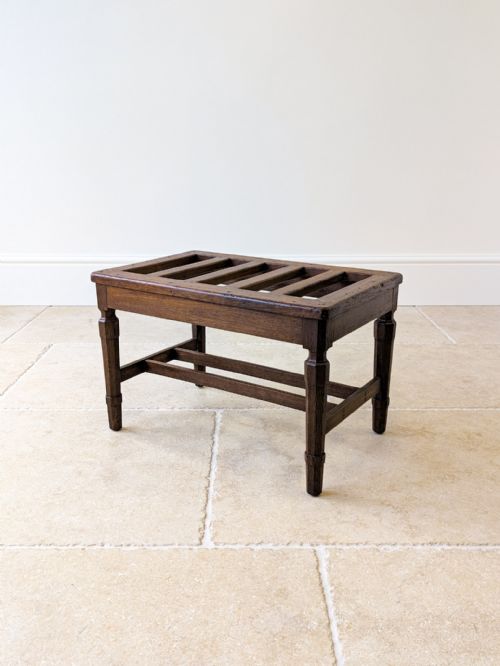
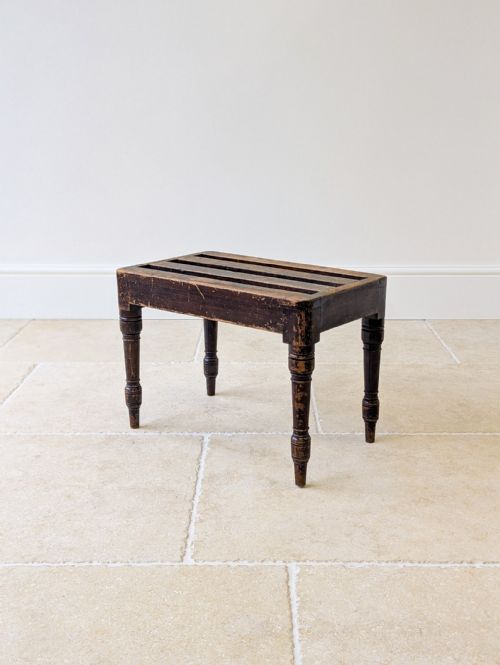


Vintage Luggage Bench
These vintage luggage bench examples are sturdy folding stands built to hold suitcases at a convenient height, offering practical utility and period character.
Vintage Luggage Bench
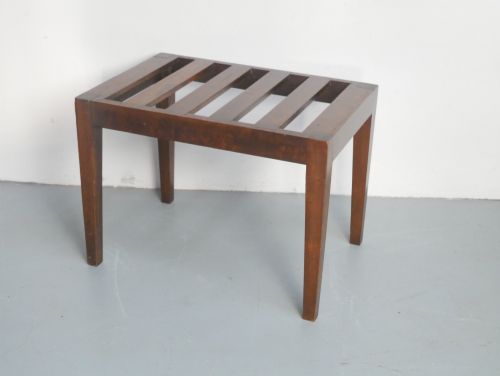
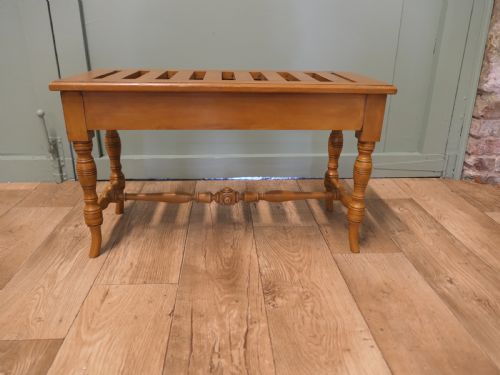
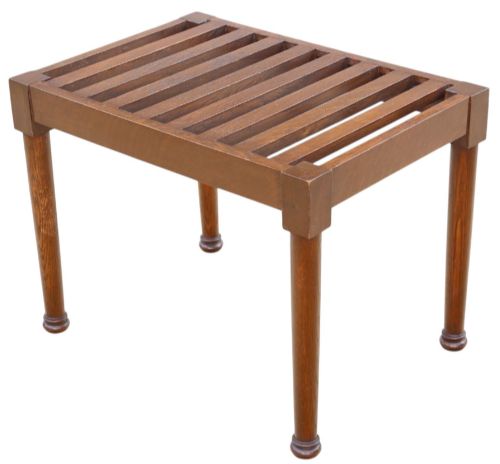
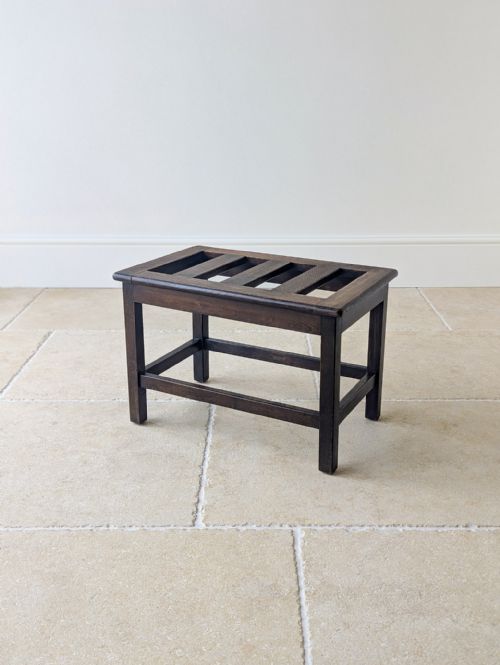
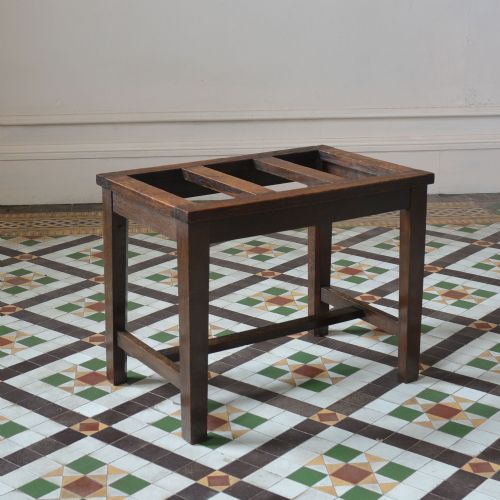
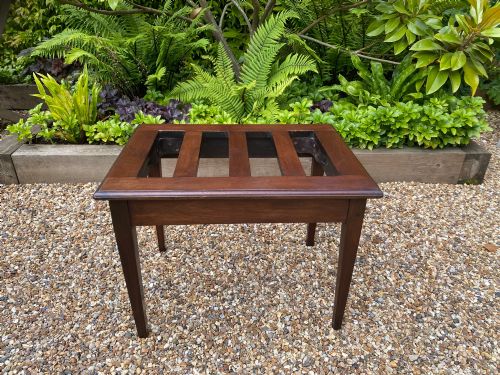
When you search for a vintage luggage bench, you encounter dedicated stands designed to hold travel bags and trunks off the floor. The examples on this page span the Victorian, Edwardian, and mid-century periods, showcasing forms originally intended for grand hotels and country house guest bedrooms.
You will most frequently meet oak and mahogany luggage stands originating from the nineteenth and early twentieth centuries. These pieces typically feature slatted tops and folding X-frame supports designed for easy storage when not in use.
How they were made
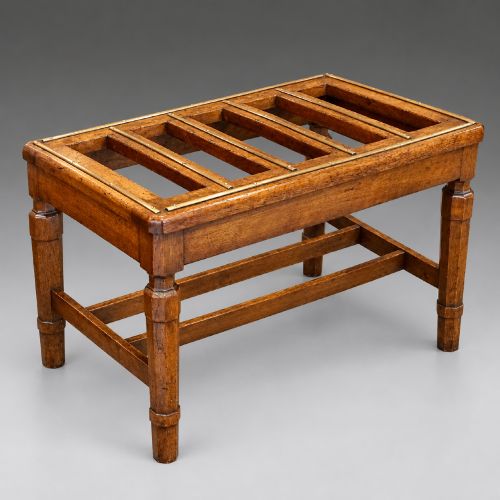
Cabinetmakers constructed these stands using dense hardwoods such as oak, mahogany, walnut, beech, and ash to withstand the heavy weight of travellers' trunks. Joinery often includes sturdy mortise and tenon joints alongside folding cross-braces secured with metal pins.
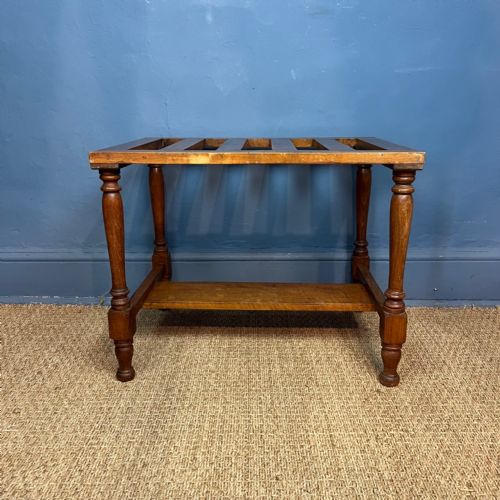
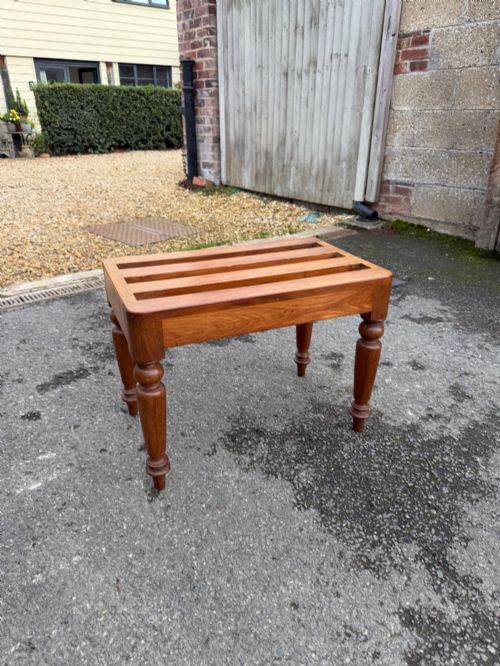
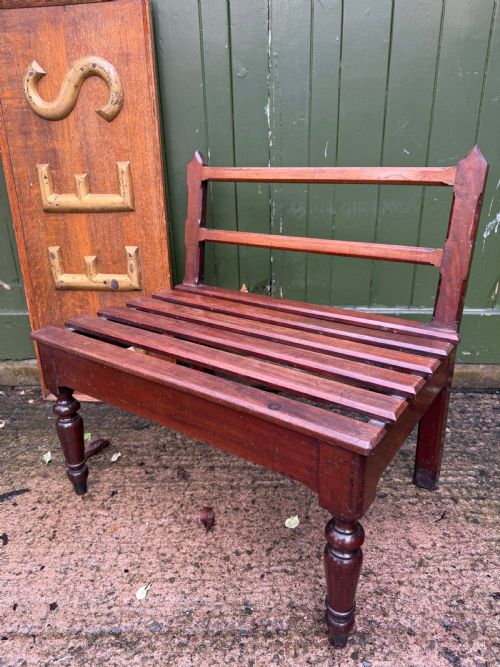
Hardware elements like brass hinges, brackets, and protective corner plates appear frequently to reinforce high-stress pivot points. Selected pieces incorporate turned legs, carved details, or raked rear upstands to prevent bags from slipping.
Vintage Luggage Bench Retail Price Guide 2026
Typical asking prices for vintage luggage bench among the pieces listed under this phrase on Sellingantiques today, from the lower quarter to the upper quarter. They describe what is for sale here now, not the wider market.
Listings feature woods including oak, mahogany, walnut, beech, ash, and painted pine alongside brass and iron hardware.
What varies in quality
The distinction between standard utility pieces and finer examples rests in the selection of timber, such as figured mahogany or golden quarter-sawn oak. Superior stands display more refined turning on the legs and tighter tolerances in the folding mechanisms.
Maker attribution and provenance elevate certain items, particularly those bearing stamps from notable firms or previous hotel use. The presence of thoughtful structural additions, such as raised rear rails or integrated lower shelves, separates simpler designs from more substantial furnishings.
Brown & Lamont·Beatty Bros Fergus Canada·Waring & Gillow
The Vintage Luggage Bench Glossary
- Luggage stand
- A low folding furniture piece designed to support a suitcase or trunk during packing and unpacking. These items usually feature a slatted top and X-frame legs.
- X-frame
- A structural arrangement where two members cross in the middle to form an X shape, allowing the stand to fold flat. This configuration provides lateral stability under heavy vertical loads.
- Upstand
- A vertical barrier rising from the rear edge of the stand top. This feature prevents luggage from sliding backward against walls or furniture.
- Quarter-sawn oak
- Timber cut radially from the growth rings, producing a distinct decorative grain pattern known as medullary rays. This method yields stable boards resistant to warping.
Vintage Luggage Bench: Frequently Asked Questions
What is a vintage luggage bench used for today?
These versatile stands function well in guest bedrooms for holding visitor suitcases or extra blankets. They also serve as compact occasional tables in hallways or living spaces.
Their folding design allows owners to store them flat in a wardrobe or behind a door when floor space is needed.
How do I identify a Victorian luggage stand?
Victorian examples typically employ solid oak, mahogany, or ash with darker finishes and heavier framing. Look for turned wooden legs, brass hardware, and robust construction typical of nineteenth-century cabinetmaking.
Many feature deep proportions and straightforward folding mechanisms intended for heavy leather and canvas trunks.
Are Edwardian luggage racks different from Victorian ones?
Edwardian stands often display lighter timbers such as golden oak or polished beech with simpler, cleaner lines. Arts and Crafts influences occasionally appear through exposed joinery and brighter wood tones.
They generally share the same functional folding X-frame structure as their Victorian predecessors but reflect a shift toward lighter domestic interiors.
How do I care for wood on a vintage luggage stand?
Maintain the timber surfaces by dusting regularly with a soft, dry cloth and applying natural beeswax periodically to nourish the polish. Avoid placing them in direct sunlight or near heat sources to prevent the wood from drying out.
Check folding joints and metal screws occasionally to ensure the frame remains stable during use.