



Vintage Loving Cup
These vintage loving cup examples bring centuries of communal drinking vessels, commemorative pottery and sterling silver barware into modern homes.
Vintage Loving Cup
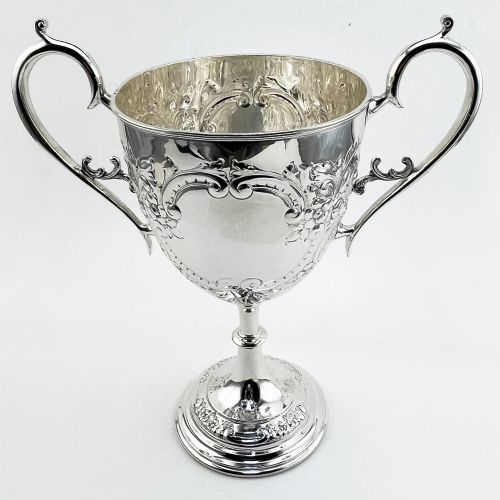
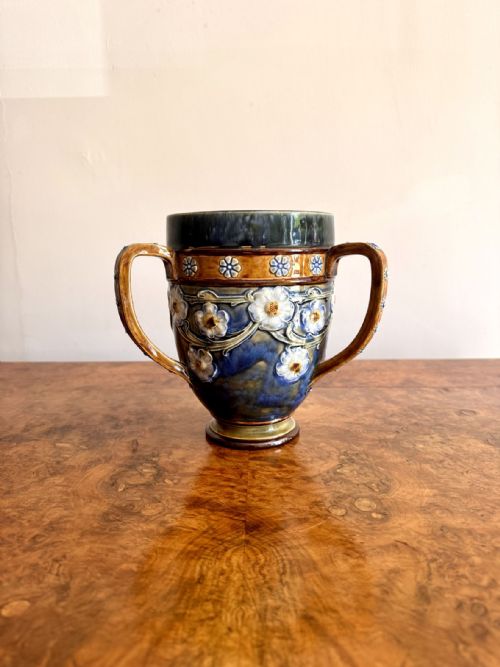
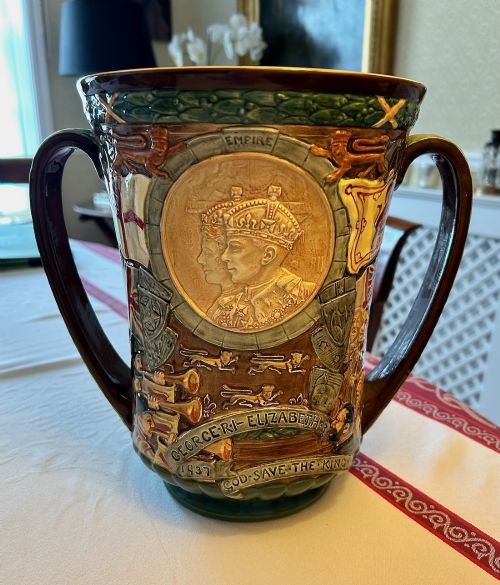
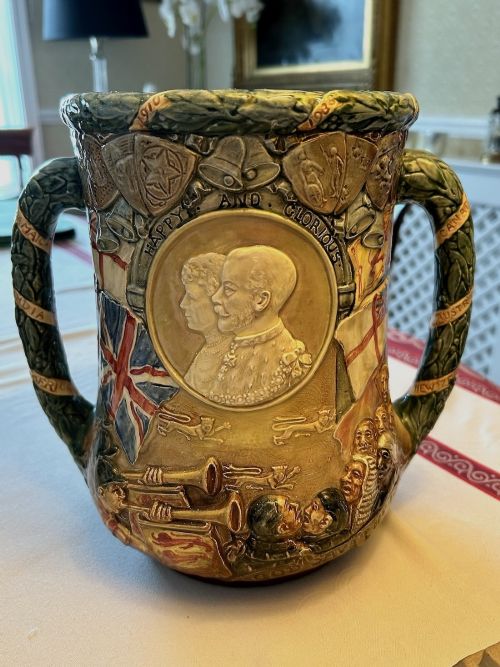
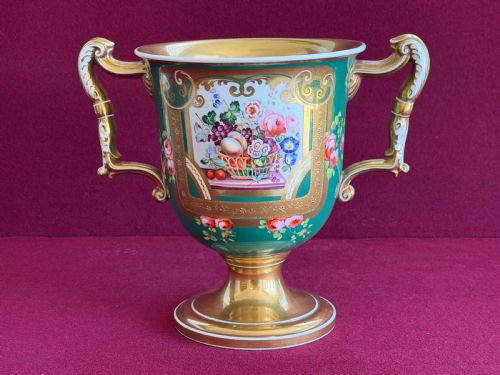
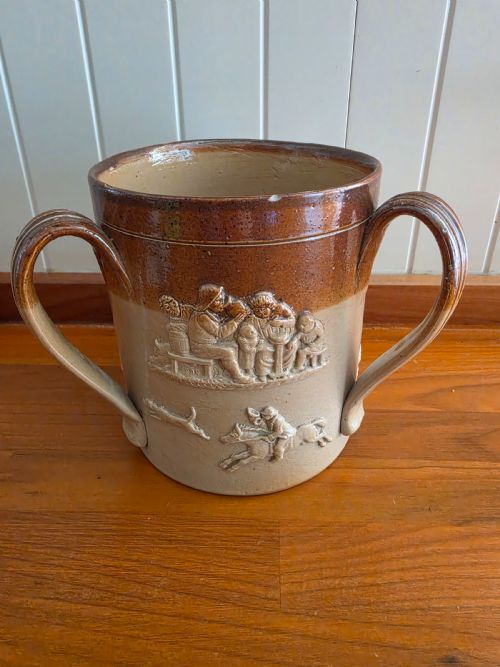
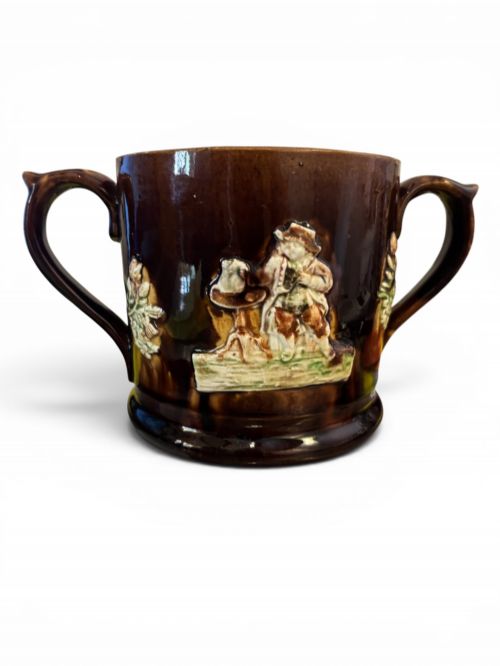
A vintage loving cup encompasses multi-handled ceramic vessels, stoneware tygs and sterling silver presentation pieces designed for shared toasts and commemorative occasions. When searching this phrase, buyers encounter everything from modest earthenware harvest jugs to elaborate porcelain editions bearing royal portraits.
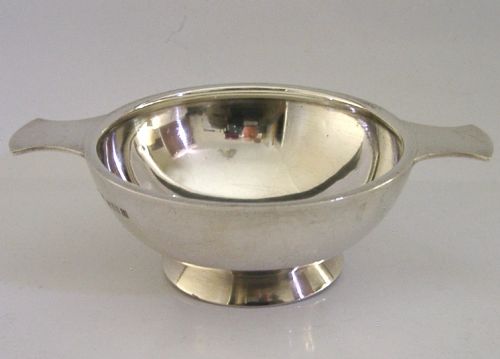
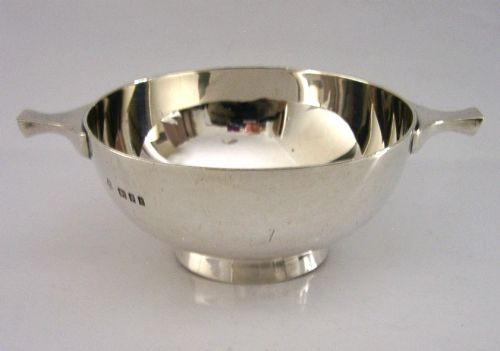
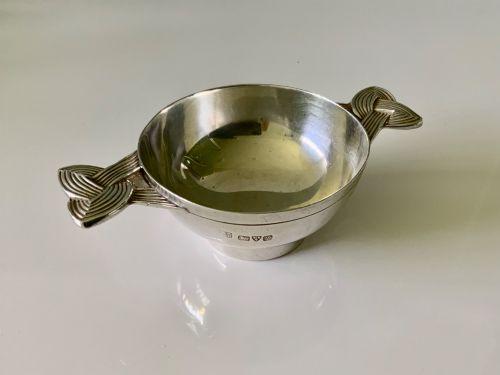
The versions most commonly met on this page span the nineteenth and twentieth centuries, reflecting changing social rituals and domestic displays. These range from heavy stoneware three-handled drinking vessels to delicate porcelain miniatures and polished silver quaichs.
Makers utilised these forms to mark coronations, jubilees and agricultural milestones, resulting in objects with distinct historical footprints. The dual or triple handle arrangement remains the defining characteristic, engineered for passing safely between hands at gatherings.
Materials and construction
Potters shaped earthenware, stoneware and porcelain using traditional throwing and moulding techniques before applying lead or lustre glazes. Many pieces incorporate hand-painted details or raised relief modelling to accentuate commemorative inscriptions and heraldic motifs.
Silver-smiths hammered and soldered sterling metal, Old Sheffield plate and added silver rims to ceramics to reinforce high-wear areas. These durable metals provided a polished contrast to absorbent clay bodies and vitreous ceramic glazes.
Vintage Loving Cup Retail Price Guide 2026
Typical asking prices for vintage loving cup among the pieces listed under this phrase on Sellingantiques today, from the lower quarter to the upper quarter. They describe what is for sale here now, not the wider market.
Listings span earthenware, sterling silver, porcelain and stoneware across the nineteenth and twentieth centuries.
Assessing quality and execution
Quality rests upon the crispness of the modelled relief, the evenness of the glaze and the weight of the metal work. Superior examples demonstrate precise hand-painting and firm attachment of multiple handles rather than crude assembly.
The distinction between standard domestic ware and top-tier items lies in the artistic ambition of the decoration, such as lustre finishes or intricate silver hallmarks. Finer pieces maintain structural integrity and clear commemorative provenance without muddying the original transfers.
Royal Doulton·H & R Daniel·Wedgwood·Joseph Rodgers & Sons·Royal Worcester
The Vintage Loving Cup Glossary
- Quaich
- A traditional Scottish two-handled drinking vessel used for whisky or other spirits. It usually takes the form of a shallow circular bowl with flat projecting lug handles.
- Lustreware
- Pottery decorated with a metallic film that gives an iridescent sheen. Makers achieved this effect by applying metallic oxides during a specialist reduction firing.
- Old Sheffield Plate
- A composite material made by fusing a thin sheet of sterling silver to a thicker copper base. This technique preceded modern electroplating and produced durable tableware.
Vintage Loving Cup: Frequently Asked Questions
What is a loving cup used for?
A loving cup functioned as a communal drinking vessel passed among guests at banquets, weddings and civic celebrations. The multiple handles allowed each person to hold the vessel securely with both hands while standing.
Over time, many of these vessels transitioned into decorative mantelpiece items or presentation pieces marking specific historical events rather than everyday barware.
How do I identify a tyg?
A tyg is distinguished primarily by having three or more distinct loop handles attached to a straight-sided or bulbous body. This multi-handle design separated them from standard mugs intended for individual use.
Most examples seen here date from the eighteenth and nineteenth centuries, often rendered in heavy stoneware or earthenware for communal drinking.
Are silver loving cups hallmarked?
Solid sterling silver examples carry official assay office hallmarks that indicate the year of manufacture, standard of purity and maker's mark. These stamps provide a reliable method for dating the piece accurately.
Silver-plated items bear alternative stamps denoting old plating methods rather than precious metal purity standards.
Why do some cups have frogs inside?
Ceramic surprise mugs feature a small modelled frog or newt sitting inside the bottom of the vessel. As the drinker finished their ale, the hidden creature would suddenly appear.
This provided a lighthearted drinking prank popular in eighteenth-century taverns and domestic gatherings.