



Vintage Living Room Set
These vintage living room set pieces bring genuine period character to a room, offering matched seating arrangements and nesting tables from past decades.
Vintage Living Room Set
When you search for a vintage living room set, you are looking at matched furniture collections designed to coordinate seating and small tables in a single space. These pieces span from late Victorian and Edwardian parlours to 1930s Art Deco interiors, reflecting the changing domestic tastes of the late nineteenth and early twentieth centuries.
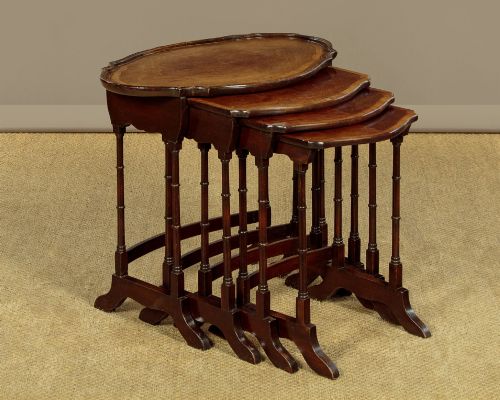
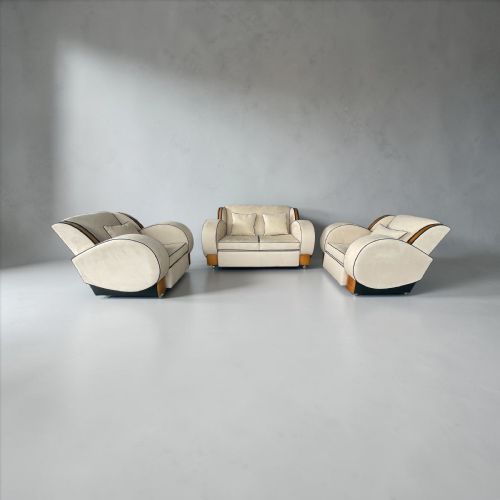
The most common versions you will meet on this page are multi-piece lounge suites comprising settees and armchairs alongside nests of coffee tables. These sets utilise woods such as mahogany, walnut, and burr birch, often shaped into distinct Art Deco cloud forms or traditional upholstered formats.
Grouping these items together provides a cohesive historical aesthetic for a modern room, drawing on periods like the 1920s and 1930s. Each suite demonstrates how earlier households organised their main entertaining spaces with matching timber and fabric elements.
How they were made
Makers constructed these sets using solid timbers and decorative veneers such as walnut veneer and burr birch applied over sturdy internal frames. Upholstered parlour suites relied on traditional stuffing and supportive springing beneath various fabrics to create comfortable seating.
Nesting tables and coffee tables employed precision cabinet-making techniques to allow multiple surfaces to slide neatly together. Wood surfaces were finished to highlight natural grain patterns, particularly in Art Deco and 1930s pieces.
Vintage Living Room Set Retail Price Guide 2026
Typical asking prices for vintage living room set among the pieces listed under this phrase on Sellingantiques today, from the lower quarter to the upper quarter. They describe what is for sale here now, not the wider market.
Even a nest of five tables requires someone to slide them all back in the correct order after tea.
What varies in quality
The distinction between standard items and finer examples lies in the selection of timbers and the sophistication of the veneer work. Sets featuring burr walnut or burr birch display superior decorative grain handling compared to plain timber versions.
Structural integrity in the joinery of tables and the retention of supportive shaping in upholstered suites dictate the overall caliber of a set. Finer cabinet-making ensures that nesting tables align smoothly and frames remain rigid over decades of use.
Harry and Lou Epstein
The Vintage Living Room Set Glossary
- Art Deco
- A design style from the 1920s and 1930s characterised by sleek geometric shapes and streamlined forms. It heavily influenced the architecture of furniture sets from this era.
- Burr Walnut
- A highly figured wood grain obtained from walnut tree growths, valued for its swirling patterns. Cabinet-makers used it as a veneer on prominent surfaces.
- Parlour Suite
- A matched set of seating furniture traditionally kept for formal entertaining in Victorian and Edwardian homes. These typically include a settee and matching armchairs.
- Nest of Tables
- A set of graduated small tables designed to fit one beneath another to save floor space. They became popular in Edwardian and 1930s homes for serving coffee and tea.
Vintage Living Room Set: Frequently Asked Questions
What is included in a vintage living room set?
These sets typically comprise coordinated seating arrangements such as settees and armchairs, or groups of occasional tables like nests of coffee tables. They reflect the interior coordination styles of periods ranging from the Victorian era to the 1930s.
Matching timber finishes and upholstery fabrics tie the individual items together into a unified collection for a room.
How do I identify an Art Deco suite?
Art Deco suites from the 1930s often feature streamlined curves, smooth surfaces, and distinctive wood veneers like walnut. Look for rounded cloud-like upholstered shapes and geometric table designs.
These pieces break away from heavy Victorian ornamentation in favour of modern, polished aesthetics.
Where were nests of tables used?
Nests of tables served as versatile furniture for entertaining guests in Edwardian and 1930s parlours and living rooms. Individual tables could be pulled out for drinks or books and stored compactly when not in use.
Their tiered design made them practical additions to smaller sitting spaces.
How do I care for walnut veneer furniture?
Keep veneer surfaces away from direct sunlight and excessive moisture to prevent warping or fading of the delicate wood grain. Regular dusting with a soft, dry cloth maintains the polished finish.
Avoid placing hot cups or liquids directly onto the timber without protective coasters.