



Vintage Livestock Art
Vintage livestock art depicts farm animals and pastoral scenes across centuries, offering buyers a direct connection to agricultural history through traditional paintings and prints.
Vintage Livestock Art
Vintage livestock art encompasses paintings, watercolours, etchings, and framed prints focused on farm animals such as cattle, sheep, pigs, and horses. Buyers seeking these works will find pieces originating from the seventeenth century through to the early twentieth century.
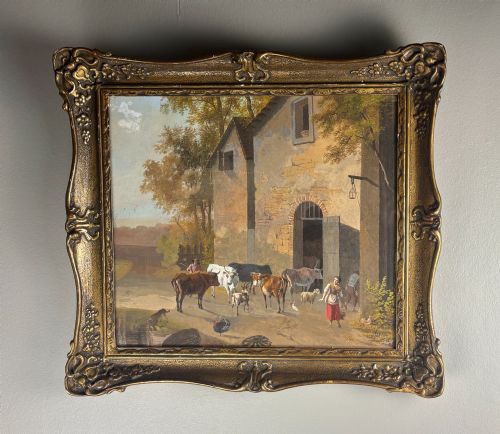
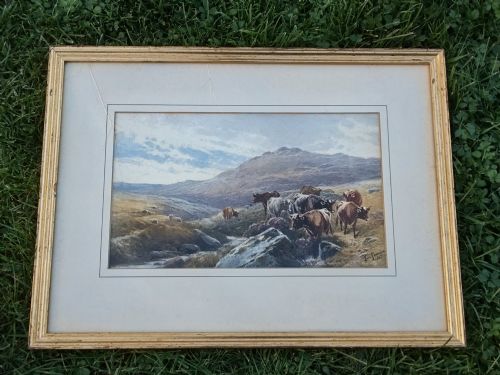
The most common formats on this page are oil paintings on canvas and detailed watercolours on paper, often housed in period frames. These works reflect both domestic British agricultural traditions and continental European pastoral scenes.
Materials and construction
These works rely on traditional media, primarily oil paint on stretched canvas and watercolour or gouache applied to paper. Artists also utilised etching techniques to produce detailed prints of farm animals.
Substrates include wood panels and heavy-grade paper, paired with gilt or burr wood frames that complement the period of the artwork. Gold leaf accents sometimes appear on framing elements from the nineteenth and early twentieth centuries.
Vintage Livestock Art Retail Price Guide 2026
Typical asking prices for vintage livestock art among the pieces listed under this phrase on Sellingantiques today, from the lower quarter to the upper quarter. They describe what is for sale here now, not the wider market.
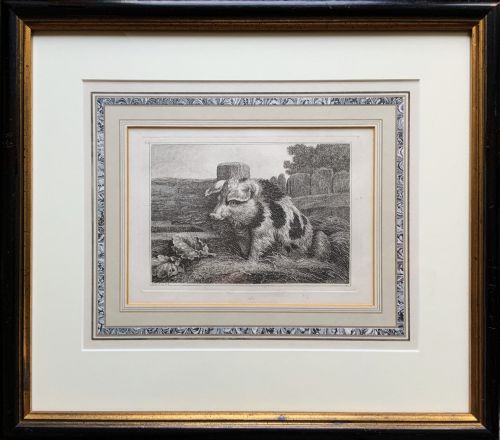
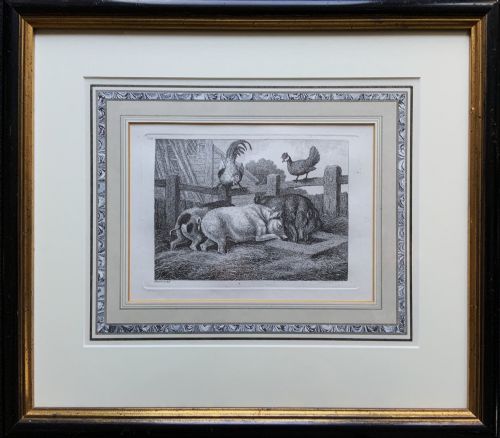
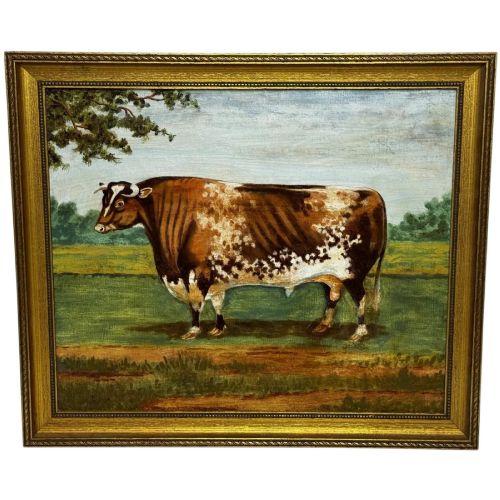
Pigs receive equal billing with prize bulls, proving that eighteenth-century artists found beauty in a spotted farmyard hog.
Assessing quality in pastoral works
Quality in these works rests upon the anatomical accuracy of the animals depicted and the skill with which the artist handles light and landscape atmosphere. Master painters render texture in wool, hide, and hair with distinct precision.
The integrity of the original medium and the preservation of the canvas or paper surface influence the standing of a piece. Works retaining their original period frames also hold greater contextual value.
Thomas Rowden·Karel Dujardin·Samuel Howitt·A M Gauci·Frederick Septimus Lewis·Ernest Pile Bucknall·Eugene Joseph Verboeckhoven·Claude Cardon·W A Clark·William Sidney Cooper·Ernest Higgins Rigg·Owen Bowen·H Strafford·Thomas E Francis
The Vintage Livestock Art Glossary
- Gouache
- An opaque water-based pigment used on paper to create solid areas of colour and sharp detail. It appears frequently in earlier works on paper.
- Etching
- A printmaking process where lines are bitten into a metal plate with acid before being inked and pressed onto paper. This technique produced detailed prints of farm animals in the eighteenth century.
- Pastoral
- A genre of art depicting rural life, shepherds, and farm animals in natural landscapes. These scenes idealise the simplicity of country living.
- Impressionism
- A style of painting focusing on loose brushwork and the accurate depiction of light rather than microscopic detail. British practitioners applied this approach to agricultural subjects around the turn of the twentieth century.
Vintage Livestock Art: Frequently Asked Questions
What subjects appear in vintage livestock art?
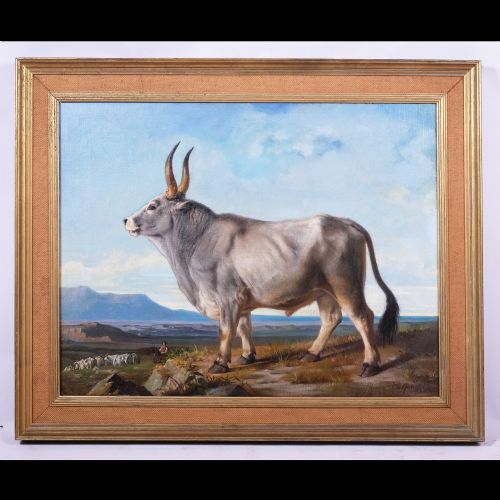
These works primarily feature cattle, sheep, pigs, and horses situated within rural landscapes, farmyards, and coastal pastures. Many pieces focus on prized agricultural breeds and everyday pastoral labour.
Artists often placed these animals against specific geographic backgrounds, ranging from Kentish riverbanks to continental valleys and coastal meadows.
How do I date an antique livestock painting?
Dating relies on stylistic markers, framing materials, and artist signatures or dates recorded on the canvas or reverse. Eighteenth-century works often display different canvas preparations compared to Victorian or Edwardian pieces.
Costume details on any human figures present, such as farmers or milkmaids, also help narrow down the production period.
Where should I hang these artworks?
These traditional pastoral scenes suit dining rooms, studies, and hallways where wooden furniture and neutral walls complement rural subject matter. Keeping them away from direct sunlight protects oil pigments and watercolours from fading.
Pairing framed oil paintings with period lighting enhances the traditional atmosphere of the room.
Are these pieces original works?
The selection includes hand-painted oils on canvas, original watercolours, gouache studies, and period etchings. Each listing specifies the exact medium used by the artist.
Some pieces represent period prints or later interpretations of earlier pastoral masters, which is noted in the individual descriptions.