



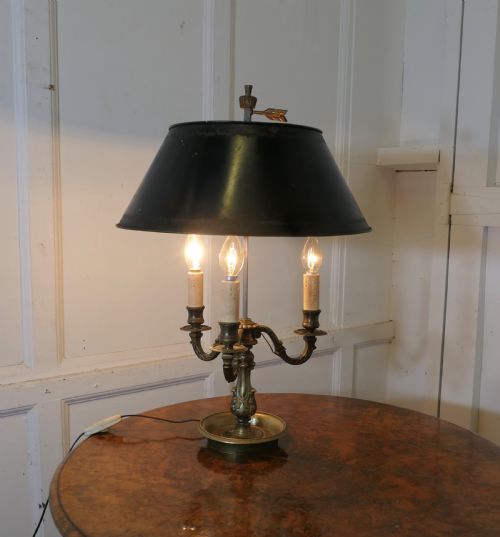


Vintage Library Lamp
These vintage library lamp examples bring practical task lighting and period character to a desk, drawing on Victorian and Edwardian forms.
Vintage Library Lamp
When you search for a vintage library lamp, you look for focused task lighting designed for reading, writing, and desk work. The pieces gathered here span from the 19th century through the 1930s, encompassing forms like bankers desk lamps, bouillotte lamps, and student lamps.
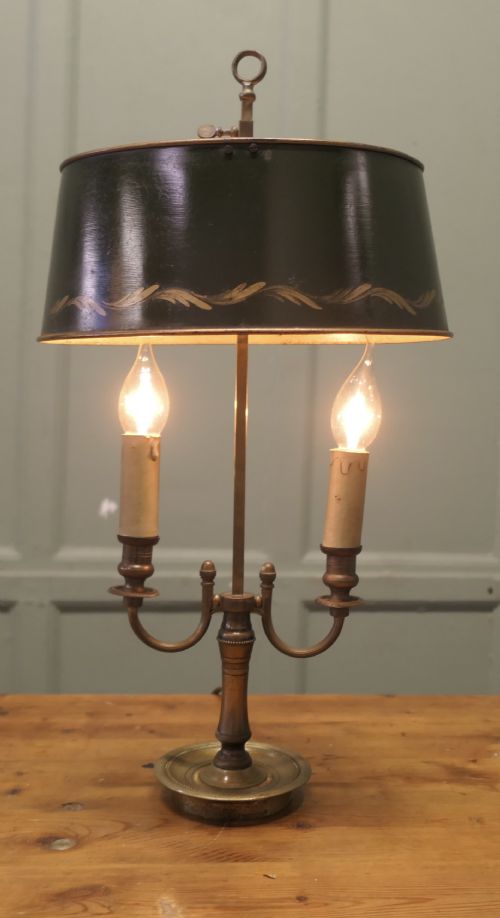
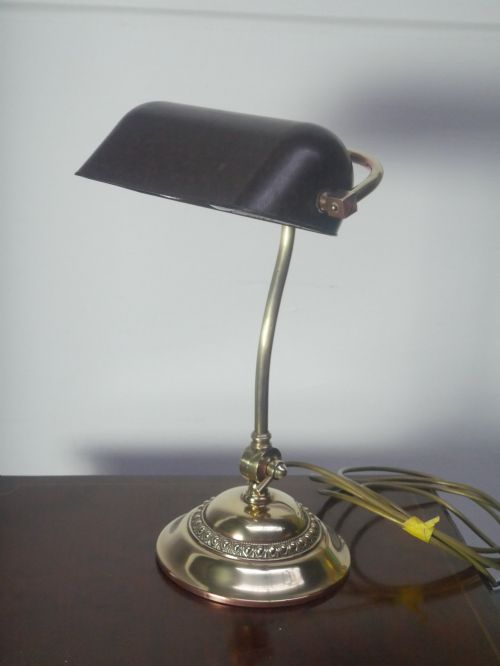
You are most likely to meet brass and toleware desk lamps originating from Victorian and Edwardian periods, alongside early 20th-century articulated designs. These pieces range from heavy brass bankers desk lamps with green shades to twin and triple bouillotte lamps featuring painted metal bodies.
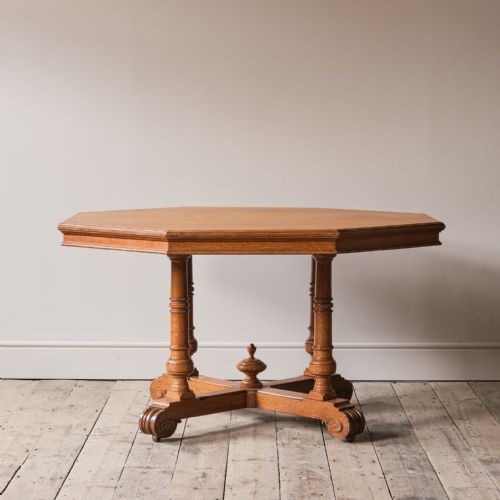
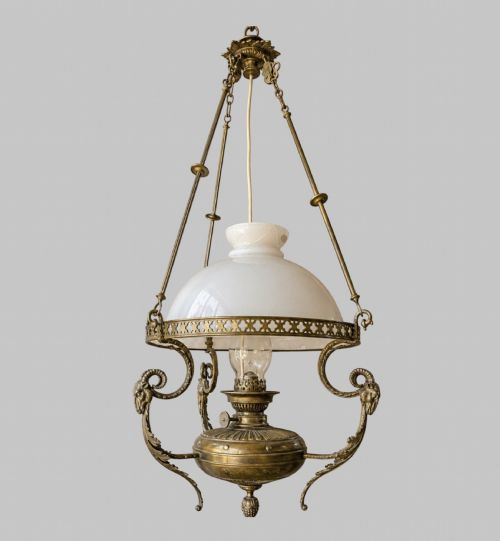
The selection also includes adjustable swan neck desk lamps, Pullman lamps with opaline or cranberry glass, and occasional standard lamps or centre tables. Materials stretch across brass, copper, patinated metal, glass, oak, and leather book lamps, reflecting diverse utility across domestic and institutional settings.
How they were made
Makers utilised cast and spun brass, copper, and patinated metal to construct the structural bodies and adjustable arms of these lamps. Toleware components involve painted sheet metal, often paired with brass fittings and twin or triple candle-style sockets.
Glass elements include green toleware shades, opaline glass, and cranberry glass inserts shaped to diffuse light downward over a workspace. Burners such as the Hinks burner appear on paraffin-adapted pieces, while articulated joints and screw adjustments allow mechanical movement.
Materials recorded across the inventory span brass, toleware, opaline glass, cranberry glass, oak, bronze, and leather.
What varies in quality
The distinction between tiers rests upon the weight of the metalwork, the precision of adjustable joints, and the integrity of original shades. Heavy cast brass frames and original glass components demonstrate superior substance compared to lighter replacement parts.
Quality also shows in the finish of patinated metal, the detail in toleware painting, and the retention of maker mechanisms like working screw keys and weighted bases. Pieces with complex configurations, such as triple bouillotte lamps or articulated bankers styles, display more sophisticated engineering.
Faraday and Sons·Wild and Wessel·Hinks
The Vintage Library Lamp Glossary
- Bouillotte lamp
- A traditional desk or table lamp featuring multiple candle-style arms and an adjustable central shade, often made of painted metal.
- Bankers lamp
- A task lamp characterised by a heavy metal base, an adjustable brass stem, and a distinctive green glass shade.
- Opaline glass
- A type of opaque white glass used in lamp shades to soften and diffuse light evenly across a surface.
- Toleware
- Painted or lacquered sheet metal items, frequently utilised for lamp bases and shades in green or dark colourways.
- Swan neck
- A curved metal arm shape on a desk lamp that allows the shade to be positioned directly over reading material.
- Student lamp
- An adjustable 19th-century lamp design originally configured for oil, featuring a side reservoir and a directional shade.
Vintage Library Lamp: Frequently Asked Questions
What is a vintage library lamp?
A vintage library lamp is a period task light designed for reading or desk work, typically featuring adjustable arms or directional shades. These pieces utilise materials like brass, toleware, and glass.
They originate from the 19th and early 20th centuries, including styles such as bankers lamps, bouillotte lamps, and student lamps.
How do I date a brass desk lamp?
Dating relies on manufacturing techniques, materials, and specific burner or switch types. Victorian pieces often incorporate heavier cast brass and manual screw adjustments.
Edwardian and 1920s examples introduce articulated stems and specific shade fittings like opaline or cranberry glass.
Were these lamps originally electric?
Many surviving pieces from the 19th century were originally configured for oil or paraffin before later conversion to electricity. Later 20th-century models were manufactured specifically for electrical use.
Burners like the Hinks burner indicate paraffin origins on specific Victorian hanging and table lamps.
Where should I place a bouillotte lamp?
Bouillotte lamps work well on desks, side tables, or reading tables where multiple light directions are useful. Their adjustable shades allow focused illumination downward onto documents or books.
The classic multi-arm design also provides balanced ambient light in a traditional study or living space.