





Vintage Library Case
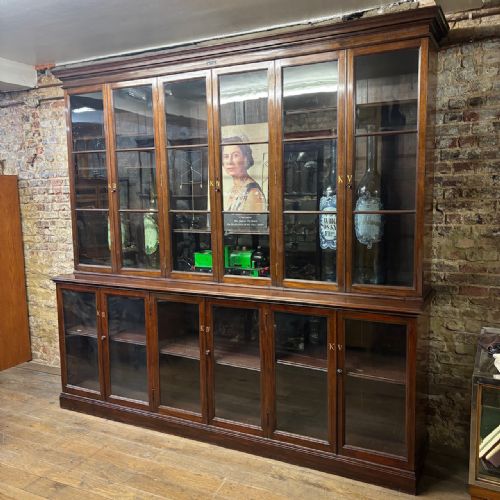
These vintage library case pieces bring substantial timber and glazed framing into a room, offering proper housing for collections and everyday volumes.
Vintage Library Case
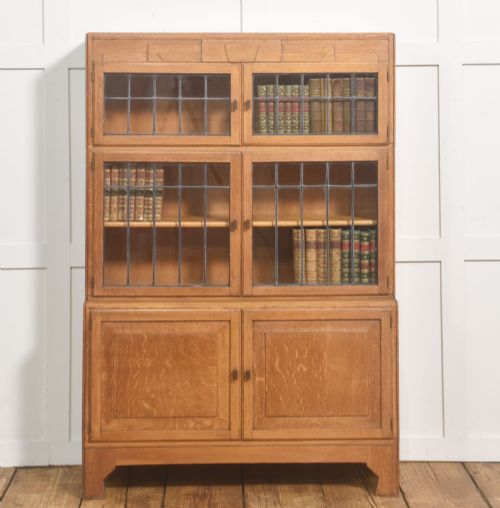
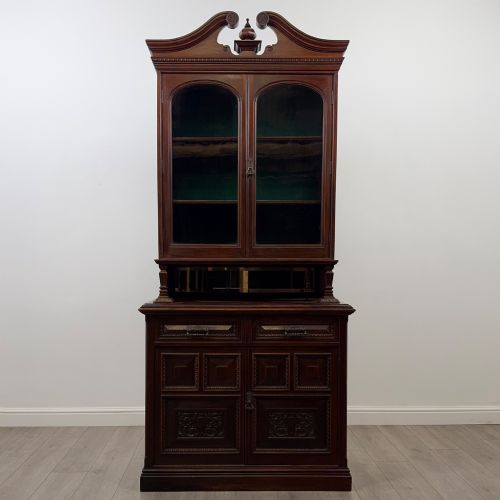
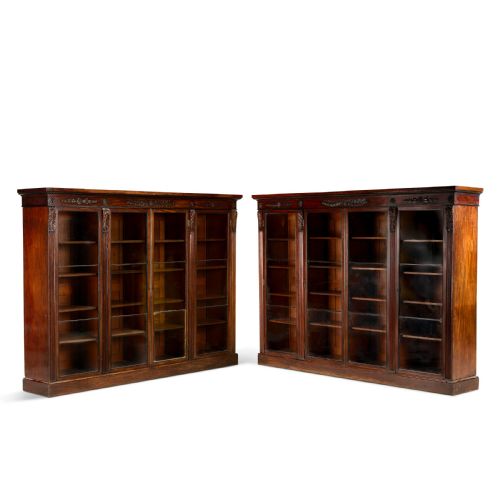
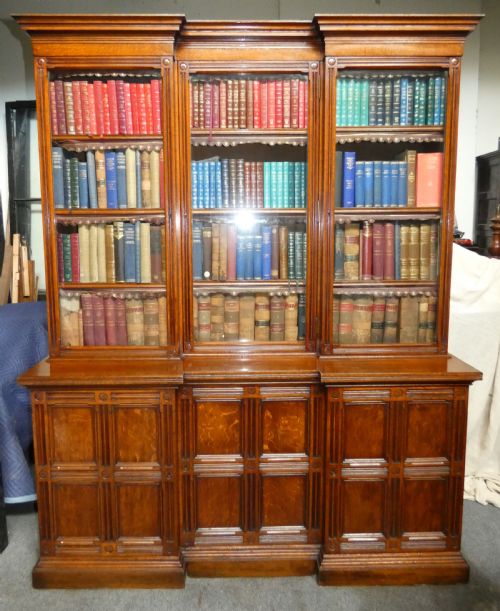
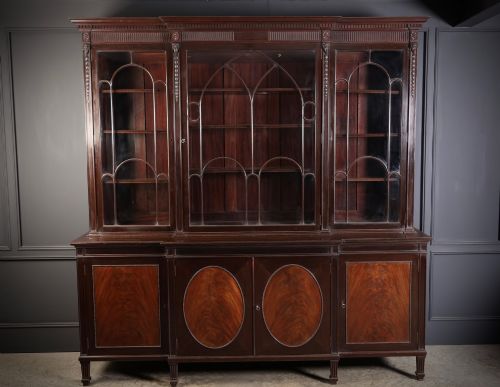
A vintage library case encompasses substantial mahogany, oak, and walnut cabinetry built to house books and display volumes behind glazed doors. The selection spans distinct eras from the Regency and Victorian periods through to Edwardian pieces and the 1920s.
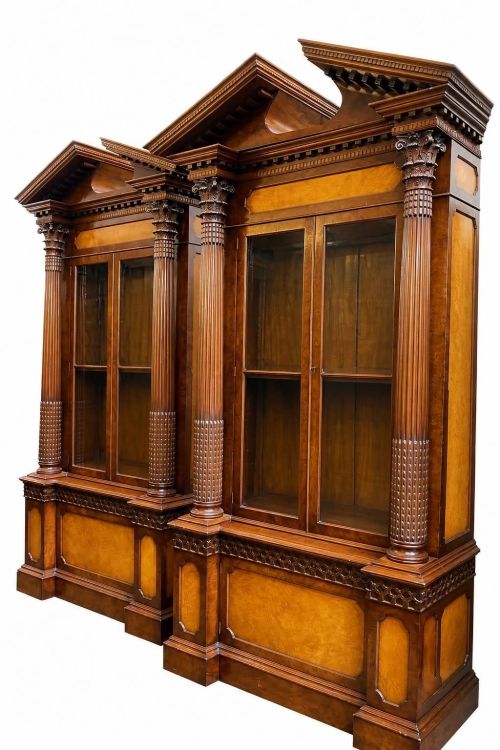
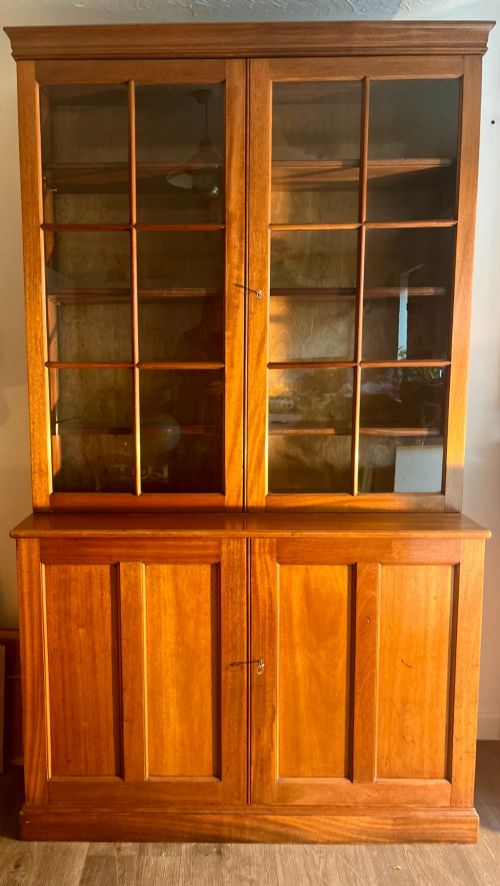
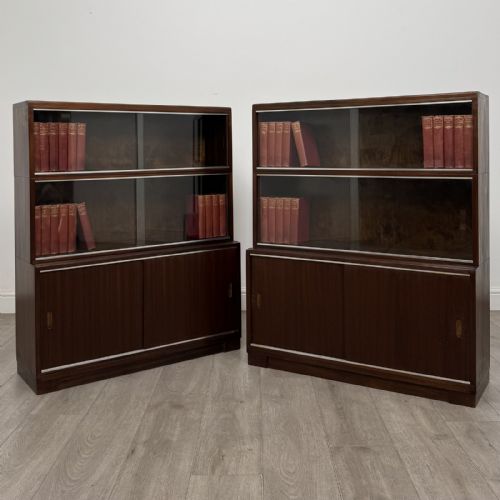
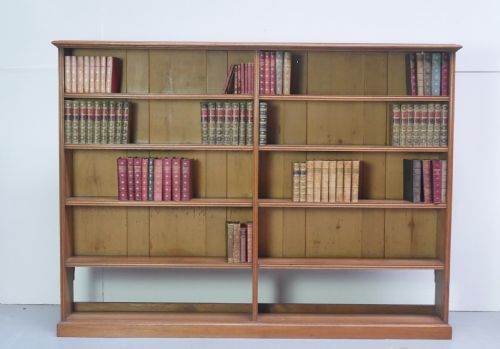
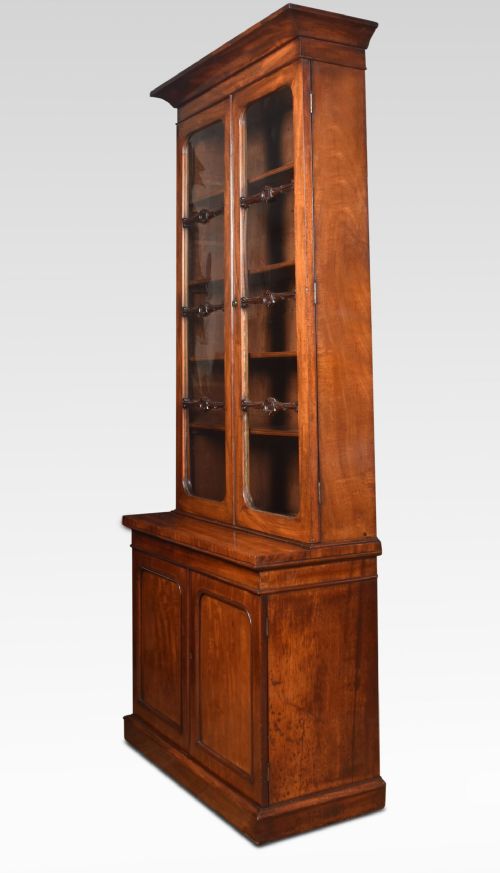
Most examples you encounter on this page take the form of upright bookcases, breakfront cabinets, and stacking sections with glass panels. These range from narrow two-door cupboards to large French library bookcases and modular Globe Wernicke designs.
Makers utilised various timbers including satinwood inlay and maple alongside the primary structural woods. Glazing treatments vary from simple sliding glass doors to leaded panels, astragal bars, and clear frontages designed to keep dust from valuable bindings.
Construction and materials
Cabinet makers constructed these pieces primarily using solid mahogany, oak, and walnut, often applying finely figured veneers to drawer fronts and pediments. Brass hardware, lead framing for glass panels, and satinwood stringing provide structural and decorative detail.
Joinery methods relied on traditional housing joints, dovetailed drawer construction, and stable carcass building to support the heavy weight of dense book collections. Glazed doors incorporate timber framework or lead cames to secure individual panes safely in place.
Vintage Library Case Retail Price Guide 2026
Typical asking prices for vintage library case among the pieces listed under this phrase on Sellingantiques today, from the lower quarter to the upper quarter. They describe what is for sale here now, not the wider market.
Listings feature pieces spanning the 1800s to the 1920s, constructed predominantly from mahogany, oak, and walnut with glass and brass elements.
Quality differences across examples
The standard of a vintage library case rests on the selection of timber veneers, the precision of the glazing bars or leadwork, and the integrity of the internal shelving supports. Superior pieces feature adjustable shelving mechanisms, well-figured grain matching, and robust brass fittings.
Simpler workshop output employs plain timber boards and fixed shelving with standard iron hinges, whereas higher grade examples incorporate architectural elements like swan neck pediments, breakfront profiles, and fine inlay work.
Maple & Co.·Chadburn Brothers of Sheffield·Matthew Berge London
The Vintage Library Case Glossary
- Breakfront
- A cabinet design where the central section projects forward from the flanking wings. This architectural arrangement creates depth and shadow across large bookcases.
- Astragal glazed
- Glass panels divided into smaller panes by narrow wooden mouldings called glazing bars. These bars form geometric or curved patterns across the door front.
- Globe Wernicke
- A modular stacking bookcase system popular in the early twentieth century. Individual glass-fronted tiers stack together with an interlocking mechanism.
- Pediment
- The decorative crowning structure situated at the top of a bookcase cabinet. Common forms on these pieces include swan neck profiles and straight cornices.
- Lead cames
- Flexible lead strips used to hold individual pieces of glass together in leaded windows and cabinet doors. They provide both structural support and decorative linear patterns.
Vintage Library Case: Frequently Asked Questions
How do I date a library case?
Dating relies on observing the timber choice, construction techniques, and stylistic details present in the carcass. Pieces from the Regency and Victorian eras display heavier proportions and distinct mouldings, while 1920s examples often introduce lighter woods or modular stacking formats.
Examining the backboards, screw types, and glass manufacture also helps determine the exact period of production. Cabinet makers across different decades utilised specific joinery methods that distinguish nineteenth-century work from later twentieth-century manufacturing.
Are the shelves adjustable?
Many of these library cases feature adjustable shelving supported by rack-and-pinion mechanisms or traditional wooden support strips. This allows owners to modify shelf heights to accommodate books of various sizes.
Simpler or earlier vernacular pieces may feature fixed shelves built directly into the carcass walls. Checking the interior description clarifies whether the shelving allows for custom vertical spacing.
How should I care for timber bookcases?
Protecting vintage timber involves keeping pieces away from direct heat sources and fluctuating humidity levels to prevent veneer lifting. Regular dusting with a soft cloth keeps the polished surface in good condition without abrasive build-up.
Applying appropriate wax feeds the wood periodically and maintains the natural lustre of mahogany, oak, and walnut. Avoiding excessive moisture during cleaning preserves both the timber and the surrounding brass hardware.