


Vintage Liberty Side Table
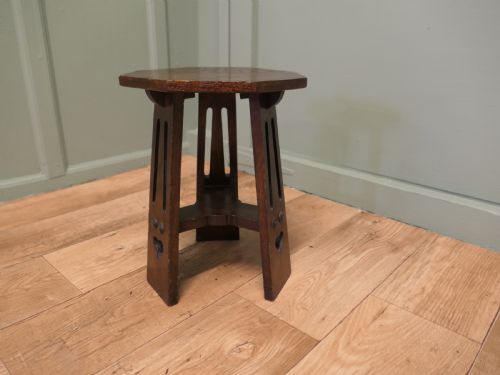
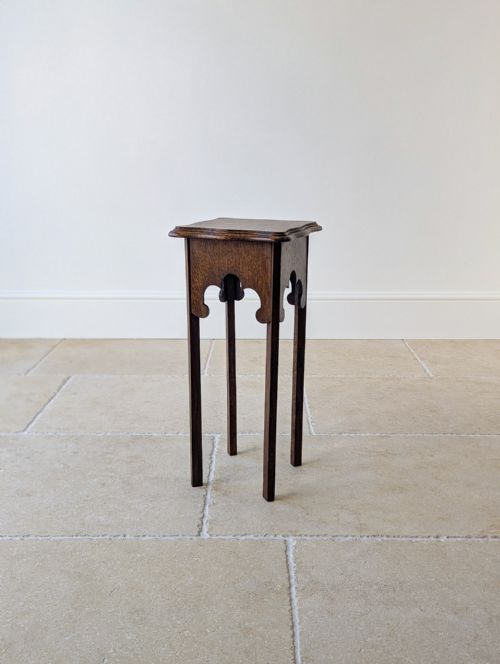
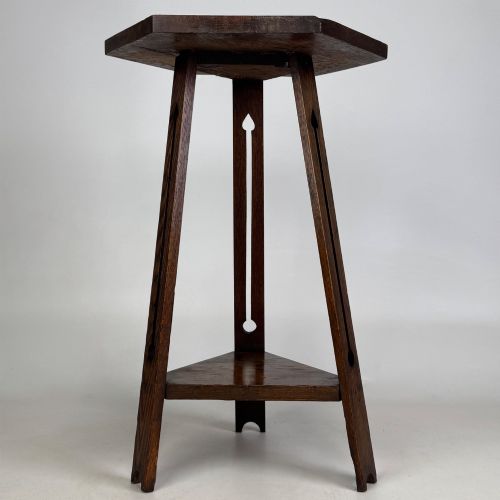
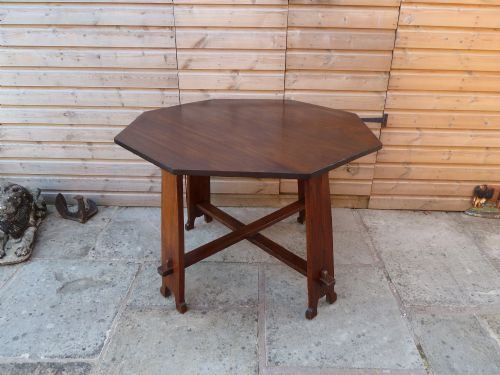
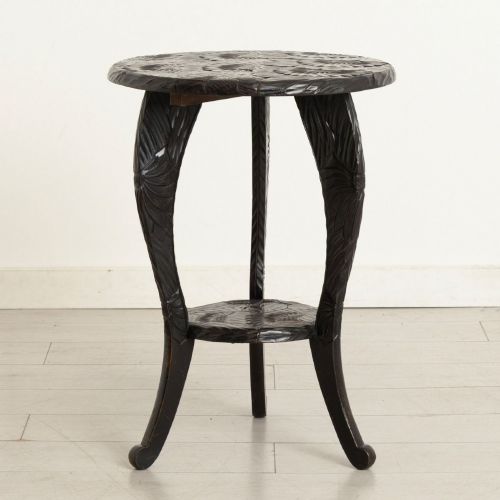
These vintage liberty side table pieces bring together distinct Arts and Crafts, Moorish, and Anglo-Indian designs that ground a room with period character.
Vintage Liberty Side Table
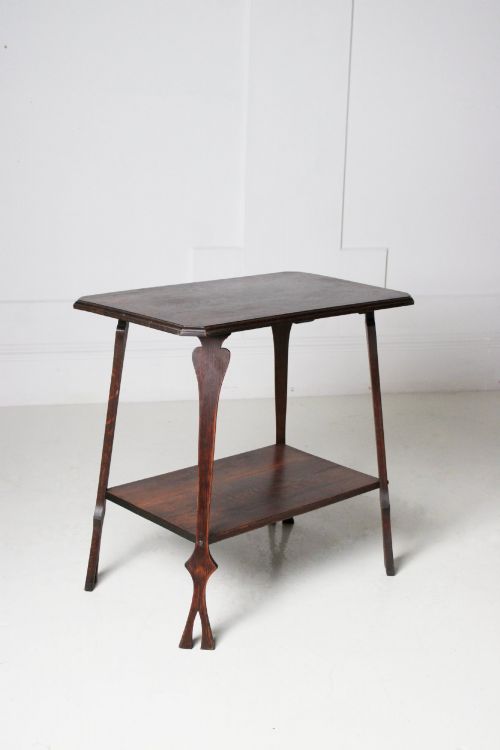
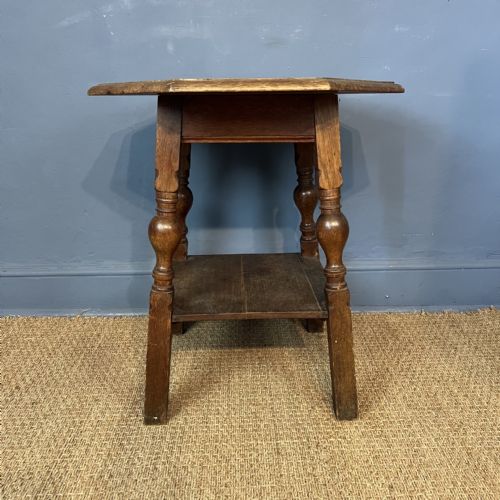
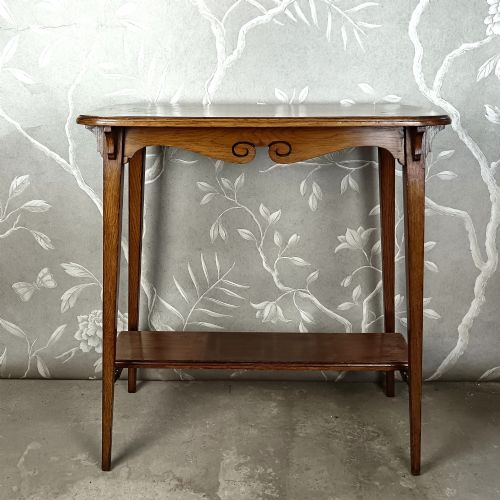
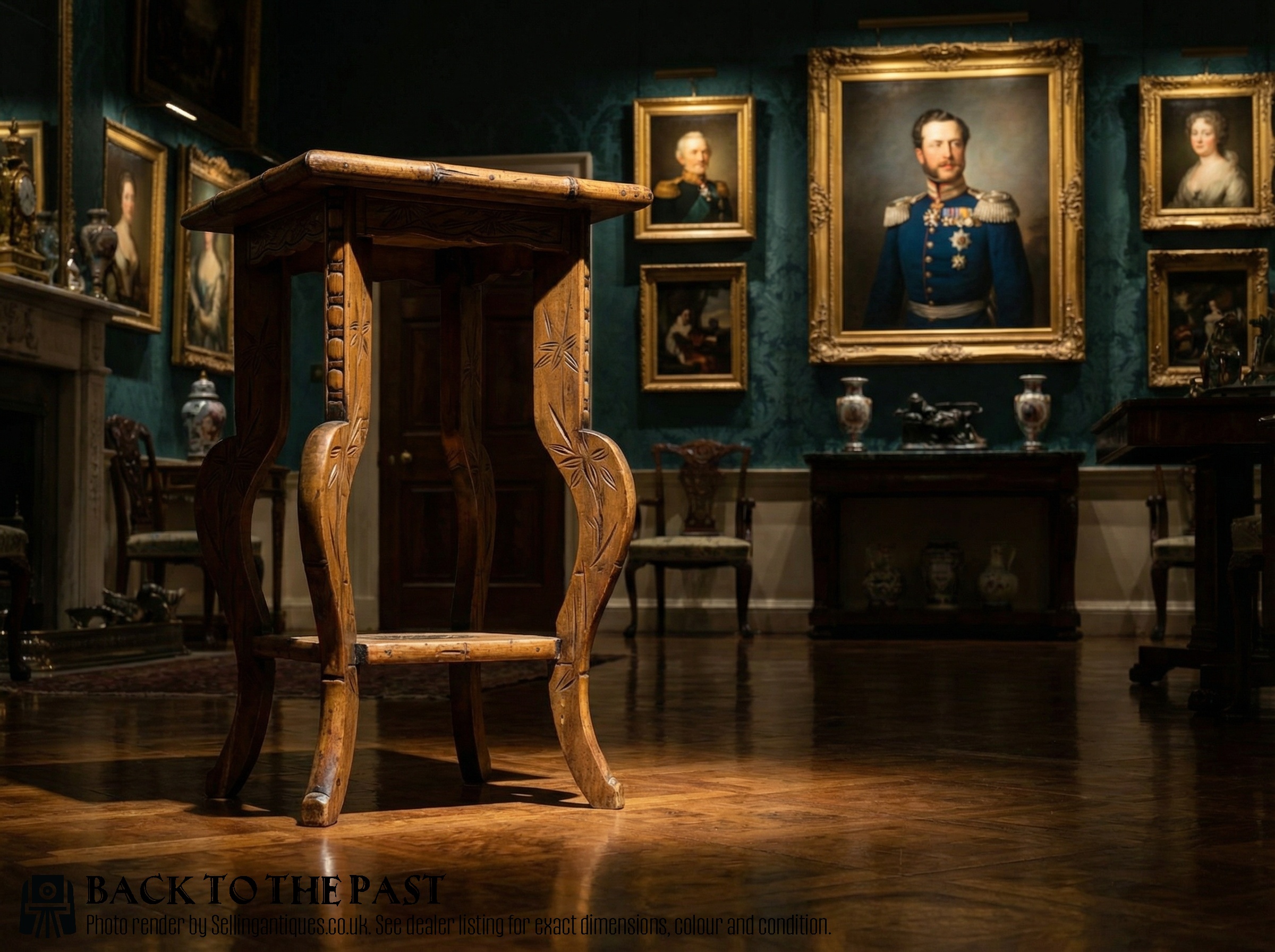
A vintage liberty side table encompasses occasional furniture, centre tables, plant stands, and stools originating from the late nineteenth century through to the 1920s. Buyers searching for a vintage liberty side table will predominantly encounter robust oak examples rooted in the Arts and Crafts movement alongside exotic inlaid and carved occasional forms.
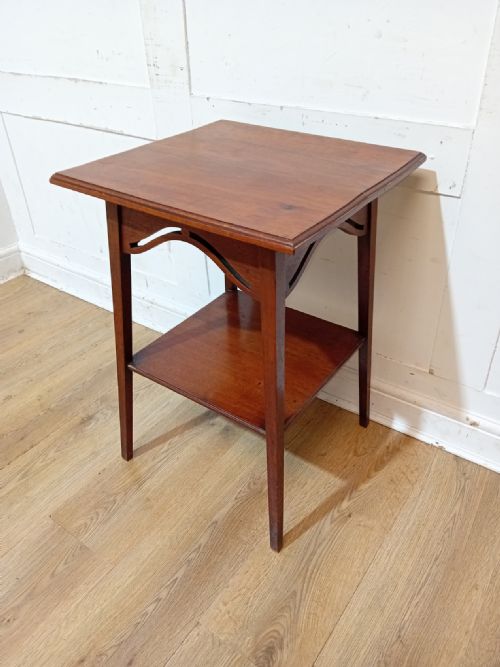
The selection ranges from simple two-tier occasional tables and octagonal plant stands to intricate brass-topped copper tray tables and low stools. These pieces reflect the eclectic retail vision of Liberty and Co, blending British craftsmanship with global stylistic influences from Japanese, Moorish, and Indian traditions.
Most items date from the Edwardian era and the turn of the twentieth century, capturing a period when domestic interiors favoured honest materials and handcrafted details. Whether placed beside a reading chair or utilised as a plant stand, each form serves a practical domestic function while displaying distinct historical design values.
How they were made
Construction relies heavily on solid timbers such as oak, walnut, rosewood, and general hardwood, often shaped with visible joinery and functional lower tiers. Artisans incorporated decorative elements like fretwork, hand carving, and copper or brass trays to add texture and metallic contrast to the wooden frames.
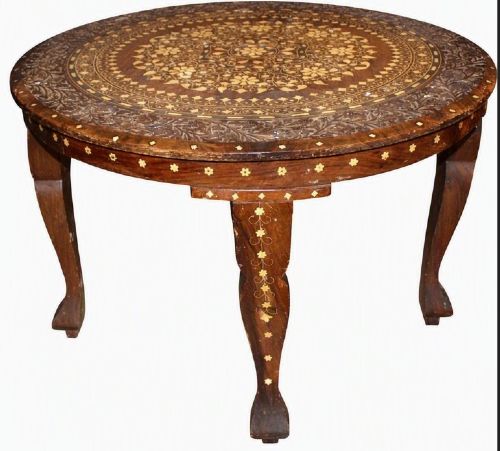
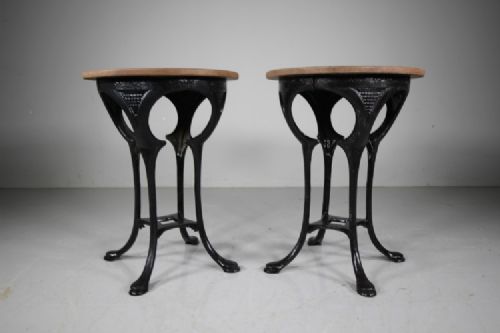
Exotic pieces utilise intricate bone inlay and mother-of-pearl set into dark woods, following Moorish and Anglo-Indian traditions that demand precise hand-fitting. Other variations combine cast iron frameworks with timber, or employ brass engraving on removable trays to create durable, highly decorative surfaces.
Tables occasionally double as miniature architecture, bringing Moorish arches and Egyptian stools into damp Edwardian parlours.
What varies in quality
Quality is defined by the integrity of the construction, the depth and crispness of the hand-carving, and the presence of authentic maker stamps or attributions. Finer examples display meticulous bone or mother-of-pearl inlay work where every small section remains secure and flush within the surrounding wood.
The choice of timber and the sophistication of the design also separate standard production items from exceptional workshop pieces. Tables featuring heavy gauge oak, hand-hammered copper, or complex fretwork demonstrate a higher level of artisan skill during manufacture.
Liberty and Co·Archibald Knox
The Vintage Liberty Side Table Glossary
- Arts and Crafts
- A design movement promoting handcraftsmanship, simple forms, and local materials in reaction to industrial machinery. It heavily influences the construction of many early twentieth-century oak tables.
- Moorish Revival
- An architectural and decorative style incorporating geometric patterns, horseshoe arches, and detailed woodwork. It inspires the exotic inlaid occasional tables associated with Liberty retail.
- Anglo-Indian
- A term describing furniture made in India during the British period, often featuring dense carved foliage and contrasting inlay. These pieces were frequently imported and sold through London emporiums.
- Japonisme
- The nineteenth-century fascination with Japanese art and design, which influenced the aesthetic and structural lines of certain imported occasional tables. This influence appears in clean structural silhouettes and carved motifs.
- Occasional table
- A small, movable table designed for a specific, temporary use in a living space, such as holding a lamp or books. They form the majority of the domestic items found in this category.
- Thebes stool
- A low, four-legged stool derived from ancient Egyptian models and popularised by Liberty and Co during the Arts and Crafts period. Its splayed legs and curved seat offer a distinctive seating form.
Vintage Liberty Side Table: Frequently Asked Questions
How do I identify inlaid Moorish tables?
Inlaid Moorish tables are recognised by dense geometric patterns formed from contrasting materials like bone and mother-of-pearl set into dark hardwood.
They often feature intricate fretwork arches and multi-sided tops inspired by Middle Eastern architectural traditions.
Where should I place a plant stand?
A plant stand works best in a well-lit corner or beside a window where its vertical proportions can lift greenery to eye level.
Their compact footprints also make them suitable as slender pedestals for decorative objects in hallways or reception rooms.
What is an occasional table used for?
An occasional table provides a movable surface for small items like lamps, tea cups, or reading material within a main living space.
Their light construction allows them to be easily shifted about a room to suit the needs of the moment.