



Vintage Leg Rest
A vintage leg rest brings everyday comfort into a traditional interior, taking the form of a low stool designed to elevate tired feet.
Vintage Leg Rest
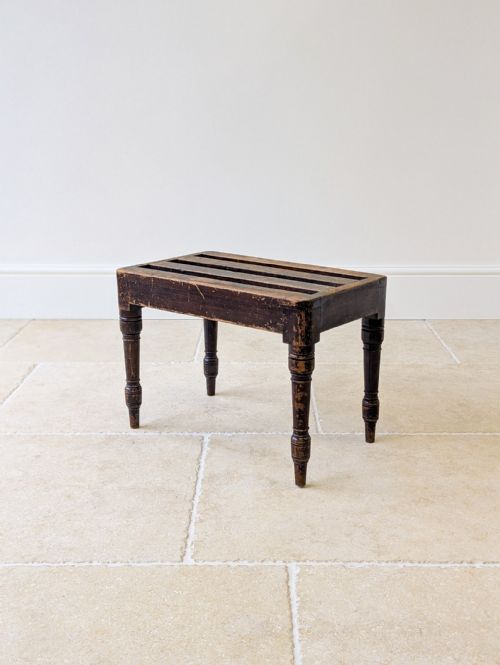
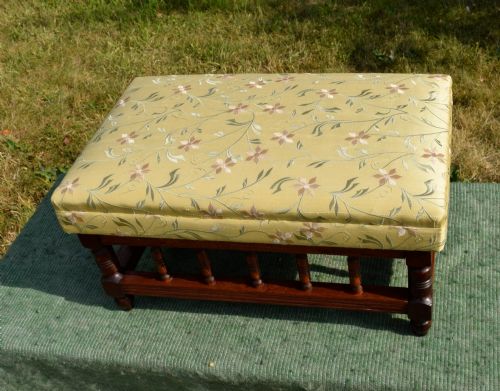
When you search for a vintage leg rest, you encounter a selection of historic supports designed for lowering fatigue, most frequently appearing as Victorian or Edwardian footstools and gout stools. These items serve the simple domestic purpose of raising the lower limbs while sitting in an armchair, utilising compact wooden frames paired with textile covers.
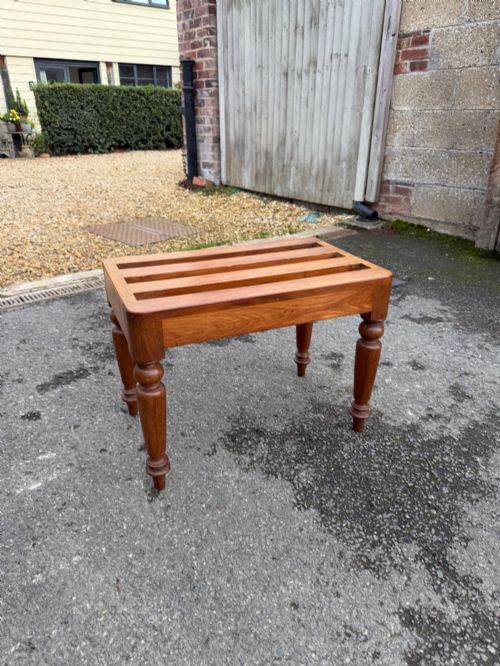
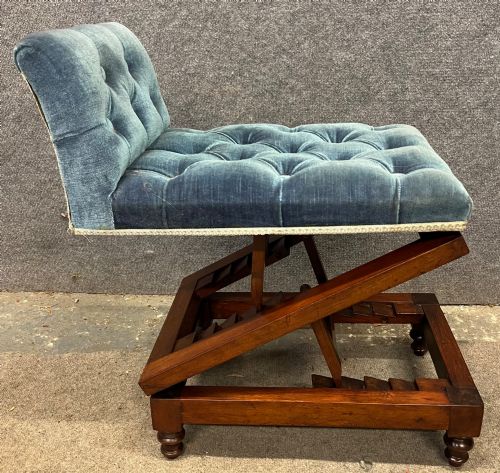
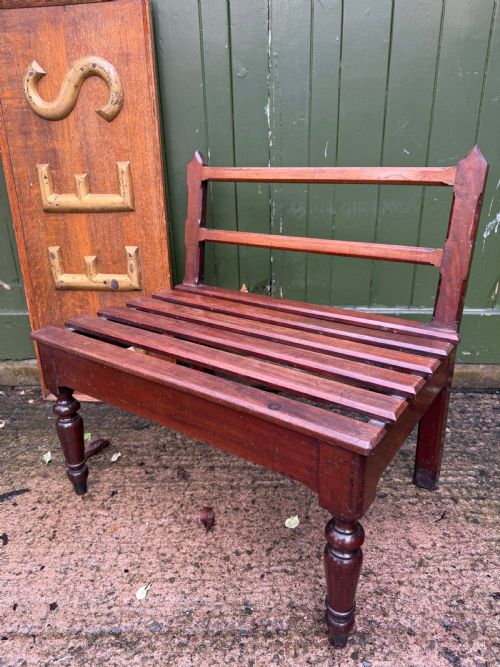
The most common examples on this page date from the nineteenth century and the early twentieth century, constructed in traditional timbers such as mahogany and walnut. Alongside standard footstools, the selection includes adjustable gout stools designed to angle the foot, as well as occasional luggage stands utilised for resting limbs or luggage.
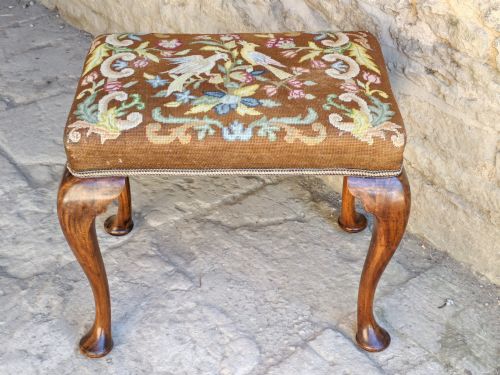
Makers shaped these supports using styles spanning from Victorian Rococo Revival and Regency to Chippendale Revival and bentwood forms. The resulting objects range from plain upholstered footstools to carved walnut frames with needlepoint or velvet coverings.
How they were made
Carpenters constructed the underlying structures primarily using solid mahogany, walnut, beech, and brass fittings, shaping the wood with hand tools and turning legs into sabre or straight profiles. These sturdy timbers provided the necessary strength for daily weight bearing in domestic parlours and libraries.
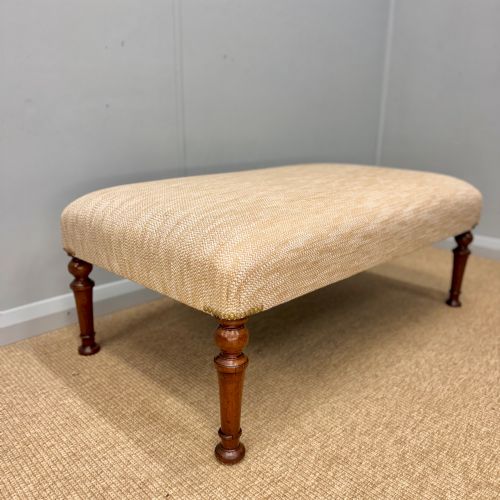
Upholsterers finished the tops using traditional fillings covered in fabrics such as velvet, chenille, damask, or woven cane bergere, secured with tacks. Some pieces feature detailed needlepoint or carved wooden details along the borders of the frame.
Vintage Leg Rest Retail Price Guide 2026
Typical asking prices for vintage leg rest among the pieces listed under this phrase on Sellingantiques today, from the lower quarter to the upper quarter. They describe what is for sale here now, not the wider market.
Listings feature timbers including mahogany, walnut, and beech, paired with upholstery types such as velvet, chenille, damask, and needlepoint.
What varies in quality
The degree of hand carving on the wooden frame separates standard utilitarian footstools from finer parlour examples, with crisply carved details indicating superior workshop execution. Timber selection also plays a role, as dense figured mahogany or richly grained walnut denotes a higher grade of manufacture than basic beech.
The integrity of the upholstery foundation and the preservation of original fabric or cane work affect the character of each piece. Items retaining their original needlepoint, bergere panels, or brass hardware demonstrate a higher level of historical preservation.
Brown & Lamont·Thonet
The Vintage Leg Rest Glossary
- Gout stool
- A specialised footstool featuring an adjustable inclined top designed to support a foot affected by gout or strain. These pieces often incorporate a mechanical ratchet to alter the angle of elevation.
- Bergere
- A woven cane panel used for seats or inserts, formed from split rattan woven in a tight pattern. This technique offers a resilient and breathable surface.
- Needlepoint
- Hand-stitched canvas embroidery utilising wool or silk yarn in counted thread stitches. It frequently decorates the upper surface of nineteenth-century stools.
- Chenille
- A fuzzy, tactile yarn woven from cotton, wool, or silk that creates a velvety pile on the fabric surface. Upholsterers employed it for soft and durable coverings.
- Damask
- A reversible figured fabric woven on a jacquard loom, featuring patterns created by contrasting warp and weft satin weaves. It provides a formal appearance on period seating.
Vintage Leg Rest: Frequently Asked Questions
What is a gout stool?
A gout stool is an adjustable wooden footrest designed with a sloping top to elevate and support the lower leg at a comfortable angle. Nineteenth-century sitters used them in parlours to relieve circulation issues and joint pain.
These pieces typically incorporate a mechanical mechanism that allows the user to alter the inclination of the padded platform. They combine functional medical utility with the polished woodwork characteristic of the period.
How do I use a footstool today?
A vintage footstool integrates easily into a modern living room as a low seat, a fireside rest for feet, or a small surface for books. Their compact proportions allow them to fit neatly in front of armchairs and sofas.
Placing one in a study or bedroom introduces historic timber and textile texture into the space without dominating the room. They require minimal floor space while offering daily practical utility.
How do I distinguish Victorian from Edwardian pieces?
Victorian footstools generally display heavier proportions, darker woods like mahogany, and ornate upholstery such as needlepoint, heavy velvet, or chenille. The carving tends to be deep and robust, reflecting mid-to-late nineteenth-century tastes.
Edwardian examples often exhibit lighter framing, simplified revival styles, and brighter decorative fabrics like damask. The overall aesthetic shifts towards airier domestic interiors at the turn of the twentieth century.
Are these footstools recently upholstered?
Many historical footstools reach the market with newly applied upholstery to replace worn original fabrics that deteriorated over time. This process ensures the piece is clean and ready for daily home use.
Conversely, other examples preserve their original nineteenth-century needlepoint or woven covers for historical interest. Checking the listing details reveals whether the textile surface is a recent replacement or an antique survival.