




Vintage Leather Marine Telescope
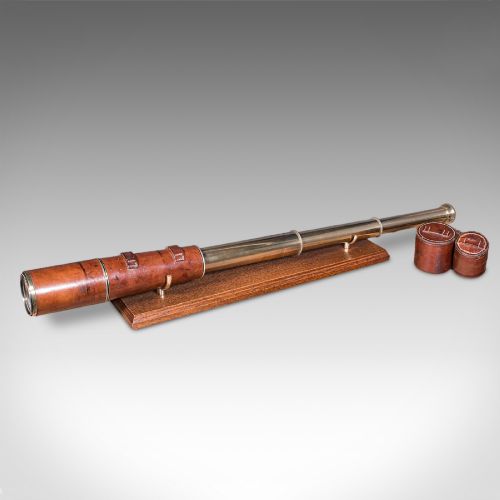
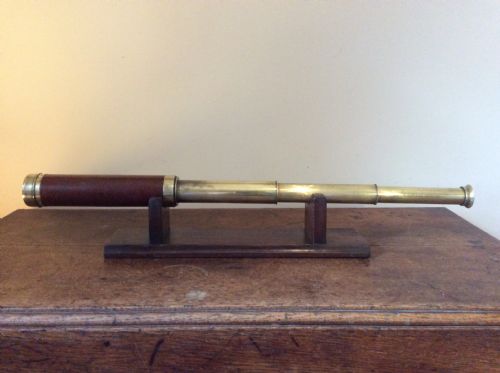
These vintage leather marine telescope examples offer tangible links to naval navigation, combining polished brass with stitched hides for practical maritime use.
Vintage Leather Marine Telescope
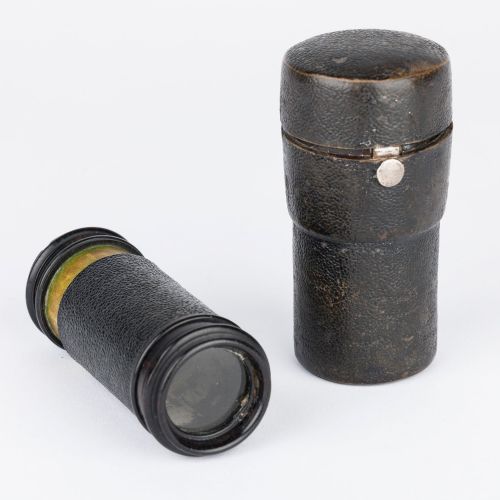
A vintage leather marine telescope is a historical optical instrument designed for terrestrial and navigational observation, predominantly encountered in single-draw, multi-draw, and pocket configurations from the Victorian, Edwardian, and Regency eras. These instruments serve as functional scientific equipment encased in protective leather sleeves, historically utilised by officers of the watch and travellers.
The specimens on this page encompass various forms including naval telescopes, spyglasses, and spotting scopes originating from English makers. Buyers encounter configurations ranging from compact pocket spyglasses dating to the eighteenth century up to extended multi-draw brass and leather iterations produced into the twentieth century.
Period styles span Victorian maritime, Edwardian military, and Regency designs, reflecting the changing aesthetic and technical demands of British optics. These pieces combine utilitarian brass body tubes with stitched leather grips designed to withstand maritime conditions.
How they were made
The construction of these instruments relies on turned brass tubing paired with hand-stitched leather coverings that improve grip in damp conditions. Lenses of glass provide magnification within extending draw tubes that collapse for compact storage.
Makers utilised durable hardwoods such as oak alongside brass and glass to house the delicate internal optics. Metal components were turned and threaded with precision to ensure smooth extension of multiple draws.
Vintage Leather Marine Telescope Retail Price Guide 2026
Typical asking prices for vintage leather marine telescope among the pieces listed under this phrase on Sellingantiques today, from the lower quarter to the upper quarter. They describe what is for sale here now, not the wider market.
Listings feature materials including brass, leather, glass, wood, oak, and nickel across Victorian, Edwardian, and Regency periods.
What varies in quality
Quality differences reside in the precision of the brass draw action and the clarity of the glass optics. Instruments with tight, smooth multi-draw tubes and well-preserved lens assemblies represent the upper end of manufacture.
The condition and execution of the leather casing also distinguish examples, particularly where stitching remains intact and tight around the metal barrel. Named pieces bearing maker signatures display superior finishing in both engraving and optical alignment.
Ross of London·Broadhurst Clarkson & Co·Dollond
The Vintage Leather Marine Telescope Glossary
- Draw
- A sliding tube section that extends from the main barrel to adjust focal length. Multiple draws allow a long telescope to collapse into a shorter, portable format.
- Terrestrial
- An optical design configured to display upright images for viewing land or sea targets rather than astronomical objects. These systems use erecting lenses within the barrel.
- Broad Arrow
- A British government mark stamped onto military and naval equipment to indicate Crown ownership. It appears on service instruments from various periods.
- Spyglass
- A small, portable refracting telescope used historically by mariners and travellers. They are typically light enough to be operated with one hand.
Vintage Leather Marine Telescope: Frequently Asked Questions
How do I use a multi-draw telescope?
Extend each brass section fully until the internal stops lock the tubes into alignment. Support the main barrel firmly while adjusting the final draw to achieve clear focus on distant objects.
Collapse the instrument by reversing the process, pushing the smaller draws back into the main body sequentially. Avoid forcing any section that sticks to prevent damage to the internal brass sleeves.
What is an officer of the watch telescope?
This specific naval instrument was designed for maritime lookouts to scan horizons and identify vessels at sea. They feature robust brass construction suited to the demands of shipboard life.
The leather covering on the barrel provided a secure grip for cold or wet hands while standing watch on deck. Many examples include sunshades or flared objective ends to reduce glare.
How do I date an antique brass telescope?
Examine the style of lettering, the number of draw sections, and any maker signatures engraved on the final draw tube. Regency and early Victorian models often feature simpler, heavier brass work compared to later Victorian multi-draw variants.
Reference marks like military broad arrows or specific maker operating dates help narrow down the decade of manufacture. The presence of leather coverings also shifts according to the prevailing military and naval tastes of each period.
Can these antique telescopes still focus clearly?
Many surviving examples retain functional glass lenses that produce usable magnification for terrestrial viewing. Dust or age-related haze on internal glass elements can sometimes reduce image sharpness.
Gentle cleaning of exterior lenses should be done carefully to preserve the historical glass surfaces. Internal adjustments are best left to specialists experienced with antique optics.