





Vintage Ladies Gold Watch
When you search for a vintage ladies gold watch, you find wristwatches, cocktail watches, and fob pieces spanning Edwardian days to the later twentieth century.
Vintage Ladies Gold Watch
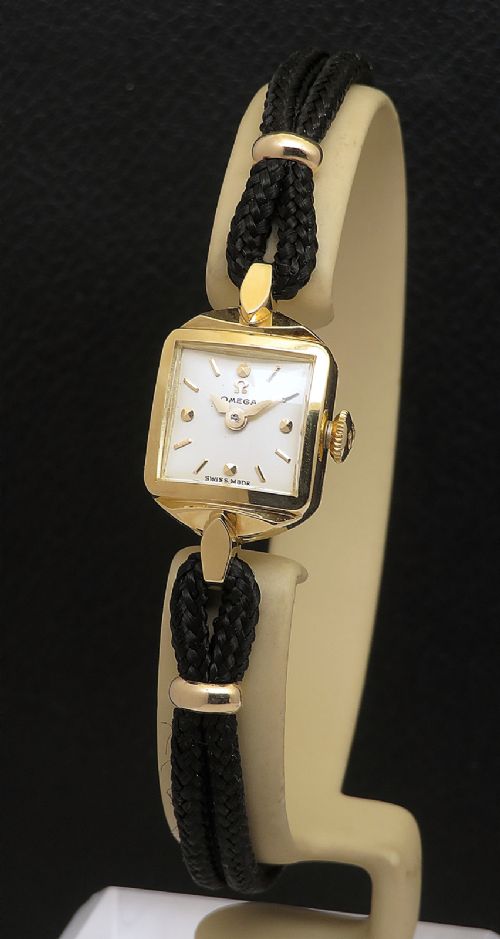
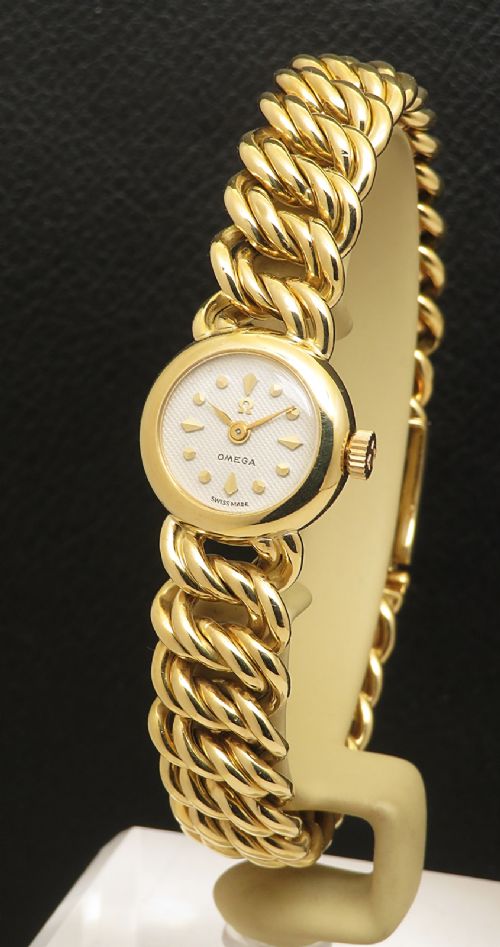
A vintage ladies gold watch encompasses a range of timepieces designed for women, spanning forms from simple everyday wristwatches to elaborate evening cocktail pieces. When looking at this selection, you encounter designs shaped by the Edwardian era, the Art Deco period, and mid-century modern aesthetics.
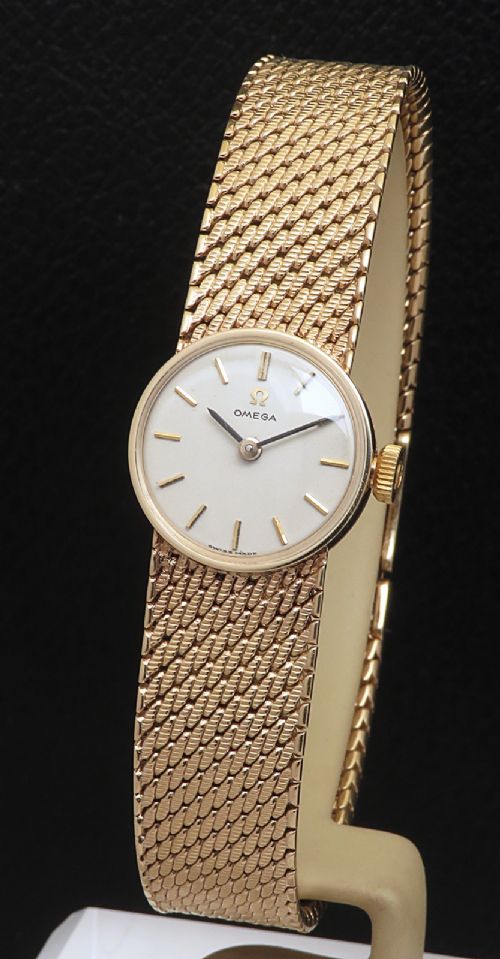
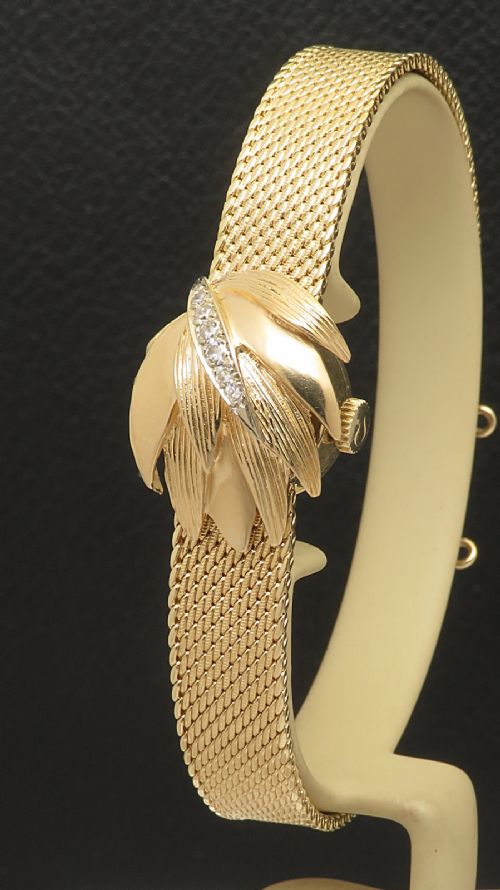
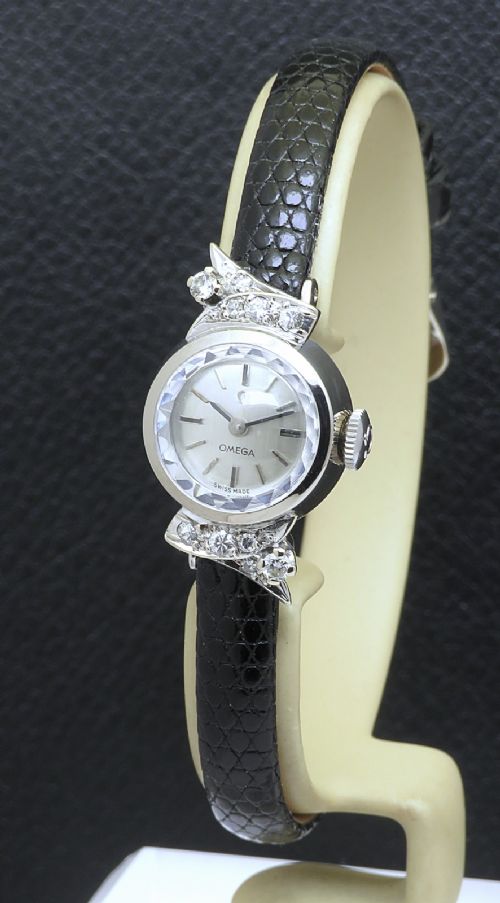
The most common versions on this page are mid-century cocktail pieces and straightforward gold wristwatches dating from the nineteen-fifties and nineteen-sixties. These items often feature solid 9ct gold or 18ct white gold cases, frequently paired with integrated bracelets or delicate leather straps.
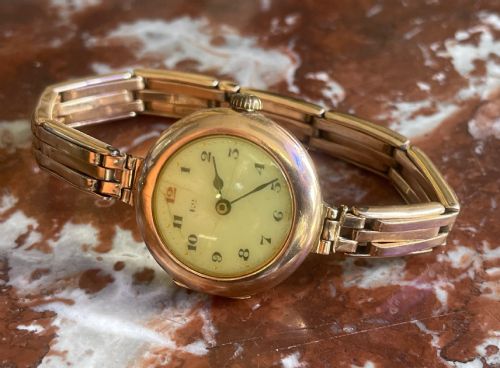
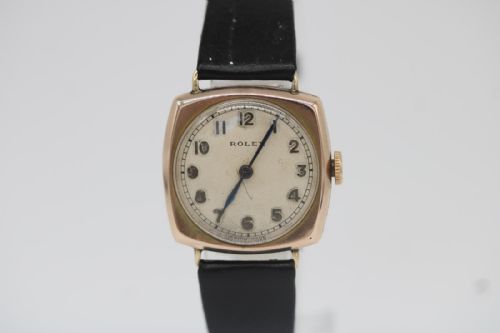
Earlier examples bridge the gap between pocket watches and wristwear, showing transitional cases from the nineteen-tens and nineteen-twenties. Alongside standard wristwatches, specialised forms such as fob watches and diamond-set evening pieces appear regularly across the inventory.
How they were made
The construction of these timepieces relies on precious metals including 9ct gold, 18ct yellow and white gold, and platinum. Artisans shaped these materials into slim cases, often hammering or drawing metal to form flexible mesh bracelets.
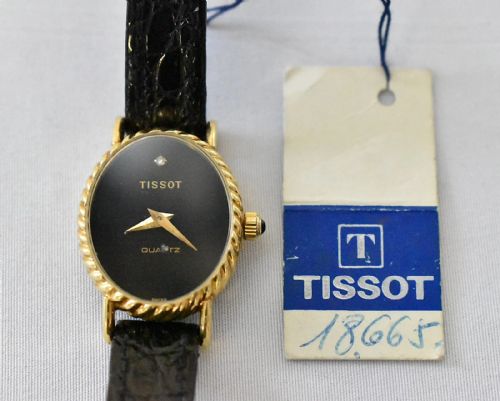
Gemstone setting forms a major part of the manufacturing technique for evening pieces, utilising diamonds, rubies, and sapphires flush-mounted or held in intricate bezels. Movements within these cases are typically manual wind mechanisms, though later examples incorporate early quartz technology.
What varies in quality
The standard of a timepiece is determined by the complexity of the movement and the integration of precious stones. Pieces featuring high-count diamond bezels and heavy solid gold mesh construction sit at the upper end of the scale.
Maker reputation heavily influences overall desirability, with established Swiss houses commanding attention for their refined mechanical calibres. The presence of original packaging, historical papers, and untouched dials further separates standard items from exceptional survivals.
Omega·Rolex·Tissot·Movado·Longines·Jaeger-LeCoultre·Baume And Mercier·Universal Geneve
The Vintage Ladies Gold Watch Glossary
- Cocktail watch
- A small, highly decorative timepiece intended for evening wear, often heavily set with diamonds and precious stones. These items function as much as jewellery as they do instruments for telling time.
- Manual wind
- A mechanical movement that requires the wearer to turn the crown by hand to tension the mainspring. This traditional method was standard before the widespread adoption of automatic and quartz calibres.
- Art Deco
- A design style spanning the nineteen-twenties and nineteen-thirties characterised by geometric shapes, clean lines, and symmetrical patterns. In watchmaking, this translates to rectangular cases and stepped bezels.
- Fob watch
- A small pocket watch designed to be attached to a ribbon or chain and pinned to clothing. They represent an early format before wristwatches became the dominant style for women.
Vintage Ladies Gold Watch: Frequently Asked Questions
Can I wear a vintage gold watch every day?
Many solid gold wristwatches from the mid-century handle daily wear well if they are serviced regularly. Delicate cocktail versions with extensive diamond settings suit occasional evening use better due to their intricate structures.
Protecting the movement from moisture and impacts ensures these older mechanical pieces continue to run reliably. Leather straps can be replaced easily, while integrated gold bracelets require careful handling.
How do I wind a manual watch?
You turn the small crown at the side of the case clockwise until you feel gentle resistance. Stop immediately at that point to avoid overwinding and damaging the internal spring.
Doing this gently at the same time each day keeps the tension steady and the timekeeping consistent. Quartz variations on this site do not require winding as they operate on battery power.
What is the difference between a wristwatch and a cocktail watch?
Standard wristwatches prioritize clear dials and robust cases intended for practical daily timekeeping. Cocktail watches subordinate the dial to precious metals and gemstones, creating an ornamental piece for social occasions.
While both display the time, cocktail variants often conceal the dial behind hinged covers or integrate it seamlessly into a jewelled bracelet.
How can I tell what decade a watch comes from?
Stylistic cues such as rectangular Art Deco geometries point toward the nineteen-twenties and thirties. Bold numerals, robust metal bracelets, and specific logo typography help date mid-century pieces from the nineteen-fifties and sixties.
Original boxes, papers, and case serial numbers often provide exact production years when available. Comparing the movement design against historical manufacturer catalogues offers further verification.