



Vintage Ladderback Seats
These vintage ladderback seats combine horizontal back rails with woven or solid wooden seating, offering practical utility and enduring vernacular charm.
Vintage Ladderback Seats
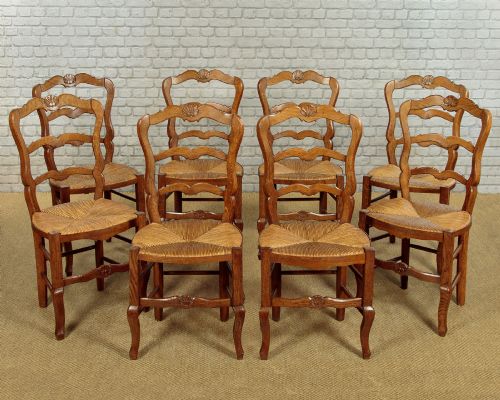
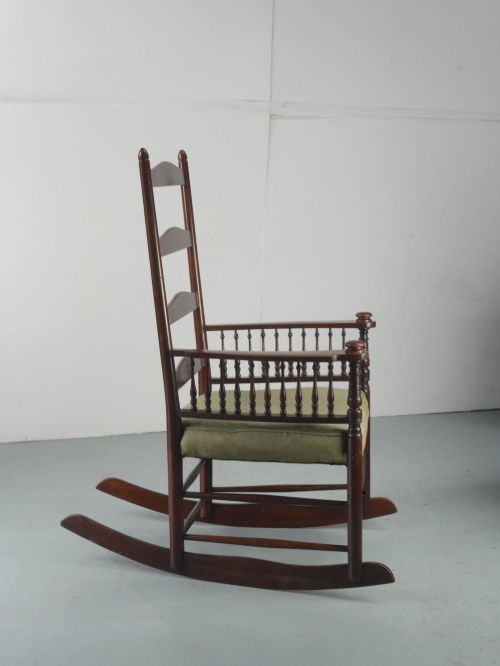
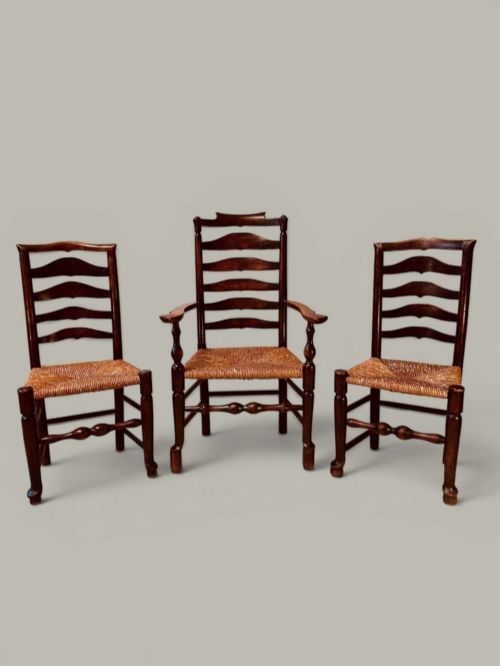
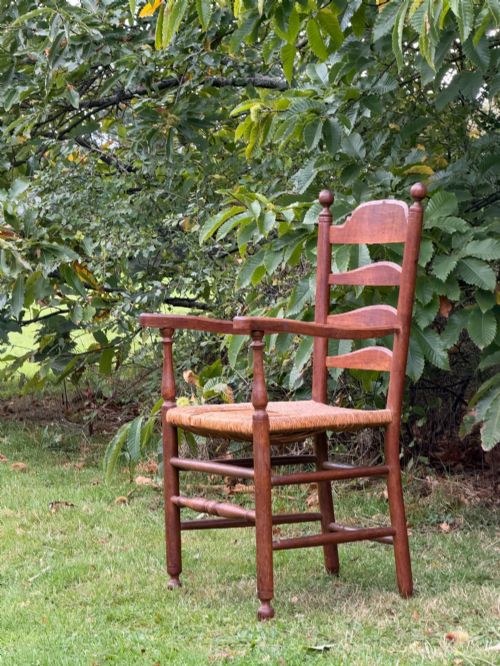
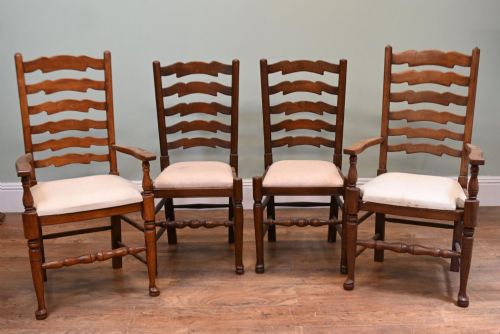
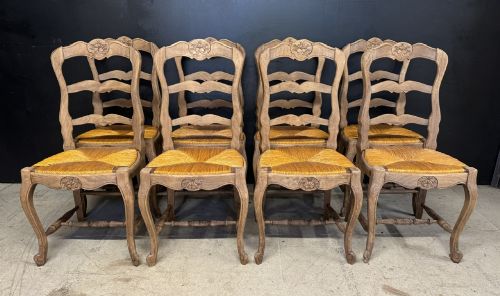
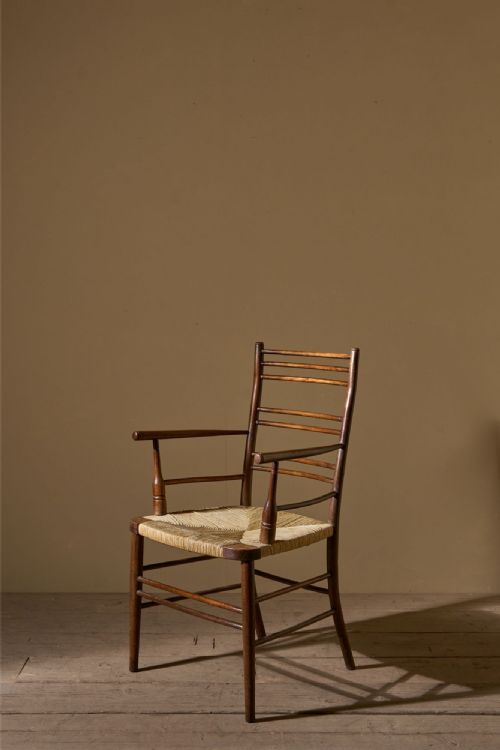
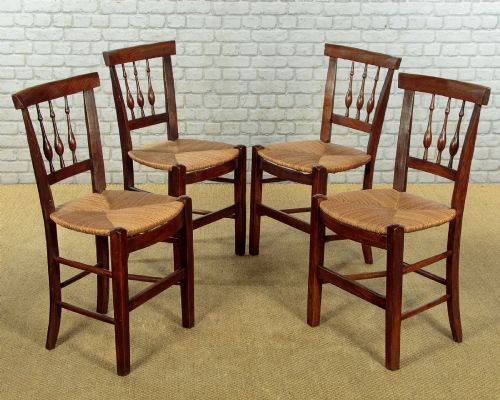
Vintage ladderback seats comprise dining chairs, carvers, armchairs, rocking chairs, and high chairs originating from periods spanning the nineteenth and early twentieth centuries. These pieces reflect diverse regional traditions, including English country, French provincial, and American vernacular styles.
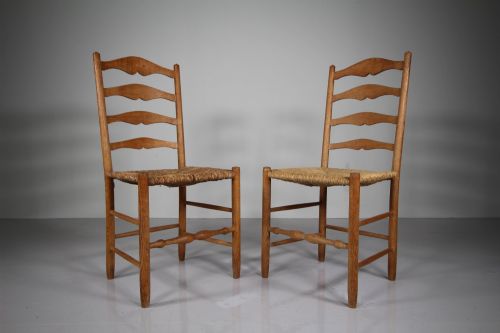
Buyers searching for vintage ladderback seats will frequently encounter sturdy oak, ash, elm, and beech dining chairs alongside rush-seated armchairs. Sets of dining chairs and individual nursing or rocking chairs appear alongside smaller folk art and nursery items.
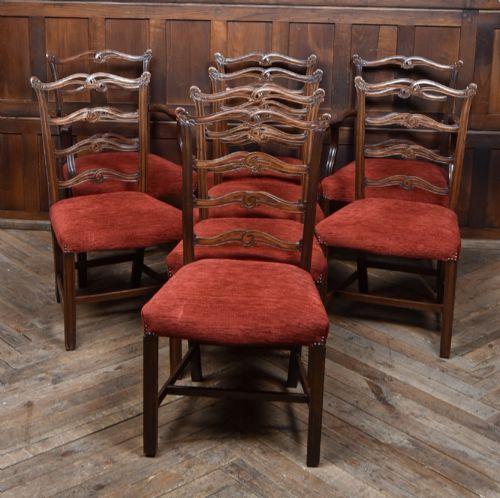
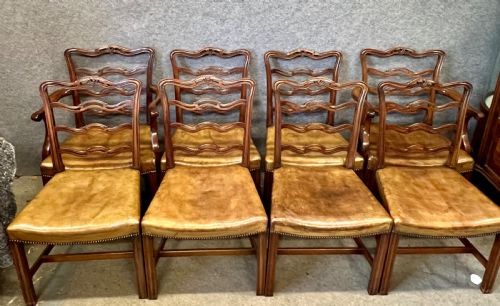
Originating from domestic kitchens, farmhouses, and workshops, these chairs range from simple utilitarian seating to refined Arts and Crafts interpretations and revival styles such as Chippendale and Hepplewhite.
How they were made
Makers constructed these frames predominantly from native timbers such as oak, elm, ash, mahogany, and beech, utilising turned spindles and shaped horizontal slats. Joinery relied on traditional mortise and tenon construction to ensure structural rigidity under daily use.
Seats utilised woven natural rush, sea grass, or solid wood panels fitted tightly within the frame. Surface finishes remained simple, often depending on the natural grain of the timber or traditional polishing methods.
Vintage Ladderback Seats Retail Price Guide 2026
Typical asking prices for vintage ladderback seats among the pieces listed under this phrase on Sellingantiques today, from the lower quarter to the upper quarter. They describe what is for sale here now, not the wider market.
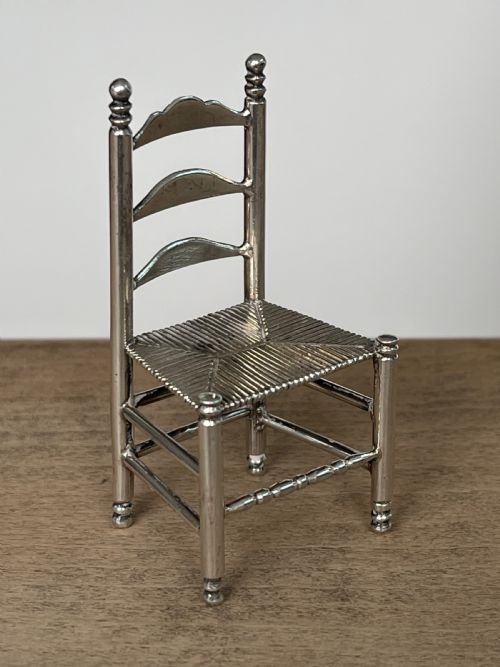
Several miniature ladderbacks survive solely as silver doll's house ornaments rather than seating for tired dolls.
What varies in quality
Quality depends upon the integrity of the timber framing and the tightness of the joinery. Original construction methods without modern hardware distinguish sturdier examples from later repairs.
The precision of the turned uprights and the symmetry of the horizontal slats dictate visual balance. Woven rush or sea grass seating uniformity also separates standard utility chairs from finer workshop productions.
Lawrence Neal·Liberty And Co·Heals
The Vintage Ladderback Seats Glossary
- Ladderback
- A chair style characterised by a series of horizontal wooden rails resembling a ladder across the back. This design provides structural support while keeping the chair light.
- Rush
- Material woven from dried marsh plants used to create durable, textured chair seats. It yields slightly to the sitter for comfort.
- Carver
- An armchair, traditionally placed at the head of a dining table, matching the design of the smaller side chairs in a set. These often feature open wooden arms.
- Vernacular
- Everyday utilitarian objects made by local craftspeople using regional materials and traditional methods rather than adhering to high court styles.
Vintage Ladderback Seats: Frequently Asked Questions
How do I clean a rush seat?
Dust the woven rush regularly with a soft brush to remove debris that can wear down the fibres.
Avoid using liquid cleaners or soaking the material, as moisture causes natural rush to rot and snap.
Are these chairs suitable for daily use?
Most solid wood and rush chairs from these periods were built for heavy domestic use and remain entirely practical.
Check the stability of the joints and the tightness of the woven seating before placing them into heavy daily rotation.
How do I identify an Arts and Crafts chair?
Arts and Crafts chairs emphasise honest construction, visible joinery, and simpler forms derived from traditional vernacular styles.
They frequently combine oak frames with rush seating and exhibit minimal applied ornamentation.