
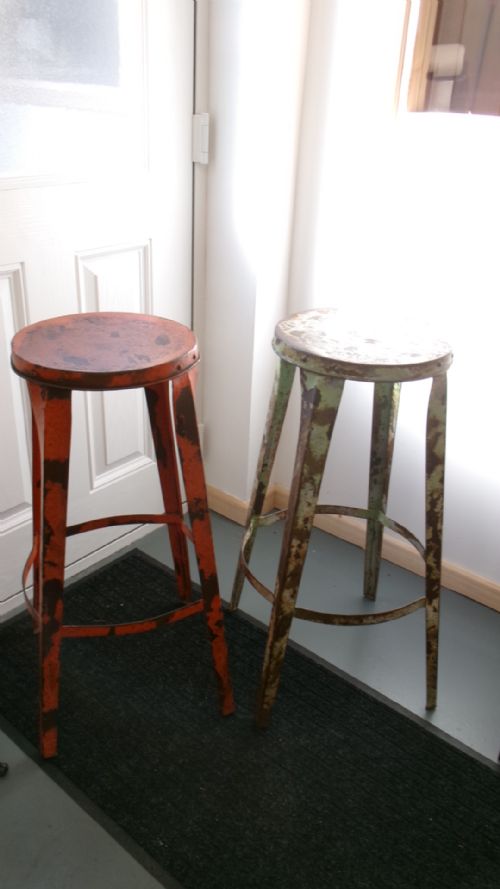


Vintage Kitchen Stools
Vintage kitchen stools bring utilitarian character to modern interiors, offering sturdy seating derived from workshops, farms and dairies.
Vintage Kitchen Stools
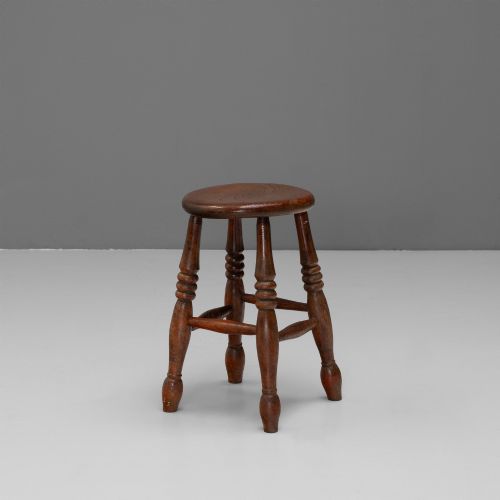
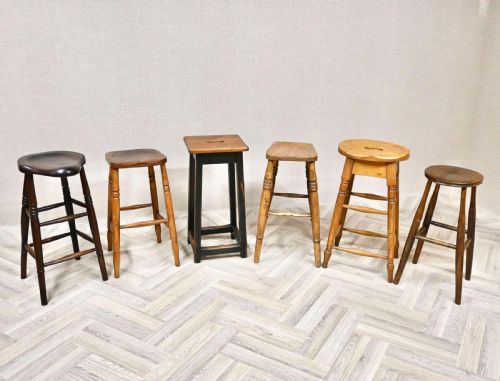
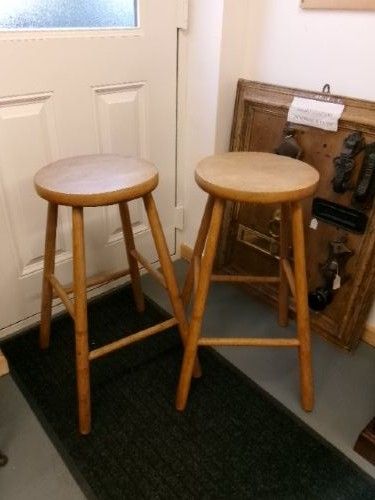
Vintage kitchen stools encompass a practical variety of high and low seating forms originating from domestic, agricultural and industrial settings. Buyers exploring vintage kitchen stools encounter pieces designed for utilitarian tasks, ranging from tall bar and lab variants to low dairy and farmhouse seats.
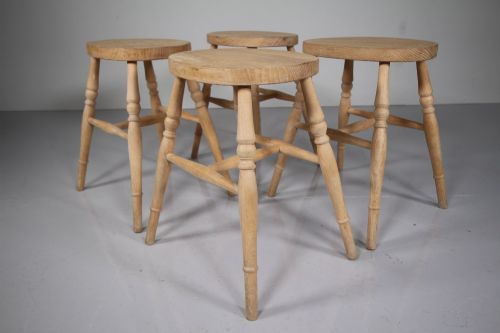
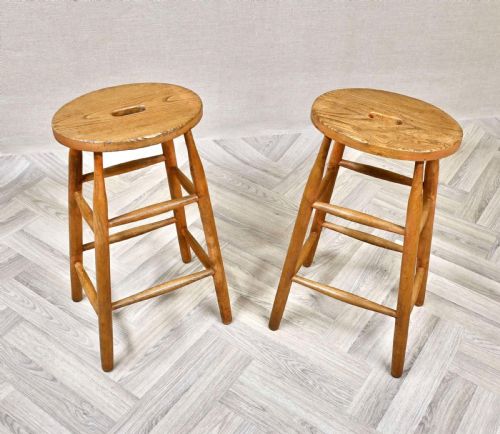
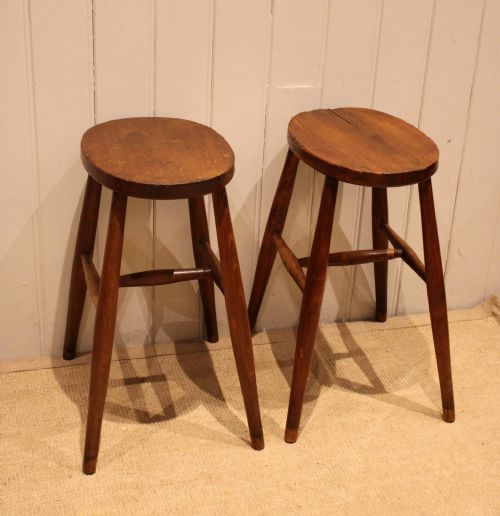
The selection includes specimens from the nineteenth century through to the mid-twentieth century, capturing periods such as the Victorian era, Edwardian period and the nineteen-twenties. Common configurations feature single seats, pairs and matched sets suitable for high counters or rustic tables.
Originating from diverse functional backgrounds, these items often display simple wooden constructions or riveted metal frames. Forms such as clerk stools, mill worker seats and bistro variants frequently appear alongside traditional farmhouse designs.
How they were made
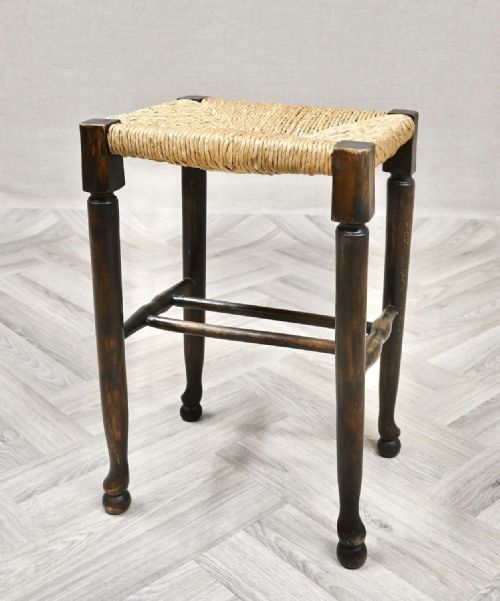
Construction relies heavily on traditional timber working, utilising dense hardwoods like elm, beech, oak and pine for seats and frames. Many examples combine turned wooden legs with solid timber tops, occasionally enhanced by painted finishes or rush seating.
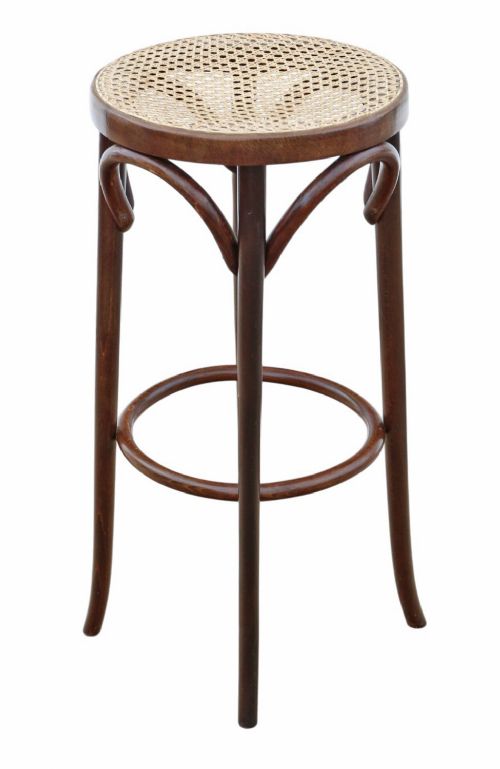
Industrial iterations incorporate iron and metal riveting alongside bentwood techniques to achieve robust frames capable of withstanding heavy daily use. Joinery methods typically involve pegged joints or secure mechanical fixings appropriate to workshop and laboratory furniture.
Styles represented include rustic farmhouse, industrial metalwork, Edwardian country and European bistro forms.
What varies in quality
Quality in these pieces rests upon the integrity of the original construction and the character earned through genuine working use. Superior examples exhibit substantial timber thickness, particularly in elm or beech seats, alongside sound joinery that maintains structural rigidity.
The distinction between standard utility items and finer pieces often lies in the sophistication of the turning on legs and the preservation of original surface patination, such as untouched paint or aged walnut finishes.
The Vintage Kitchen Stools Glossary
- Bentwood
- Wood softened by steam and bent into curved structural forms. This technique creates lightweight yet resilient frames seen in high stools.
- Turned
- Shaped on a lathe to create cylindrical, tapered or decorative legs and stretchers. This process defines the structural supports of nineteenth-century seating.
- Rush
- Dried marsh grasses twisted into cords and woven to form flexible seating surfaces. It provides a textured seat on traditional country stools.
- Patina
- The surface sheen and colour developed through years of handling, wear and ageing. This quality distinguishes genuine antique timber from modern reproductions.
- Stretcher
- Horizontal support connecting the legs of a stool to ensure stability. These components often double as footrests on tall bar and lab variants.
Vintage Kitchen Stools: Frequently Asked Questions
How do I use vintage stools in a modern kitchen?
These pieces integrate naturally around kitchen islands, breakfast bars or rustic dining tables to provide elevated seating.
Their varied heights and utilitarian designs add tactile contrast and functional character to contemporary domestic spaces.
How can I tell a nineteenth-century stool from a later one?
Nineteenth-century examples typically display hand-turned components, pegged timber joinery and deeper surface patination accumulated through decades of use.
Later pieces from the nineteen-twenties and nineteen-thirties often incorporate industrial metal, bentwood construction or machine-standardised fixings.
Are high stools suitable for everyday kitchen use?
Tall bar stools and lab seating were originally built for industrial and commercial environments, making them exceptionally durable for daily household tasks.
Their robust frames of hardwood or riveted iron easily withstand regular sitting and high-traffic kitchen activity.
What wood types are most common on these stools?
Elm and beech appear frequently, chosen by makers for their strength and suitability for solid saddle seats and turned legs.
Pine, oak and hardwood also feature regularly, occasionally supplemented by painted finishes or walnut veneers.