


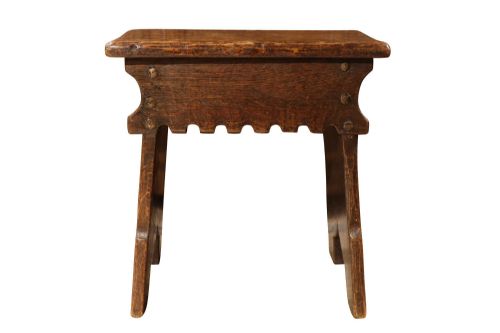


Vintage Joint Stool Table
These vintage joint stool table pieces offer sturdy timber construction and historic revival charm that anchors any traditional interior.
Vintage Joint Stool Table
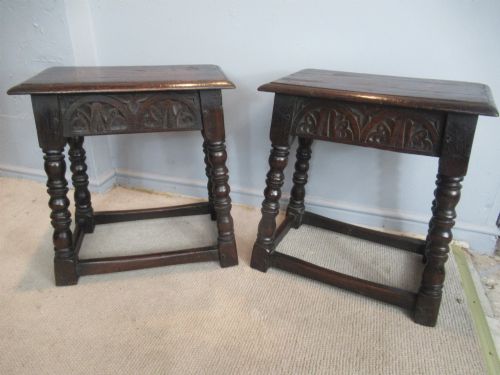
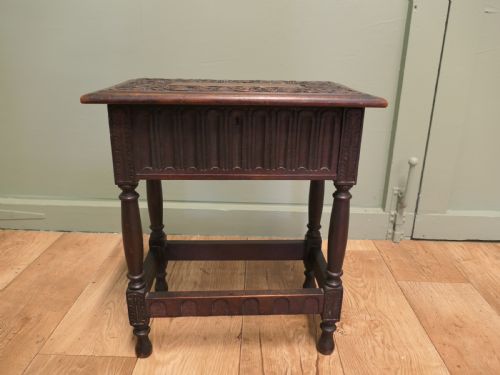
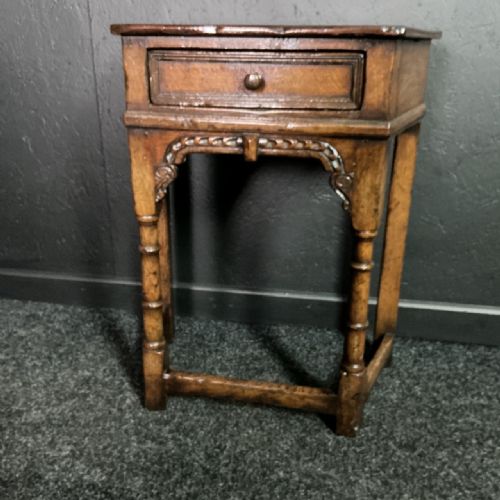
A vintage joint stool table combines the low sturdy form of a traditional stool with the surface utility of a small table, often drawn from early revival styles. When searching for a vintage joint stool table, buyers encounter formats ranging from seventeenth-century interpretations to later twentieth-century iterations.
The selections on this page span the nineteenth century through the 1930s, featuring periods such as 1900, 1910, 1920, and 1930. These pieces often blur the line between seating and occasional surfaces, including side tables, coffee tables, and miniature decorative shelf tables.
Jacobean revival and rustic farmhouse styles dominate the physical forms, alongside Victorian gothic revival and arts and crafts influences. Buyers are most likely to meet solid oak constructions utilising traditional pegged joinery methods.
Construction and materials
Makers relied primarily on English oak and general hardwood, shaping heavy timber frames into sturdy four-legged forms. Pegged construction ensured stability without relying on modern metal fasteners, utilising wooden dowels to lock the joints securely.
Carpenters utilised simple hand tools to shape plank tops and turn legs, following historical Jacobean and gothic revival traditions. Occasional iron elements appear in structural hardware, complementing the dense wood grain.
Vintage Joint Stool Table Retail Price Guide 2026
Typical asking prices for vintage joint stool table among the pieces listed under this phrase on Sellingantiques today, from the lower quarter to the upper quarter. They describe what is for sale here now, not the wider market.
One tiny oak table on this page started life as an apprentice piece, built small enough to sit on a grander desk.
Evaluating craftsmanship and build
Quality rests heavily on the integrity of the pegged construction and the density of the timber used in the frame. Firmer, heavier specimens exhibit tighter joinery that resists the wobbling common in lesser vernacular pieces.
The refinement of the hand-carved detailing and the uniformity of the oak planks separate standard utility items from finer decorative examples. Original surface patination also dictates the visual depth of the piece, marking the distinction between everyday workshop production and careful craftsmanship.
The Vintage Joint Stool Table Glossary
- Joint stool
- A traditional wooden stool built with mortise and tenon joints, strong enough to serve as a small platform or seat.
- Pegged construction
- A method of securing timber joints using wooden pegs rather than metal nails or modern screws.
- Jacobean revival
- A decorative style popular in the nineteenth and early twentieth centuries that copies the heavy, carved oak aesthetic of the early seventeenth century.
- Apprentice piece
- A miniature furniture item created by a learner to demonstrate mastery of woodworking skills to a guild.
- Gateleg table
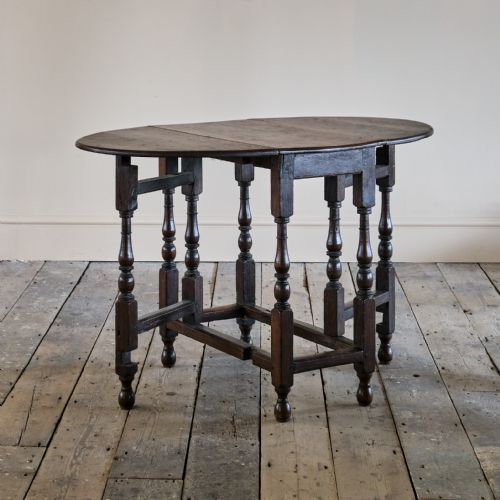
- A table with hinged leaves supported by swing-out legs, allowing the surface area to expand or fold down.
Vintage Joint Stool Table: Frequently Asked Questions
What is a joint stool table?
A joint stool table is a sturdy wooden item that functions as both a low seat and a small occasional surface. These pieces utilise traditional mortise and tenon joinery to support heavy timber tops.
Originating from early furniture forms, these pieces were built to withstand heavy daily use in domestic spaces. Their compact proportions make them versatile additions to modern rooms as side tables or plant stands.
How old are these oak tables?
The items available span from the nineteenth century through the early twentieth century, specifically covering periods around 1900, 1910, 1920, and 1930. Many reflect revival movements that looked back to earlier Jacobean or gothic designs.
Dating relies on timber characteristics, tool marks, and construction techniques such as pegged joints. Stylistic cues like heavy turned legs or carved aprons help pinpoint the exact era of production.
Where were these wooden stools used?
Historically, these items served multiple purposes around the home, acting as seating around a hearth or as small platforms for household goods. Their robust build allowed them to be moved easily from room to room.
Today, buyers place them beside armchairs as low side tables or use them to display decorative objects. Their small footprint suits them well for compact spaces needing character and surface area.
How do I identify revival styles?
Revival pieces emulate the heavy proportions and dark finishes of seventeenth-century furniture but show nineteenth or twentieth-century manufacturing traits. Look for machine-sawn timber elements hidden beneath hand-finished surfaces.
Jacobean revival styles typically feature straight turned legs and geometric carving, while arts and crafts examples emphasise simpler lines and exposed construction details.