


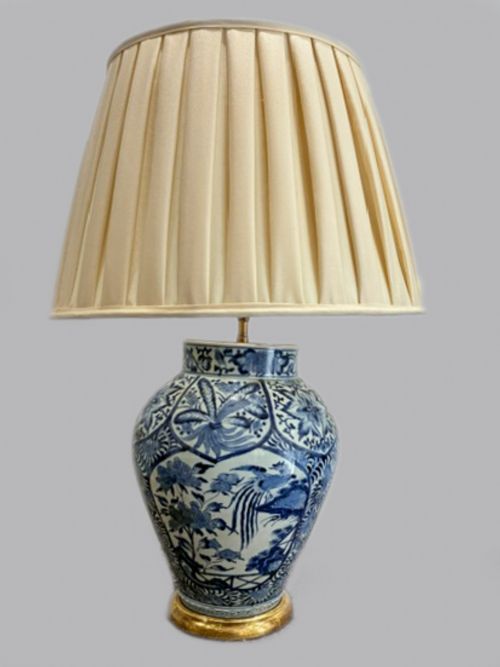






Vintage Japanese Porcelain Lamp
These vintage japanese porcelain lamp pieces bring centuries of ceramic artistry into daily interiors as functional lighting.
Vintage Japanese Porcelain Lamp
The objects on this page largely comprise vases originally made in earlier centuries that were subsequently fitted with electrical wiring and mounts. These conversions range from nineteenth-century Satsuma and Kutani wares to earlier Arita Imari porcelain and blue and white pieces.
Many examples appear as matched pairs, particularly within Satsuma and Kutani styles dating from the nineteenth and early twentieth centuries. Single larger vases converted around the same eras also feature prominently across the available selection.
Materials and construction methods
The foundation of every piece is hard-paste porcelain or earthenware, hand-thrown or moulded before being decorated with detailed cobalt blue, enamel, or gilt pigments. Kiln firing fixed these mineral colours beneath or above a clear glaze, producing durable surfaces designed to last for centuries.
Conversion into lighting involved drilling the base or mounting the ceramic body securely onto brass fittings and wooden or metal bases without compromising the structural integrity of the antique vessel. Fabric and silk shades often complement the mounted porcelain bodies.
Vintage Japanese Porcelain Lamp Retail Price Guide 2026
Typical asking prices for vintage japanese porcelain lamp among the pieces listed under this phrase on Sellingantiques today, from the lower quarter to the upper quarter. They describe what is for sale here now, not the wider market.
Materials paired with the porcelain include brass, wood, fabric, and silk, utilised to transform decorative vessels into working table lamps.
Assessing quality in converted porcelain lamps
The distinction between ordinary and exceptional examples rests primarily on the artistic merit and preservation of the original ceramic vessel. Finely painted enamel details, crisp cobalt underglazes, and balanced proportions set superior vases apart from simpler mass-produced wares.
The discretion used during the conversion process heavily influences overall desirability, particularly whether the mounting preserves the character of the original vase. Subtle brass work and sympathetic wiring integration maintain the aesthetic integrity of the antique body.
The Vintage Japanese Porcelain Lamp Glossary
- Satsuma
- A type of Japanese earthenware featuring a crackle glaze and ornate polychrome and gilt enamel decoration. These wares were widely produced during the nineteenth and early twentieth centuries.
- Kutani
- Japanese porcelain and pottery characterised by vibrant overglaze enamel colours, often incorporating bold greens, reds, and golds. Kutani pieces frequently depict pictorial scenes from nature and folklore.
- Imari
- A style of Japanese porcelain decorated in underglaze blue, iron red, and gold, originating from the port of Arita. These striking patterns became immensely popular in European export markets from the seventeenth century onward.
- Arita
- The Japanese town where porcelain production first began in the early seventeenth century. Arita kilns supplied much of the fine porcelain exported to the West during the Edo period.
- Japonisme
- A late nineteenth-century Western artistic movement influenced by Japanese art and design. This aesthetic shaped how Asian ceramics were appreciated and integrated into European domestic interiors.
Vintage Japanese Porcelain Lamp: Frequently Asked Questions
How are these antique vases converted safely?
Conversion typically involves mounting the ceramic securely onto a metal or wooden base and fitting electrical components above or through a carefully drilled aperture.
Professional fitters ensure the porcelain body sustains no damage during wiring while providing a stable foundation for a standard lampshade.
Can I use standard modern lampshades?
Most pieces accept standard European or British harp and fitter assemblies depending on the specific brass mounts added during conversion.
Fabric or silk shades are chosen to complement the scale and colour palette of the underlying porcelain vessel.
How do I distinguish Satsuma from Kutani?
Satsuma wares generally present an ivory-coloured earthenware body with a fine network of crackled glaze beneath dense enamel and gilt ornamentation.
Kutani pieces are typically true porcelain featuring bolder, brighter overglaze palettes dominated by greens, reds, and blues.
Where were these ceramics originally made?
The vessels originated in various historical kilns across Japan, including the production centres of Arita, Satsuma, and Kutani provinces.
Many were created during the Edo and Meiji periods for both domestic use and international export.