



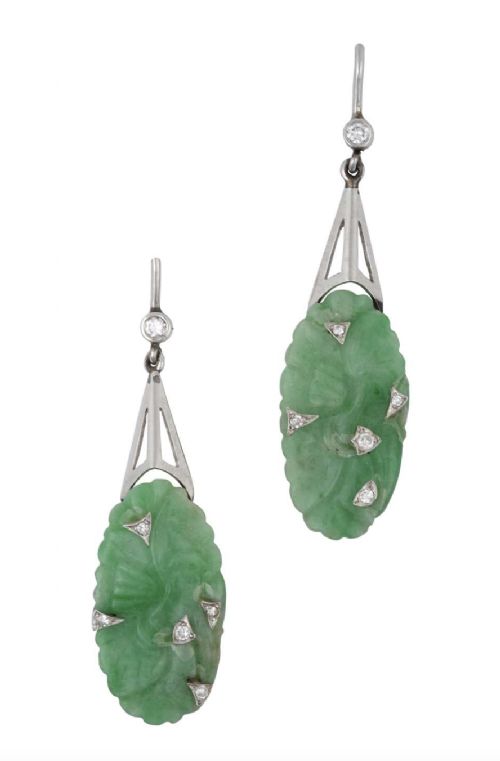


Vintage Jadeite Earrings
Vintage jadeite earrings bring together carved green stones and precious metals across Art Deco and Mid-Century designs.
Vintage Jadeite Earrings
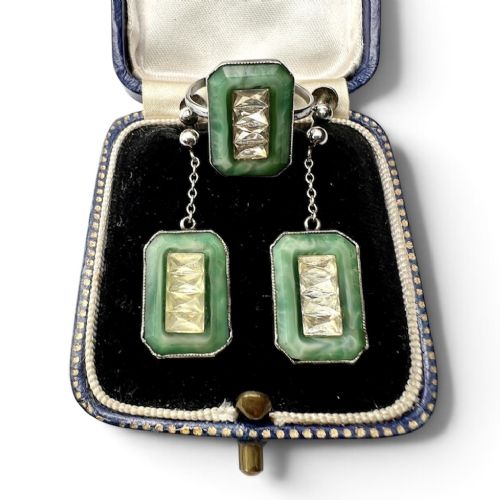
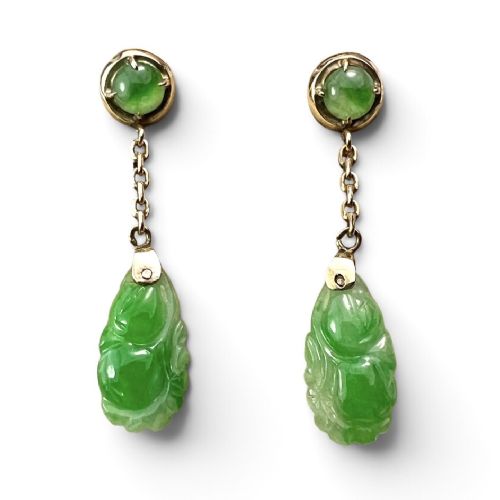
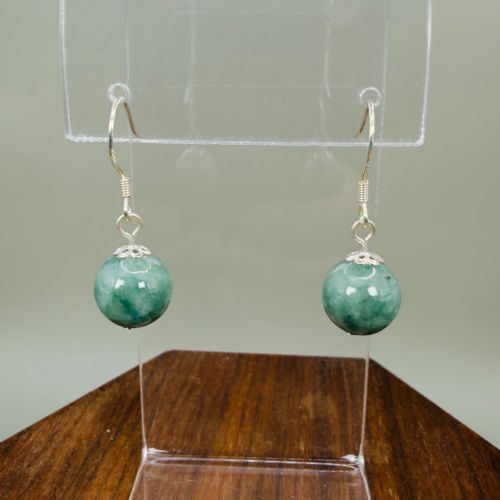
Vintage jadeite earrings are decorative ornaments for the ears, spanning periods from the 1920s to the 1950s. These pieces incorporate carved stones, beads, and gems set into various precious metals.
Art Deco and Mid-Century styles dominate the selection, often featuring geometric layouts or Chinese Export motifs. Buyers frequently encounter screw-back studs, dangling drops, and hook designs.
The materials range from genuine jadeite and jade to supporting elements like diamonds, pearls, and jade glass. Origins include specific periods such as 1920, 1930, 1940, and 1950.
How they were made
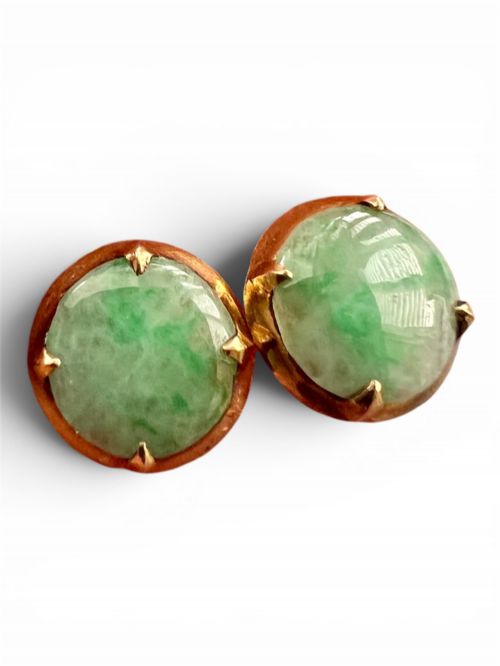
Craftsmen shaped jadeite and jade into beads, cabochons, and carved drops. These green stones were then mounted into settings of platinum, sterling silver, 9ct gold, 14ct gold, 15ct gold, and 18ct gold.
Master jewellers incorporated diamonds and pearls as accent stones, particularly within platinum and high-karat gold frameworks during the 1920s and 1930s. Screw-back mechanisms and hook fastenings were constructed to secure the heavier drop and stud configurations.
Vintage Jadeite Earrings Retail Price Guide 2026
Typical asking prices for vintage jadeite earrings among the pieces listed under this phrase on Sellingantiques today, from the lower quarter to the upper quarter. They describe what is for sale here now, not the wider market.
Some vintage pairs whisper of Chinese blessings while safely securing themselves to unpierced lobes with tiny threaded screws.
What varies in quality
The standard of materials dictates the upper tier of these pieces, separating solid platinum and high-karat gold settings paired with natural diamonds from simpler sterling silver or jade glass alternatives. The clarity and hue of the pale green jadeite also influence the distinction between standard production and finer examples.
Complexity of construction separates simple stud mountings from elaborate Art Deco drop designs and carved Chinese blessing motifs. Precision in the metalwork and the integration of supplementary pearls or diamonds define the finish of the piece.
The Vintage Jadeite Earrings Glossary
- Jadeite
- A dense mineral prized for its vibrant green coloration, frequently carved into drops and beads for vintage jewellery.
- Art Deco
- A design style characterised by sleek geometric lines and symmetry, prominent in pieces from the 1920s and 1930s.
- Cabochon
- A gem polished to a smooth, convex top rather than faceted, often seen in jade stud earrings.
- Screw-back
- A mechanical fastening mechanism used on earrings for non-pierced lobes, common in mid-century designs.
- Chinese Export
- Items manufactured in China specifically for Western markets, often featuring traditional cultural motifs.
Vintage Jadeite Earrings: Frequently Asked Questions
What periods do these earrings come from?
These pieces originate from the 1920s, 1930s, 1940s, and 1950s. Each decade brings distinct stylistic shifts, moving from geometric Art Deco platinum to mid-century gold studs.
Design choices altered across these decades, reflecting changes in metal availability and fastener technology such as screw-backs.
Are all these earrings made of real jadeite?
The selections encompass natural jadeite, general jade, and jade glass alternatives. Precious metals like platinum and various karats of gold accompany the genuine stones.
Examining the setting and the material texture helps differentiate solid gold and platinum mountings from silver or glass substitutes.
How should I wear screw-back earrings?
Screw-back fasteners are adjusted by turning a threaded post until the backing rests comfortably against the earlobe without excessive pressure. This mechanism suits non-pierced ears.
Careful adjustment prevents slipping while ensuring the weight of drop earrings distributes evenly across the lobe.
How do I identify an Art Deco pair?
Art Deco earrings typically feature symmetrical geometric patterns, often combining platinum or white gold with diamonds and carved jade drops. The aesthetic is angular and stylised.
These designs frequently date from the 1920s and 1930s, contrasting with the simpler forms of the 1950s.