



Vintage Jacobean Style Chairs
Vintage jacobean style chairs bring heavy timber and formal upright posture into modern rooms.
Vintage Jacobean Style Chairs
Vintage jacobean style chairs encompass seating built across the nineteenth and early twentieth centuries that mimics seventeenth-century models. Buyers search for vintage jacobean style chairs when they require robust wooden seating with high backs and carved details for dining rooms or halls.
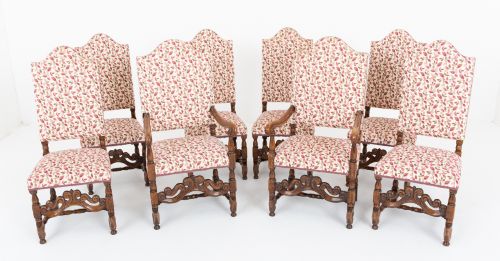
Dining chairs and sets dominate the selections, alongside individual armchairs, carvers, and benches. Most examples date from the 1900s to the 1930s, reflecting a strong Edwardian and interwar revival of seventeenth-century forms.
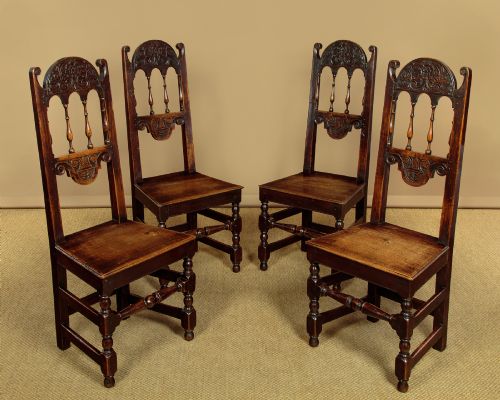
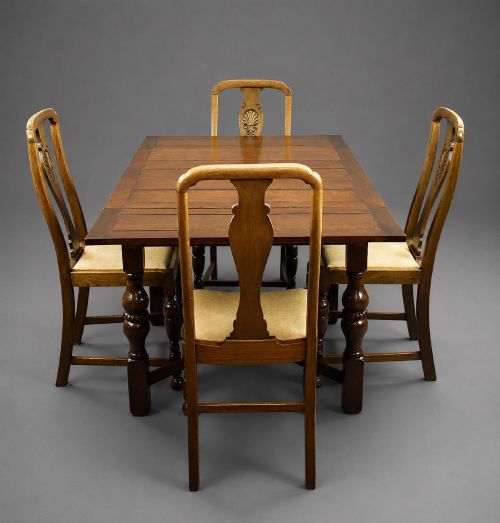
The furniture relies heavily on architectural forms, high rectangular backs, and sturdy upright posts. Side chairs and armchairs frequently appear in matched sets of four, six, or eight pieces intended for formal dining spaces.
Materials and construction methods
Solid oak serves as the primary structural material across nearly all pieces, providing the dense grain and heavy weight characteristic of the revival styles. Craftsmen shaped this timber through turning, paneling, and deep chisel carving.
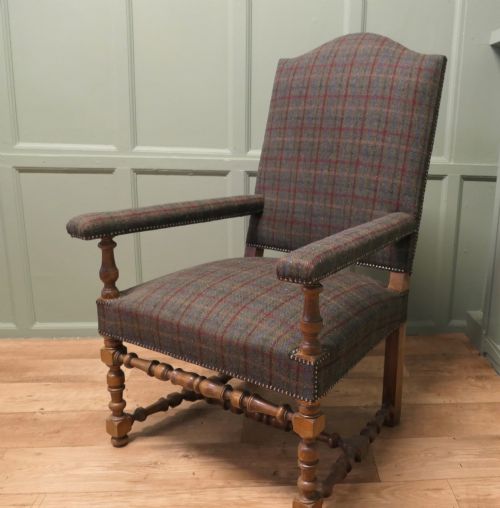
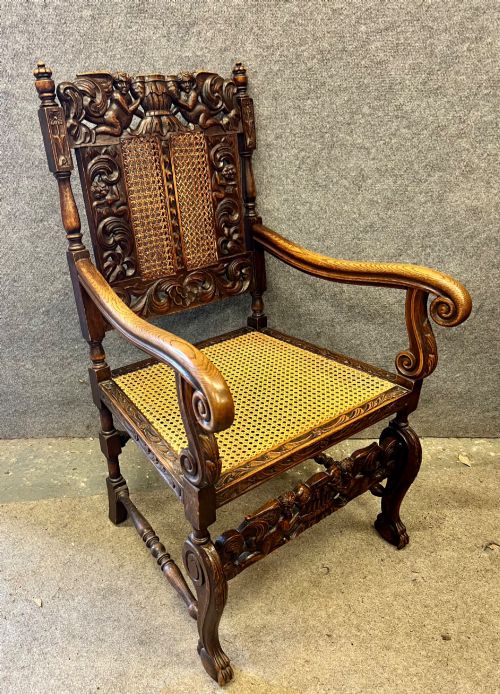
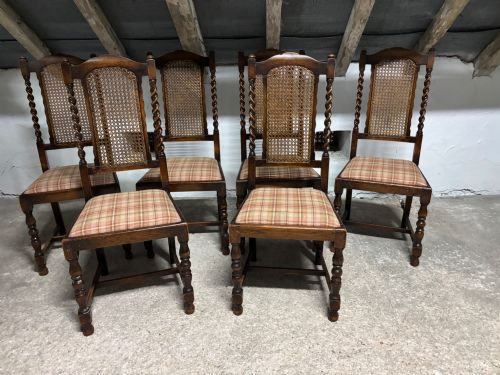
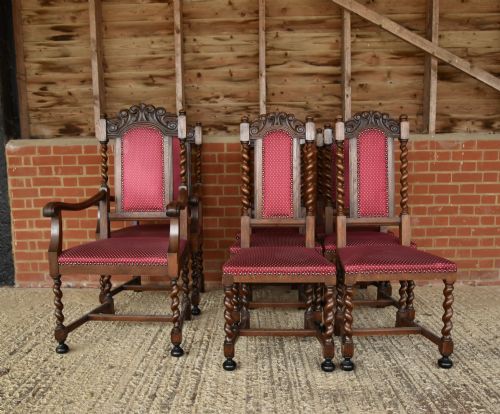
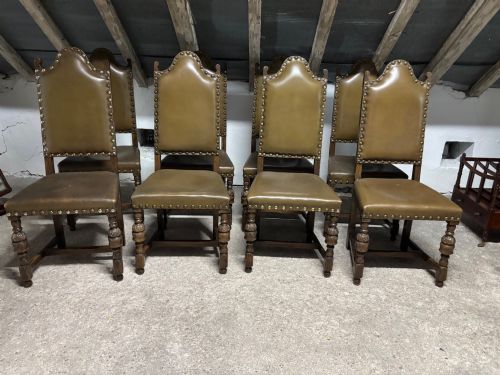
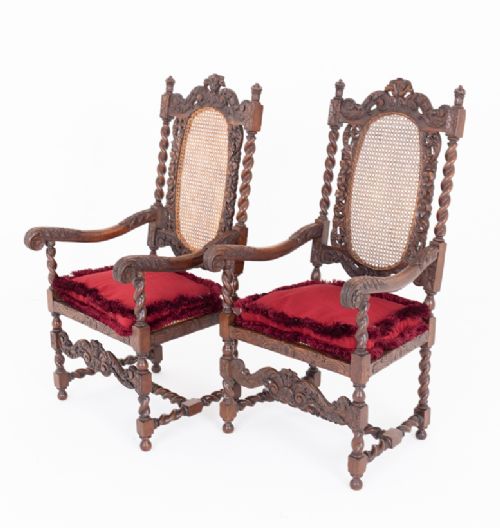
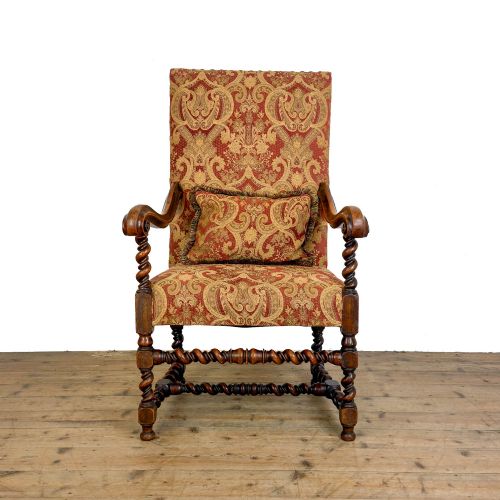
Seating panels and backrests frequently incorporate woven cane, embossed leather, velvet, or plain upholstery fixed with brass studding. Turned woodwork elements, notably barley twist legs and stretchers, appear consistently across the periods represented.
Vintage Jacobean Style Chairs Retail Price Guide 2026
Typical asking prices for vintage jacobean style chairs among the pieces listed under this phrase on Sellingantiques today, from the lower quarter to the upper quarter. They describe what is for sale here now, not the wider market.
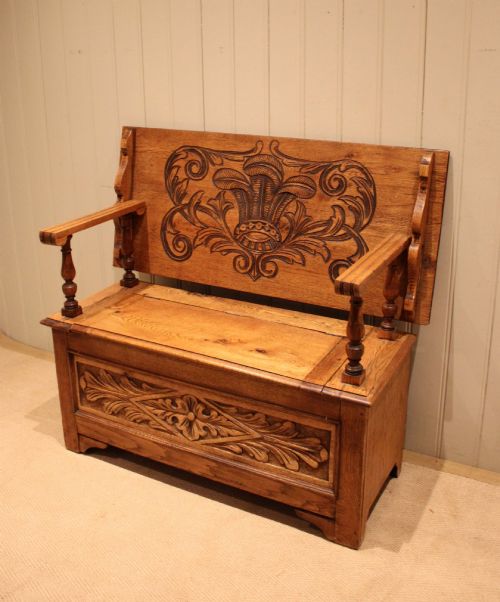
Monks benches double as writing tables when the back folds down, solving small-space living over a century ago.
Assessing quality in revival seating
Quality rests upon the depth and crispness of the hand carving rather than shallow machine stamping. Superior examples retain dense, heavy oak frames with tight joinery that resists movement in the joints.
The grade of secondary materials elevates a piece significantly, such as supple stitched leather or finely woven cane panels. Original surface patination and honest age in the timber distinguish better workshops from ordinary production.
The Vintage Jacobean Style Chairs Glossary
- Carver
- An armchair designed with armrests, traditionally placed at the head of a dining table. These match the smaller side chairs in a larger dining set.
- Barley twist
- A decorative turning technique resembling a twisted rope, carved into the vertical legs or horizontal stretchers of chairs and tables. This detail defines much of the early twentieth-century revival output.
- Caned back
- A panel formed by weaving rattan or cane strips through holes drilled in the wooden frame. It lightens the heavy appearance of solid oak seating.
- Monks bench
- A multifunctional piece of furniture featuring a hinged top that folds down to convert a bench seat into a table. These items combine seating with compartment storage beneath the seat.
- Wainscot chair
- A heavy wooden armchair constructed with paneled backrests and solid wooden seats, originating from sixteenth and seventeenth-century domestic interiors.
Vintage Jacobean Style Chairs: Frequently Asked Questions
What periods do these chairs date from?
The pieces listed span the nineteenth and early twentieth centuries, with a heavy concentration of items built between 1900 and 1930. These later pieces reproduce seventeenth-century aesthetics rather than originating in the 1600s.
Revival interest peaked during the Edwardian era and the interwar decades, producing substantial dining suites and single arm chairs in durable oak.
How do I care for antique oak?
Solid oak requires minimal intervention, benefiting from occasional applications of natural beeswax to nourish the dry timber. Avoid placing heavy wooden furniture near direct heat sources or in fluctuating humidity.
Leather and cane elements need gentle cleaning with appropriate conditioning products to prevent cracking in older animal skins or dried plant fibres.
Are these chairs suitable for daily dining?
These robust oak chairs were built for heavy domestic use and remain structurally sound for regular seating around a dining table. Their upright proportions encourage formal posture during meals.
Sets ranging from four to eight chairs provide uniform seating for dining rooms, while individual carvers function effectively as desk chairs.