

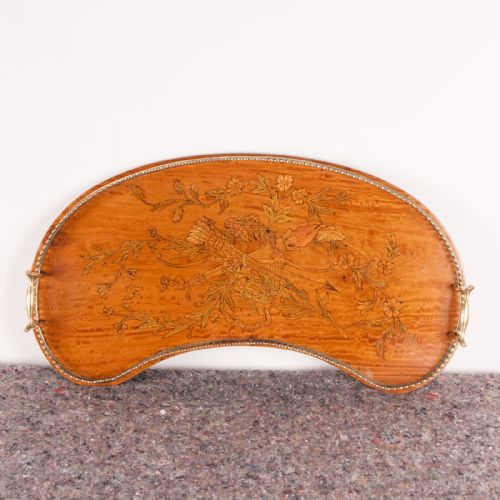
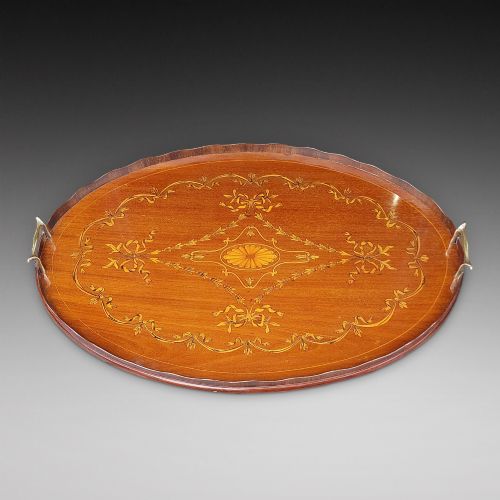
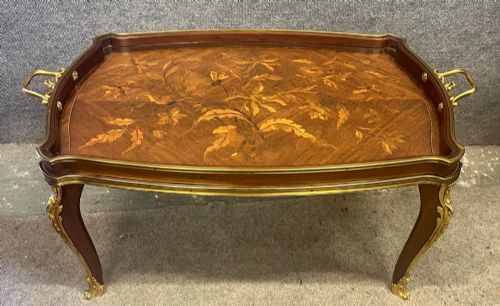
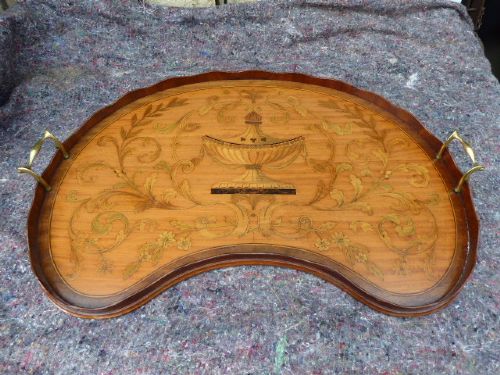

Vintage Inlay Tray
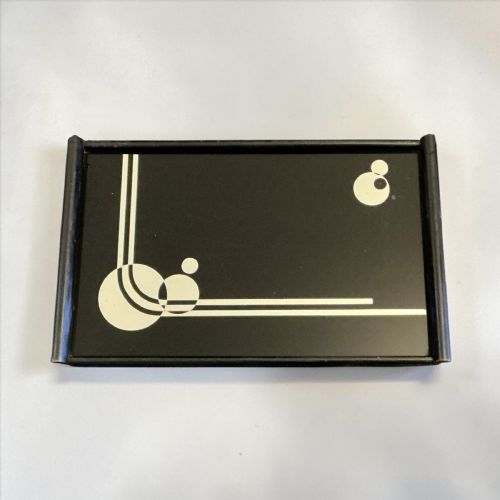
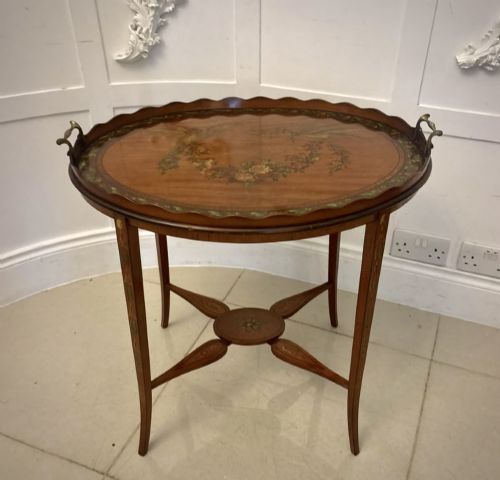
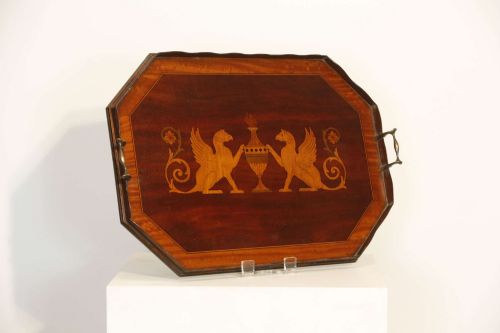
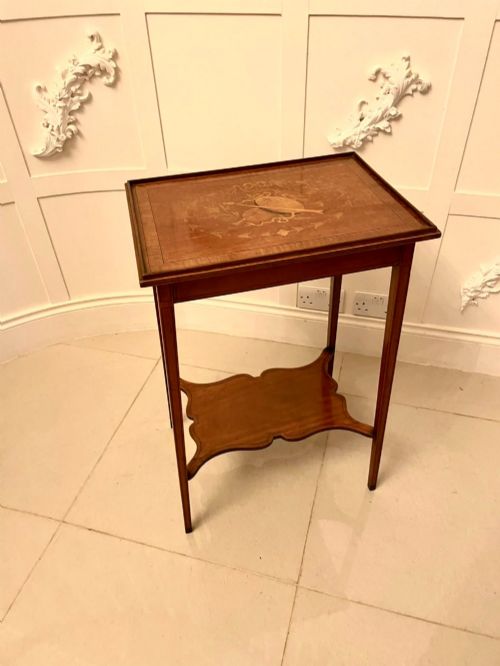
A vintage inlay tray brings contrasting timbers and detailed craftsmanship straight to the table, offering both a functional serving piece and a decorative centrepiece.
Vintage Inlay Tray
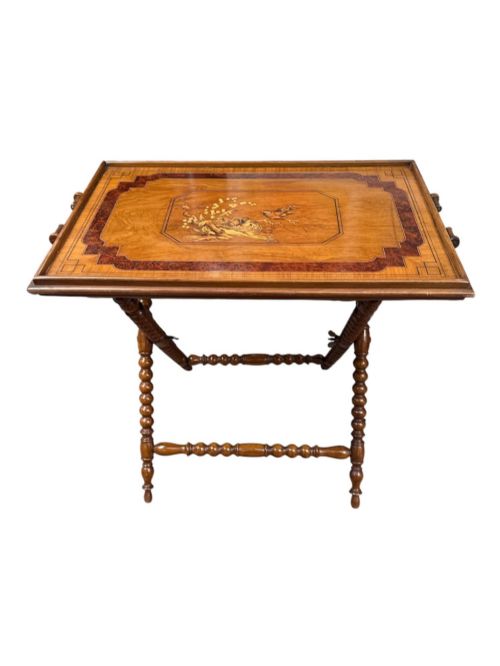
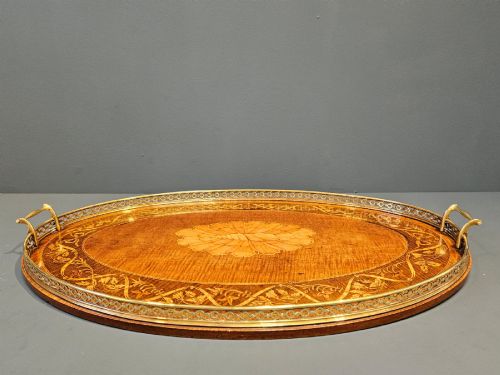
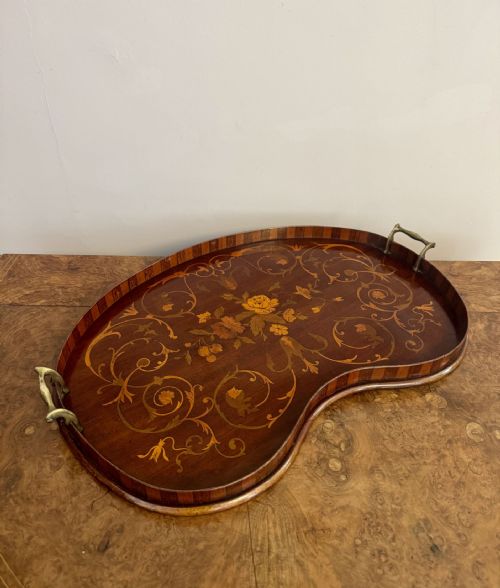
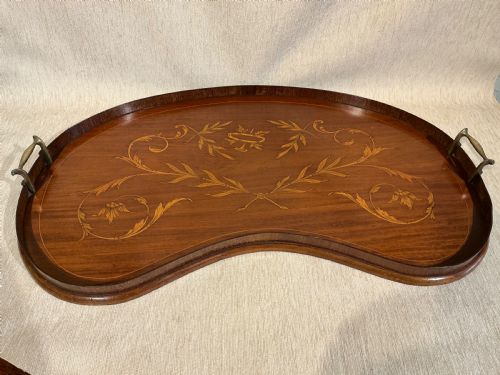
A vintage inlay tray typically appears in forms designed for entertaining and display, ranging from oval and kidney-shaped serving pieces to butler's trays mounted on stands. These items span the Victorian, Edwardian and early twentieth-century periods, alongside styles drawing on Sheraton Revival and Sorrento Ware traditions.
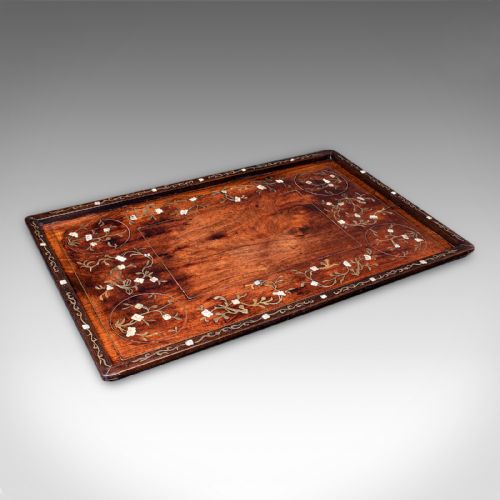
Buyers seeking this phrase encounter serving platters, tea trays and occasional table tops constructed across the nineteenth and twentieth centuries. The selection includes British mahogany and satinwood designs alongside Anglo-Indian, Kashmiri and Middle Eastern metal-inlaid examples.
Materials and technique
Construction relies on solid hardwoods and dependable carcases, predominantly mahogany, rosewood, walnut and satinwood, paired with contrasting inlay veneers. Craftsmen cut intricate marquetry motifs into the timber surfaces, often incorporating boxwood, shell or metal stringing.
Alternative traditions utilise silver plate, copper, brass, onyx and lapis lazuli, combining metalwork with timber or stone bases. Techniques range from European marquetry and Sorrento Ware to Middle Eastern silver-inlaid copper work and Kashmiri production.
Vintage Inlay Tray Retail Price Guide 2026
Typical asking prices for vintage inlay tray among the pieces listed under this phrase on Sellingantiques today, from the lower quarter to the upper quarter. They describe what is for sale here now, not the wider market.
Brazilian butterfly wings occasionally find their way beneath glass panels on exotic twentieth-century trays.
Judging quality
The distinction between standard production and exceptional work rests on the precision of the veneer cutting and the complexity of the marquetry design. Superior pieces display tight joints, crisp botanical or geometric inlay, and well-figured timber with deep natural polish.
Construction methods and material choice further separate the range, where hand-cut details and heavier gallery rims denote superior manufacture. Condition of the delicate surface inlay and integrity of the foundational wood structure determine the standing of each piece.
Edwards and Roberts·Waring and Gillow
The Vintage Inlay Tray Glossary
- Marquetry
- Decorative veneer work forming pictures or patterns by assembling small pieces of wood, shell or other materials. This technique defines the patterned surfaces seen on many Edwardian and nineteenth-century examples.
- Sorrento Ware
- Italian woodwork featuring micro-mosaic marquetry, typically produced in Sorrento near Naples. Pieces often utilise olivewood decorated with intricate geometric or pictorial scenes.
- Butler's Tray
- A portable wooden tray with hinged or fixed sides, frequently paired with a folding stand to create a side table. These functional items served domestic households during the Victorian and Edwardian eras.
- Gallery Tray
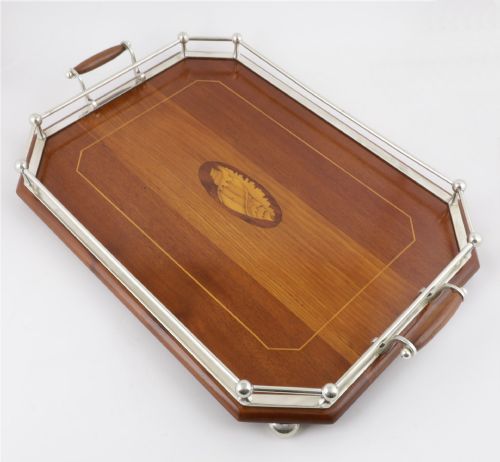
- A serving tray featuring an elevated raised border or rim around the edge to secure items during transit. These rims are frequently pierced or constructed in contrasting metals and woods.
- Satinwood
- A pale, lustrous hardwood sourced from tropical trees, prized for its golden sheen and smooth texture. It serves as a primary ground or contrasting inlay veneer in Sheraton Revival pieces.
Vintage Inlay Tray: Frequently Asked Questions
How were these trays used originally?
These pieces served households for carrying tea, beverages and correspondence between rooms, often brought in by domestic staff.
Many examples functioned alongside folding stands as temporary side tables or were utilised to organise dressing tables and writing desks.
Can I use an antique tray for serving food?
Most antique serving trays function well for modern entertaining, provided the delicate wood or marquetry surfaces receive sensible care.
Consider placing liners or using the pieces primarily for dry service to protect historic finishes and intricate inlay work from moisture.
How do I identify an Edwardian tray?
Edwardian pieces often feature light satinwood grounds, delicate mahogany framing and refined floral marquetry influenced by Sheraton Revival design.
Construction from this period typically exhibits neat dovetailing and thinner gallery edges compared to heavier Victorian counterparts.