

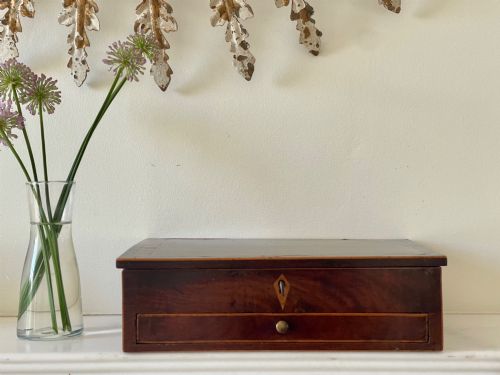
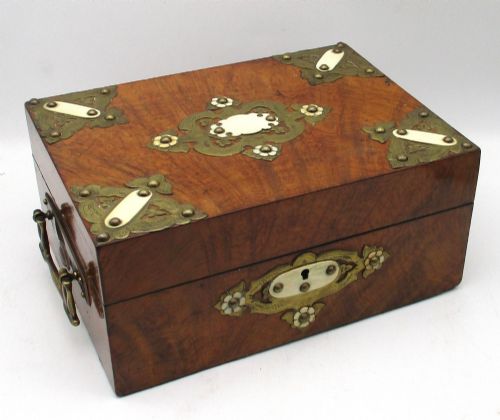
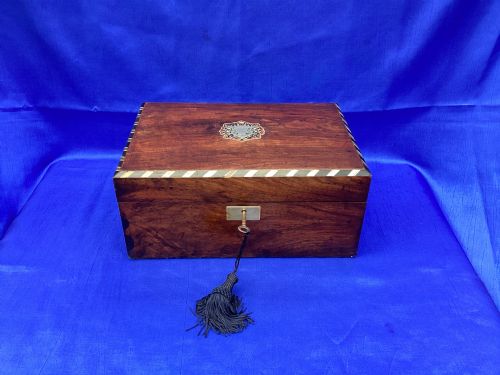

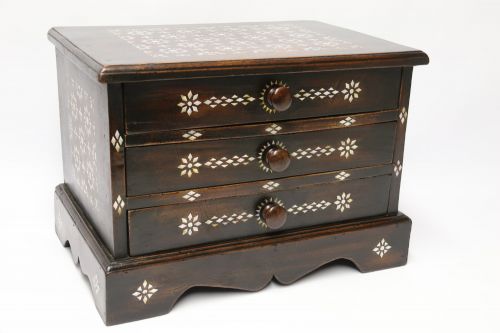




Vintage Inlaid Jewellery Box
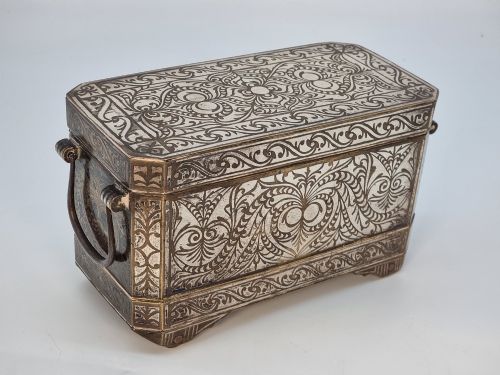
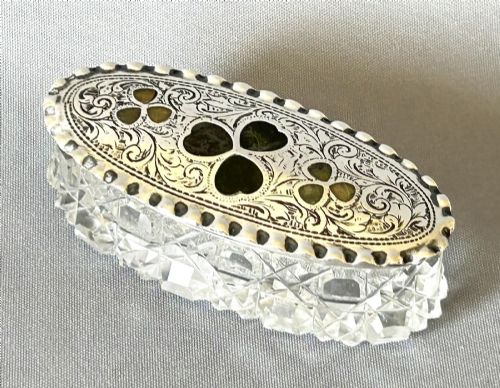
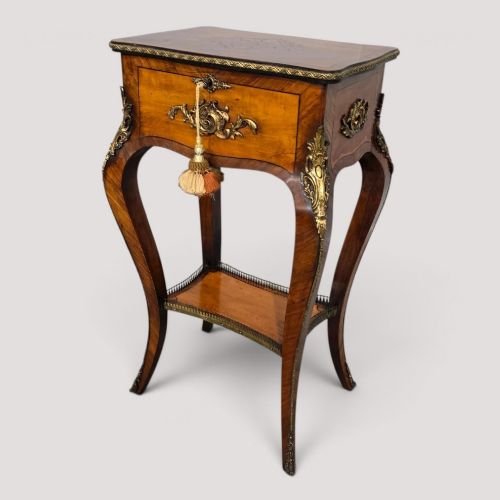
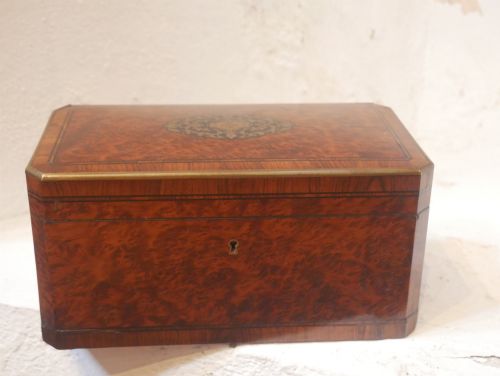
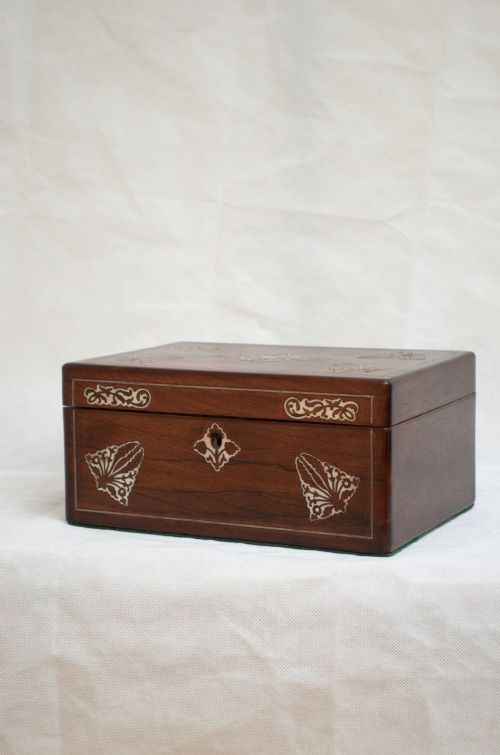
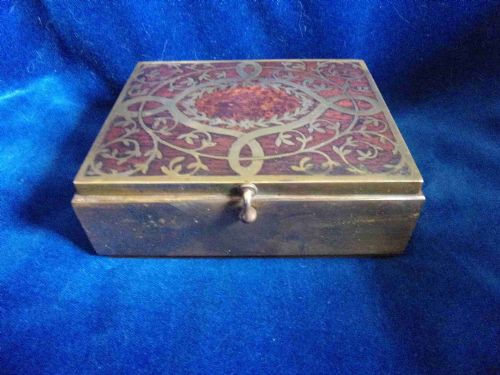
A vintage inlaid jewellery box brings meticulous craftsmanship and rich timber grain to the dressing table.
Vintage Inlaid Jewellery Box
A vintage inlaid jewellery box serves as both a practical keeper of valuables and a decorative centrepiece, drawing on centuries of cabinet-making traditions. These pieces appear frequently in rich timbers such as rosewood, walnut, and mahogany, often enhanced by contrasting decorative veneers.
The selection ranges from compact Victorian table boxes to fitted Edwardian caskets and intricate Anglo-Indian examples. Many contain original compartmentalised trays, silk linings, or specialised sections designed for rings, watches, and keepsakes.
Origins stretch across British, European, and Eastern workshops, incorporating distinct regional decorative techniques. Buyers encounter everything from geometric Tunbridge ware mosaics to sweeping Art Deco sunray patterns and delicate mother-of-pearl embellishments.
Evaluating craftsmanship and condition
The standard of a piece depends heavily on the precision of the inlay work and the selection of timber veneers. Superior examples display seamless flush surfaces where different materials meet, with no visible gaps or lifting edges.
Internal fittings dictate much of the utility and original design integrity. Complete original trays, intact silk or velvet linings, and working locks with matching keys elevate the piece significantly above altered or stripped interiors.
Subtlety of design and depth of figuring in woods like amboyna or flame mahogany separate standard utilitarian boxes from exceptional cabinet work. Well-executed geometric patterns and harmonious colour contrasts indicate skilled workshop production.
Vintage Inlaid Jewellery Box Retail Price Guide 2026
Typical asking prices for vintage inlaid jewellery box among the pieces listed under this phrase on Sellingantiques today, from the lower quarter to the upper quarter. They describe what is for sale here now, not the wider market.
The inventory spans the Regency period through the Victorian era and into the Art Deco style of the twentieth century.
Tahan Paris·Erhard and Sohne
The Vintage Inlaid Jewellery Box Glossary
- Inlay
- The technique of embedding pieces of contrasting material into a solid wood surface to form a decorative pattern. This method creates a smooth, flush exterior.
- Tunbridge Ware
- A distinct type of British woodwork characterised by tiny mosaic tiles assembled from natural coloured woods to depict pictorial scenes or geometric bands. It originates from Tunbridge Wells in Kent.
- Escutcheon
- A protective brass plate surrounding the keyhole of a box. It frequently incorporates decorative engraving.
- Bijouterie table
- A glass-topped display table or cabinet designed specifically for showcasing small valuable objects and jewellery. These pieces often feature satinwood or mahogany frames.
- Marquetry
- The art of applying pieces of veneer to a structure to form decorative patterns and pictures. Unlike inlay into solid wood, marquetry covers the entire surface.
- Quadrant hinge
- A specialised quarter-circle brass hinge that supports the lid of a box when open. It prevents the lid from falling backward.
Vintage Inlaid Jewellery Box: Frequently Asked Questions
How do I date a vintage jewellery box?
Dating relies on examining the timber species, construction joints, interior lining materials, and hardware styles. Regency and early Victorian pieces often feature secret compartments and heavier brasses, while Edwardian examples lean towards lighter satinwood and display formats.
Maker's marks, stamps, and paper labels inside the lid also provide clues to the exact workshop and decade of production.
Were these boxes used exclusively for jewellery?
While many were built specifically for rings, necklaces, and brooches, numerous variations served broader domestic purposes. Interiors often accommodated writing implements, sewing tools, visiting cards, or tea caddy compartments.
Fitted trays frequently lifted out to reveal deeper storage wells for miscellaneous keepsakes and personal documents.
How should I clean an inlaid wooden box?
Maintenance requires gentle dusting with a soft, dry cloth to prevent moisture damage to old timber and delicate veneers. Avoid modern chemical polishes, which can degrade historic shellac finishes and loosen old glues.
Applying microcrystalline wax occasionally helps nourish dry wood and protect the exterior surface without harming the inlay.
What is the difference between inlay and marquetry?
Inlay involves recessing pieces of material directly into a solid wooden substrate to create a design. Marquetry involves assembling an entire picture or pattern from various wood veneers before applying it across the whole surface of the box.
Both techniques require high levels of precision, though marquetry typically yields more painterly, multi-toned pictorial scenes.
Are replacement keys common for these boxes?
Original keys are scarce because they were easily misplaced over generations of use. Many surviving boxes rely on sympathetic replacement keys fitted to the original locks by specialists.
A working lock adds convenience, but the presence of the original mechanism remains the key marker of authenticity.