


Vintage Inlaid Desk Chair
A vintage inlaid desk chair offers proper support at a writing table while bringing classical cabinet work into a working room.
Vintage Inlaid Desk Chair
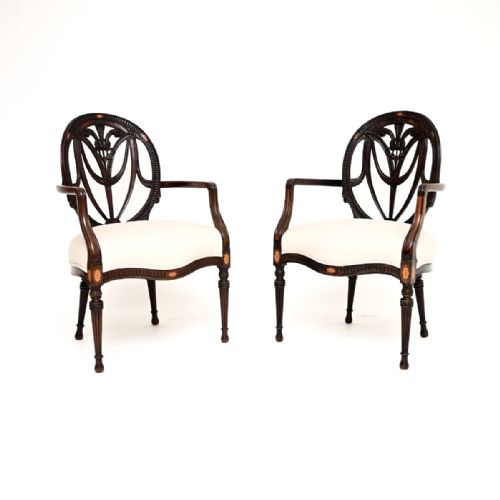
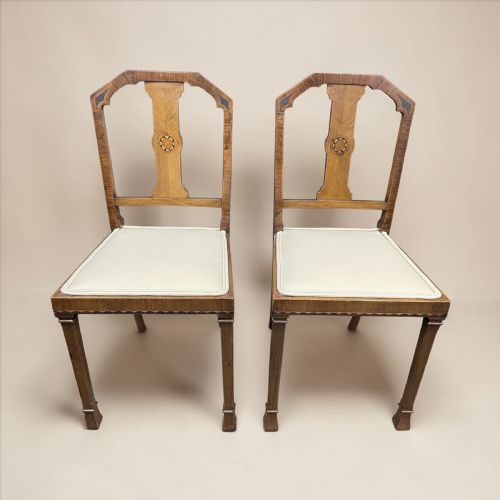
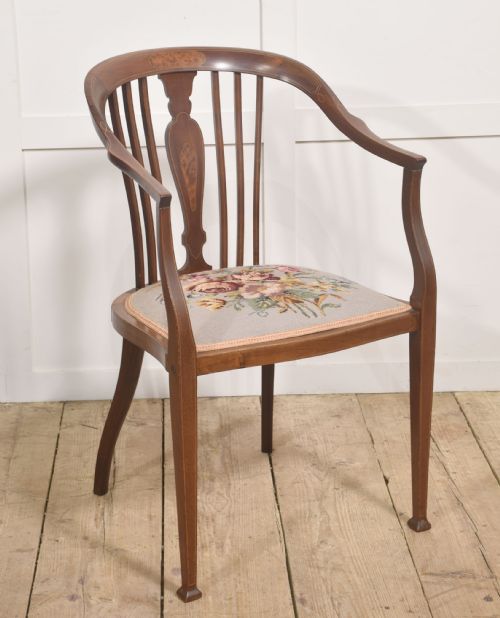
A vintage inlaid desk chair is typically encountered in Edwardian mahogany or satinwood, often dating from around nineteen hundred to the nineteen twenties. These pieces combine practical seating for a library or study with decorative woodwork, frequently taking the form of an elbow chair, tub chair, or swivel chair.
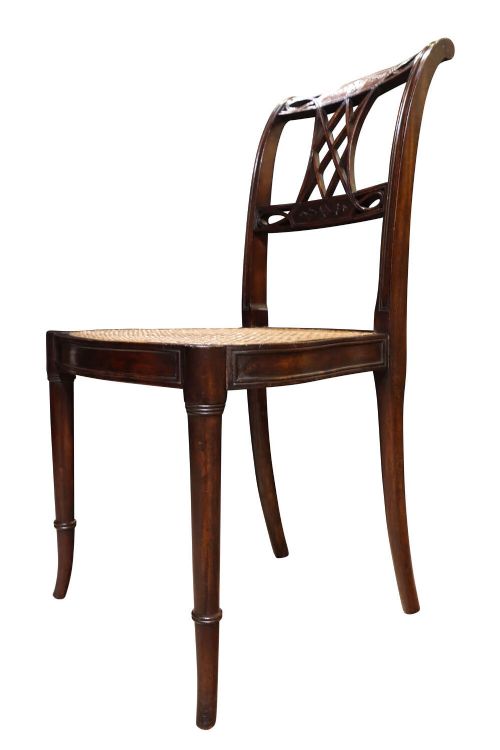
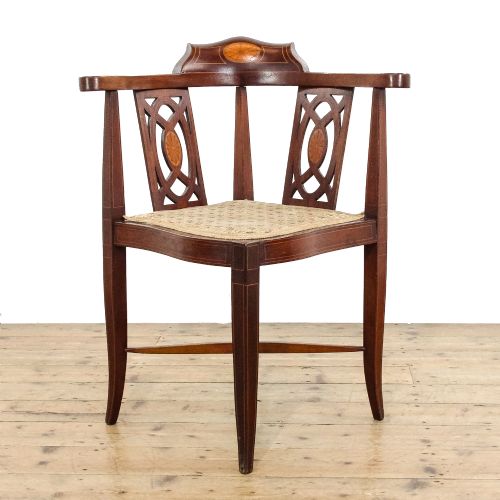
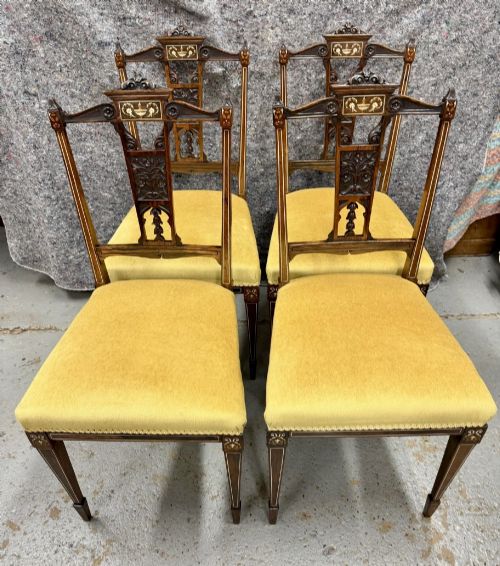
The materials visible across these listings span mahogany, satinwood, walnut, and rosewood, enriched with contrasting wood inlay and boxwood stringing. Makers of the Edwardian period and the late nineteenth century frequently drew upon Sheraton Revival or neoclassical design vocabulary to ornament the backrests and splats.
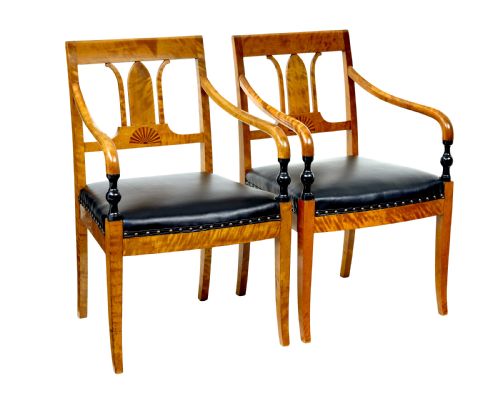
Buyers will find that many examples double as elbow chairs or occasional seats with low profiles designed to fit beneath traditional writing tables. The presence of upholstered pads in leather, fabric, or velvet distinguishes working library seats from lighter salon and bedroom chairs.
Construction and materials
The primary structural timber is most commonly solid mahogany or walnut, shaped into curved arm supports, legs, and steam-bent tub rails. Cabinet makers combined these sturdy woods with contrasting veneers and delicate stringing lines to create crisp geometric or floral motifs on the back panels.
Inlay work relied on contrasting timbers such as boxwood and satinwood, precisely fitted into hand-cut channels within the primary wood surface. Traditional joinery methods secured the frames, while upholstery was built up using webbing, springs, and stuffing covered in leather, velvet, or woven fabric.
One persistent chair was clearly built for multi-tasking, advertised across bedroom, hall, dressing table, and library duties simultaneously.
Assessing quality in inlaid seating
Quality rests upon the crispness of the cabinet work and the precision of the wood inlay. Sharply defined stringing and tight joints indicate skilled workshop production, whereas careless gaps or blurry motifs suggest hurried manufacturing.
The choice of primary timber and the structural integrity of the frame dictate longevity. Chairs retaining their original swivel mechanisms, solid brass mounts, and well-proportioned mahogany frames represent the upper tier of surviving examples.
The Vintage Inlaid Desk Chair Glossary
- Inlay
- A decorative technique where pieces of contrasting wood, shell, or metal are set into depressions flush with the surface of the primary timber. This method defines the ornamented panels seen on Edwardian and Sheraton Revival furniture.
- Stringing
- A narrow line of contrasting wood veneer inlaid into the surface of a chair back or frame to form geometric borders. It is a hallmark of late nineteenth and early twentieth century cabinet work.
- Tub chair
- An armchair featuring a continuous curved back and armrest rail enclosing the sitter in a semicircular form. Many vintage desk chairs utilise this wrap-around shape for comfort.
- Sheraton Revival
- A late nineteenth and early twentieth century design movement that reinterpreted the lighter, neoclassical furniture forms of the eighteenth century. Pieces from this style frequently feature delicate satinwood and mahogany with formal symmetry.
Vintage Inlaid Desk Chair: Frequently Asked Questions
Can I use an antique armchair at a modern desk?
Many vintage inlaid desk chairs were designed for lower nineteenth-century writing tables rather than modern office desks. Checking the seat height and under-desk clearance ensures comfortable daily use.
Adding a thin, custom leather pad can also adjust the seating height without altering the historic frame.
How do I distinguish an Edwardian chair from a Victorian one?
Edwardian chairs generally display lighter mahogany frames with refined satinwood inlay and Sheraton Revival motifs. Victorian equivalents tend to be heavier in proportion, often featuring darker walnut, scroll-carved backs, or simpler structural lines.
Examining the underlying timber and the style of the decorative inlay clarifies the period of manufacture.
Are these chairs comfortable for long hours of work?
Most antique desk chairs were built with sprung or padded seats covered in leather, fabric, or velvet to provide adequate support. While they lack the pneumatic height adjustments of modern office furniture, their ergonomic curved backrests suit reading and writing.
Upholstered elbow chairs and tub variants offer particular comfort for extended periods at a desk.
How should I maintain the wood and inlay?
Keeping wooden frames away from direct heat sources and sudden humidity changes prevents the dry wood from shrinking and loosening the delicate inlay. Regular dusting with a soft, dry cloth preserves the polished finish.
Occasional application of appropriate wax feeding helps maintain the moisture balance of antique mahogany and satinwood.