
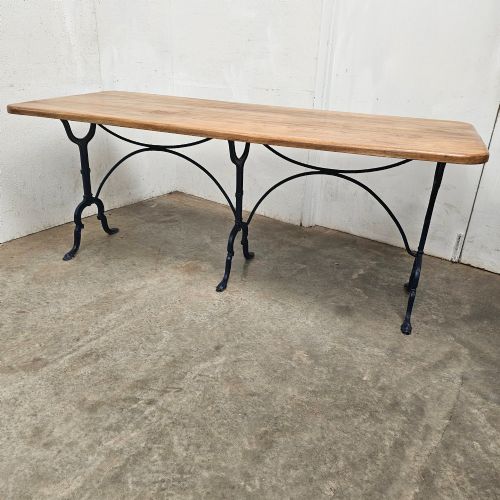
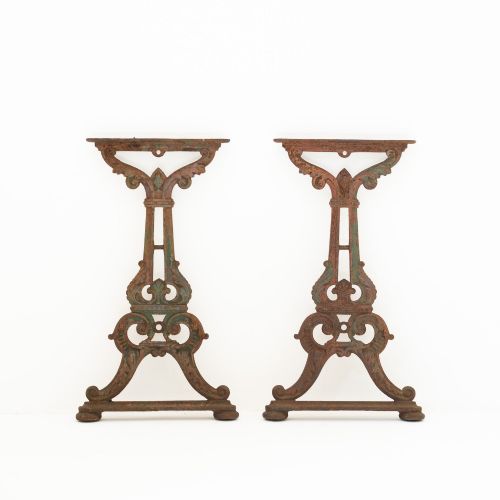


Vintage Industrial Dining Table
These vintage industrial dining table pieces bring together rugged metal frames and solid timber tops to anchor a room with genuine working-life character.
Vintage Industrial Dining Table
When you search for a vintage industrial dining table, you are looking at robust surfaces built for hard use in workshops, pubs, and French bistros. These pieces bridge utilitarian origins and domestic dining, offering substantial presence and practical everyday utility.
The versions you are most likely to meet on this page span the nineteenth and early twentieth centuries, featuring heavy metal bases paired with timber tops in elm, oak, and pine. Many originate from French workshops or British institutions, showing patinated surfaces that reflect decades of active service.
Materials and construction methods
Construction relies on structural combinations of iron, cast iron, and steel paired with sturdy timber tops made from oak, elm, pine, and mahogany. Metal components provide rigid support through cast frames, trestle supports, and folding mechanisms.
Wooden elements utilise thick boards secured to metal bases using bolts, brackets, and traditional joinery. Surfaces show the marks of heavy timber preparation, exposed fixings, and enduring metalwork designed to withstand continuous daily handling.
Several folding metalwork tables on this page were built to be packed away swiftly when French café owners needed to clear the pavement at night.
Assessing quality and character
Quality in a vintage industrial dining table rests on the integrity of the marriage between base and top. Examples where timber and metal share a proportional balance and authentic working history stand well above pieces with mismatched or overly sanitized components.
The depth of surface wear and the quality of the foundry work on the iron or steel elements define the visual standing of each piece. Original painted finishes, uncompromised timber grain, and robust structural engineering separate superior utilitarian survivals from ordinary items.
The Vintage Industrial Dining Table Glossary
- Cast iron
- An iron-carbon alloy poured into moulds to create rigid, decorative, and structural furniture bases. It provides the heavy counterweight essential for stable industrial tables.
- Trestle table
- A board resting on two or more supports, which allows for unobstructed legroom along the length of the surface. This format often underpins utilitarian work tables and long dining boards.
- Refectory table
- A long dining table historically used in communal dining halls and later adopted for domestic farmhouse use. They typically feature heavy timber tops and stretcher-joined legs.
- Bistro table
- A small café or tavern table designed for commercial hospitality spaces. These frequently pair a heavy metal pedestal or tripod base with a compact wooden top.
Vintage Industrial Dining Table: Frequently Asked Questions
How do I clean a wooden top?
Wipe the surface gently with a slightly damp cloth to remove everyday dust and debris. Avoid harsh chemical cleaners that strip the historic finish.
Apply natural beeswax occasionally to nourish dry timber and maintain a soft protective sheen without altering the accumulated patina.
Are these tables suitable for everyday family dining?
These tables were originally built for rigorous commercial or workshop environments, making them exceptionally sturdy for daily use. Their robust iron and hardwood construction handles active households with ease.
Many examples feature durable finishes that shrug off minor knocks and spills, though using mats helps protect ancient timber surfaces from excessive moisture.
How can I tell the period of the base?
Nineteenth-century examples often feature intricate Victorian foundry casting marks and heavier ornamental ironwork. Later pieces from the nineteen-twenties tend toward simpler steel framework and utilitarian bolted construction.
Examining the fasteners, surface textures, and manufacturing techniques reveals whether a base belongs to the Victorian era or the early twentieth century.
Can I mix these tables with modern chairs?
Combining an industrial table with contemporary seating creates a striking contrast between raw utility and modern design. The neutral tones of weathered timber and dark metal pair easily with various seating styles.
Ensure you check the clearance beneath the apron or stretcher rails to confirm your chairs slide comfortably underneath the top.