

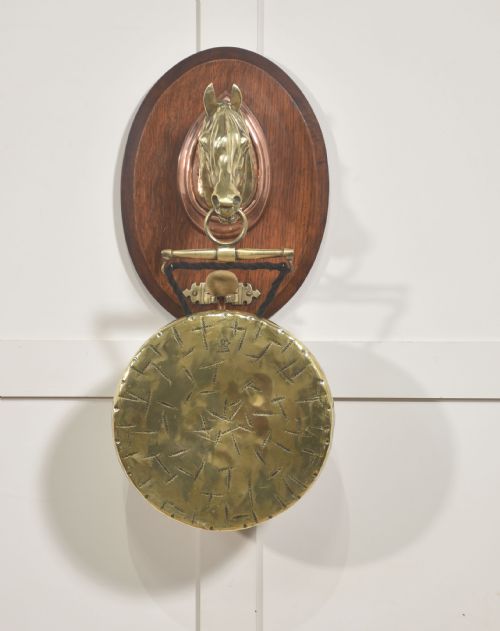


Vintage House Gong
A vintage house gong brings the resonant chime of Victorian dining hours back into the hallway with rich timber and brass.
Vintage House Gong
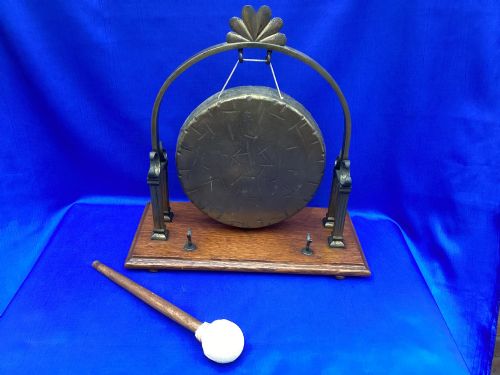
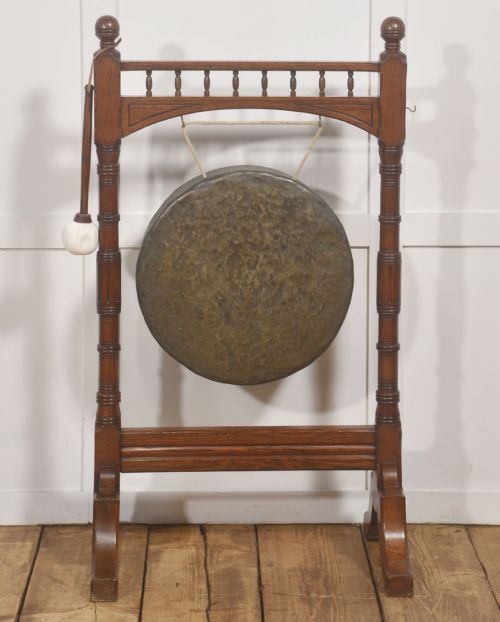
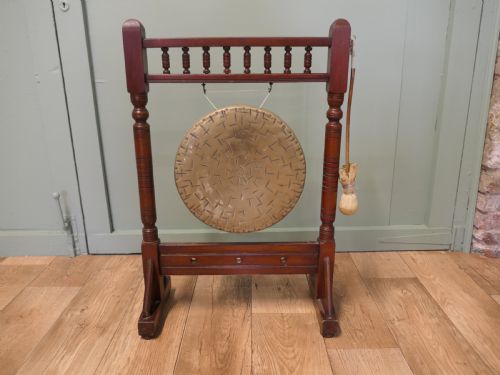
A vintage house gong is a striking instrument traditionally used to summon household members to dinner, housed in a sturdy wooden frame designed for floor standing or wall hanging. These pieces predominantly date from the Victorian era and around 1900, reflecting the formal domestic rituals of the period.
The selection ranges from wall-hanging models featuring decorative mounts like horse heads to large floor-standing arrangements. Each piece combines functional metalwork with substantial timber framing suited to period interiors.
Materials and construction
The frames are constructed primarily from solid oak and occasionally mahogany or wrought iron, utilising traditional mortise and tenon joinery to support the swinging weight. Carved decoration appears across many pieces, particularly within the Arts and Crafts and Gothic Revival traditions.
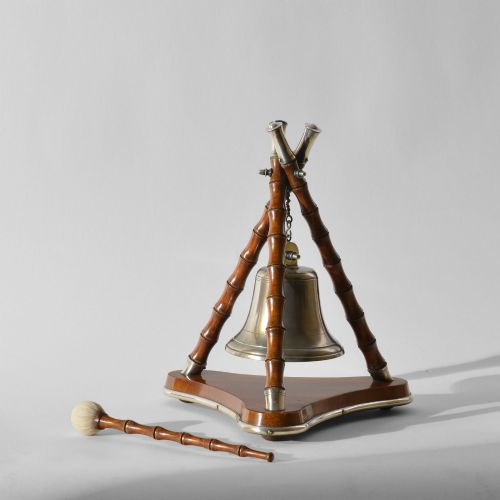
The sounding plates and gongs are formed from polished brass or copper, suspended within the frame by means of leather straps, sturdy cord, or rope. Strikers typically match the metal hardware, often finished with a leather or wooden head to produce the resonant tone.
Vintage House Gong Retail Price Guide 2026
Typical asking prices for vintage house gong among the pieces listed under this phrase on Sellingantiques today, from the lower quarter to the upper quarter. They describe what is for sale here now, not the wider market.
One wall-hanging gong comes complete with a brass horse head mount, ready to announce dinner to a household of riders.
Distinctions in quality
Quality in a vintage house gong rests on the depth of the timber carving and the architectural ambition of the frame. Monumental floor-standing examples and pieces displaying refined Arts and Crafts or Gothic Revival detailing stand well apart from plain, utilitarian framing.
The resonance of the metal plate and the integrity of the suspension materials dictate the success of the piece. Well-preserved brass plates paired with original leather or cord hangers retain their acoustic clarity, whereas altered or mismatched components diminish the integrity of the object.
The Vintage House Gong Glossary
- Dinner Gong
- A resonant metal disc suspended in a frame, struck with a mallet to announce meals in large Victorian households. These objects formed a standard fixture in country house hallways.
- Arts and Crafts
- A design movement valuing handcraftsmanship, simple forms, and honest construction using local timbers like oak. Pieces in this style emphasise structural clarity and natural materials.
- Gothic Revival
- An architectural and decorative style drawing inspiration from medieval forms, featuring pointed arches, heavy carving, and dark woods. This aesthetic dominates the heavier gongs on this page.
- Wrought Iron
- Iron heated and hammered into shape by a blacksmith, used here for robust framing. It provides an industrial contrast to the polished brass and warm oak.
Vintage House Gong: Frequently Asked Questions
How do you hang a wall gong safely?
A wall-hanging house gong requires secure fixings into structural wall studs or heavy-duty masonry plugs to bear the considerable weight of the oak frame and brass plate. Ensure the hanging bracket engages firmly with the rear timber mounting.
Because these pieces swing slightly when struck, leave a small clearance between the frame and the wall surface to prevent marking the plaster.
What is the best way to clean the brass plate?
Cleaning the brass gong plate requires a soft cloth and a mild metal polish applied sparingly to preserve the underlying metal. Avoid abrasive pads that can scratch the polished surface.
Leave the aged patina on the oak frame untouched, feeding the timber occasionally with a traditional beeswax polish to nourish the grain.
How can you tell a Victorian gong apart from later pieces?
Victorian and nineteenth-century gongs typically display hand-cut joinery, deeper hand-carved ornamentation, and denser native oak timbers. The patination on the brass and the wear on the suspension cord offer clues to age.
Porter and country house gongs from around 1900 often maintain these traditional construction methods before industrial manufacturing took over fully.
What rooms suit a floor standing gong today?
Floor-standing gongs sit comfortably in entrance halls, large landings, or spacious living rooms where their architectural presence can be appreciated. Their substantial oak frames command space much like a tall clock.
They function as striking decorative furniture while retaining their ability to produce a deep, resonant tone when struck.