






Vintage Hot Water Kettle
These vintage hot water kettle pieces are practical vessels for pouring tea, offering period charm for any interior.
Vintage Hot Water Kettle
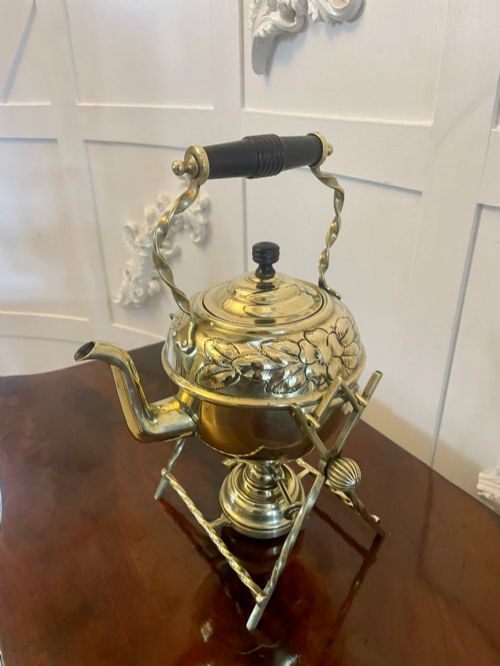
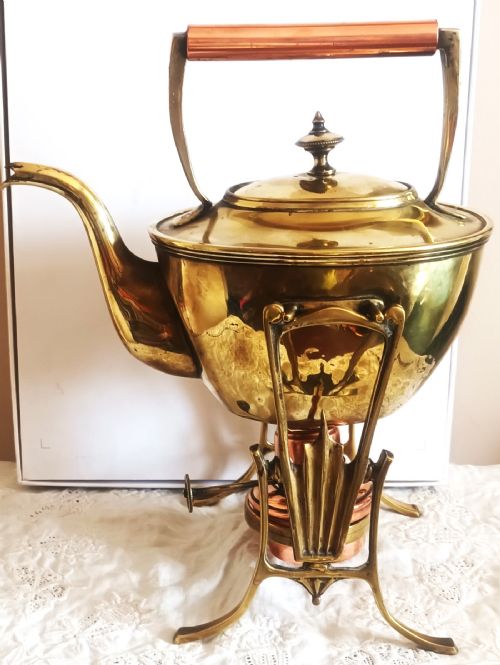
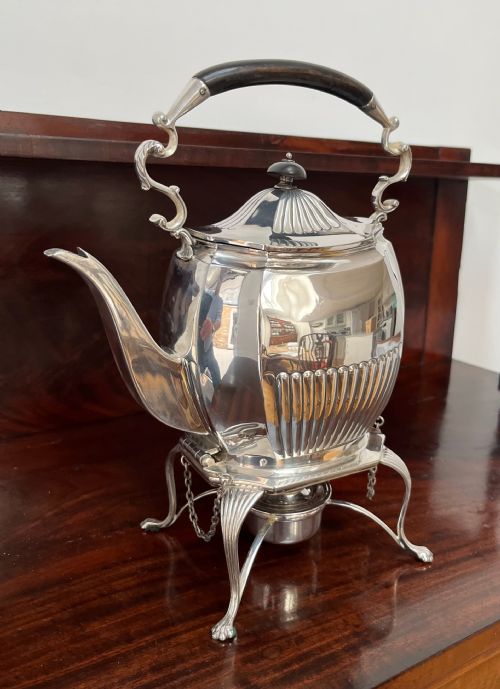
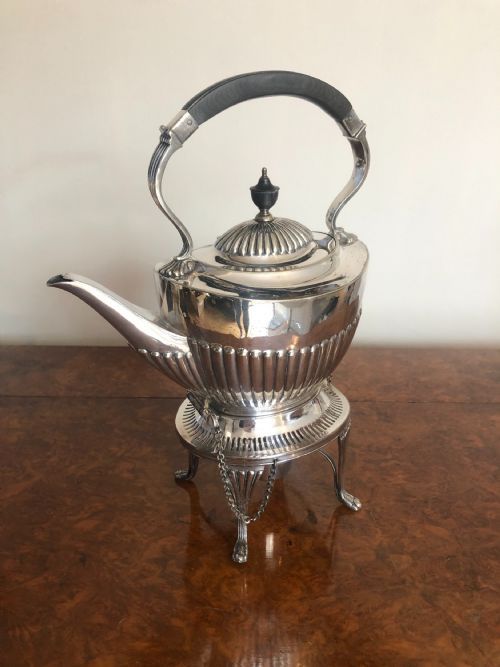
When you search for vintage hot water kettle, you encounter a range of heated vessels designed for tea service across the nineteenth and early twentieth centuries. These encompass spirit kettles mounted on stands with burners alongside larger tea urns and samovars.
The Victorian period supplies most examples on this page, often executed in copper, brass, or silver plate. Edwardian iterations also appear frequently, alongside occasional Regency and Arts and Crafts pieces.
Forms include spirit kettles complete with their original burners and stands, as well as substantial samovars featuring taps for dispensing hot water. Wood handles, including ebonised wood and ebony, frequently accent the metal bodies.
How they were made
Maker workshops utilised sheet metals such as copper, brass, and nickel silver, shaping them into durable bodies for daily service. Many pieces combine copper and brass elements within a single design.
Handlers incorporated insulating materials like wood, ebonised wood, and ebony on handles and knobs to protect fingers from heat. Stands and burners were engineered to support the weight of filled vessels safely over an open flame.
Vintage Hot Water Kettle Retail Price Guide 2026
Typical asking prices for vintage hot water kettle among the pieces listed under this phrase on Sellingantiques today, from the lower quarter to the upper quarter. They describe what is for sale here now, not the wider market.
What varies in quality
Quality rests in the heaviness of the metal gauge and the integrity of the construction across the body and stand. Substantial copper and brass walls endure repeated heating better than lighter alternatives.
The presence of matching original components, such as burners, stands, and wooden handles, elevates a piece. Workshop marks, such as those from known makers, indicate superior manufacturing standards.
William Soutter And Sons·Walker And Hall Sheffield
The Vintage Hot Water Kettle Glossary
- Spirit kettle
- A kettle mounted on a metal stand above a small spirit burner used to keep water hot during tea service. These often date from the Victorian and Edwardian eras.
- Samovar
- A large heated metal urn traditionally used to boil and heat water for tea. Examples feature a central metal tube for heating and a tap near the base.
- Silver plate
- A thin layer of silver applied to a base metal such as copper or nickel silver. This technique offered the appearance of solid silver at a lower cost.
- Ebonised wood
- Timber treated to resemble ebony, a dense dark wood. It appears frequently on the handles and insulators of period kettles.
Vintage Hot Water Kettle: Frequently Asked Questions
How do I use a spirit kettle?
Fill the vessel with hot water and place it securely on its metal stand above the filled burner. Light the burner to maintain the water temperature during a gathering.
Ensure the stand rests on a heat-resistant surface and keep the burner filled with appropriate fuel for safe operation.
What is a samovar used for?
A samovar heats and holds large quantities of water for tea service, dispensing liquid through a small tap near the base. These vessels served central roles in large household gatherings.
Today, they function primarily as decorative objects or focal points in dining rooms and living spaces.
How do I clean copper kettles?
Wash the metal surfaces gently with warm soapy water and a soft cloth to remove dust and surface dirt. Avoid harsh abrasives that can strip the natural aged finish.
Dry the metal thoroughly after washing to prevent water spots and preserve the historic appearance of the brass and copper.
Are these kettles safe for boiling water?
Many vintage kettles retain their internal linings and structural integrity, but older silver plate and solder may contain lead or other materials. Assess the interior condition carefully before attempting to heat water for consumption.
Most collectors display these pieces as decorative antiques rather than utilising them for daily beverage preparation.