

Vintage Hoop Back Chair
A vintage hoop back chair offers sturdy domestic seating shaped by generations of English country makers.
Vintage Hoop Back Chair
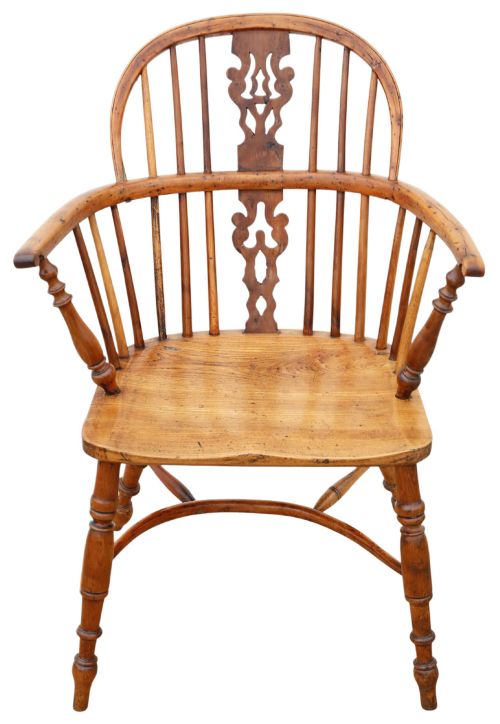
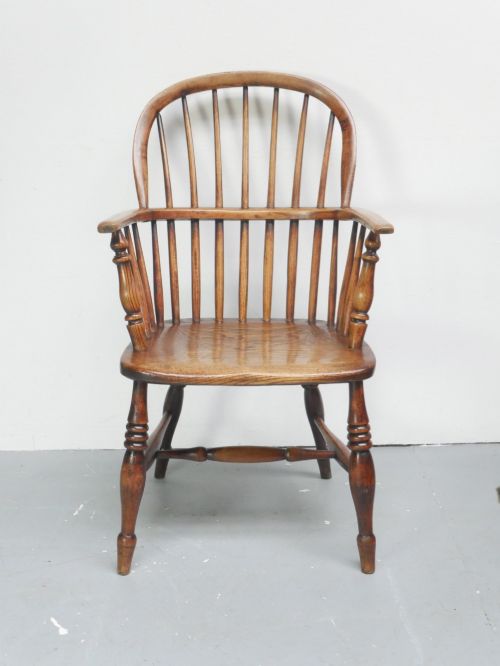
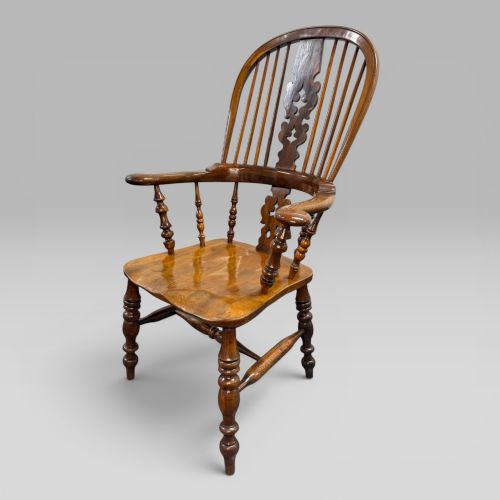
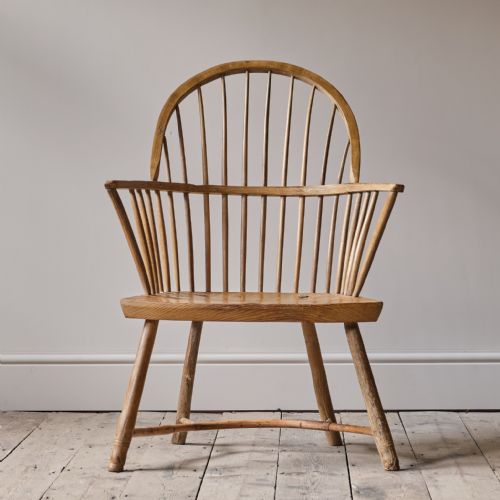
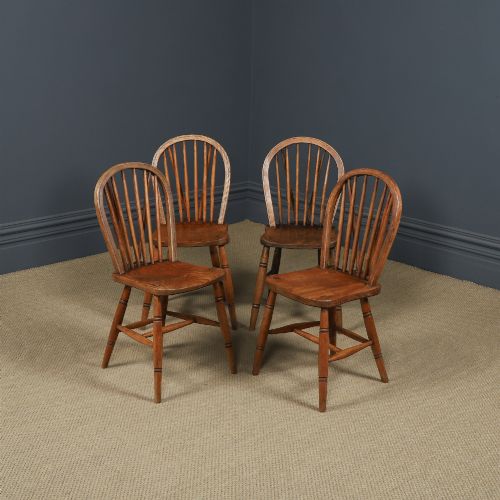
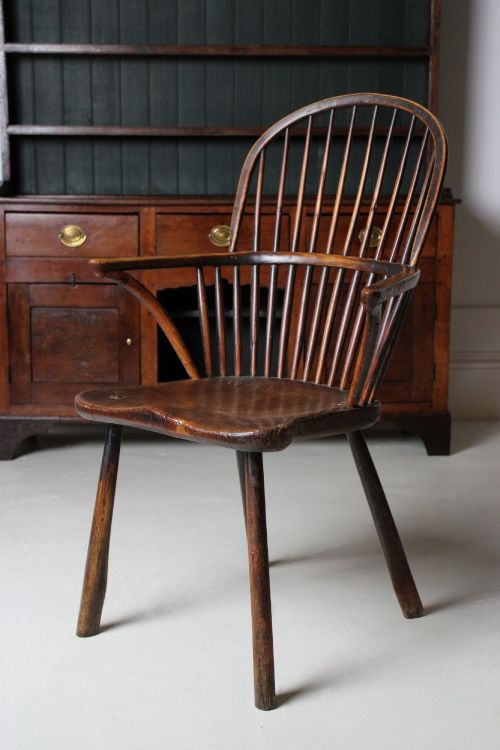
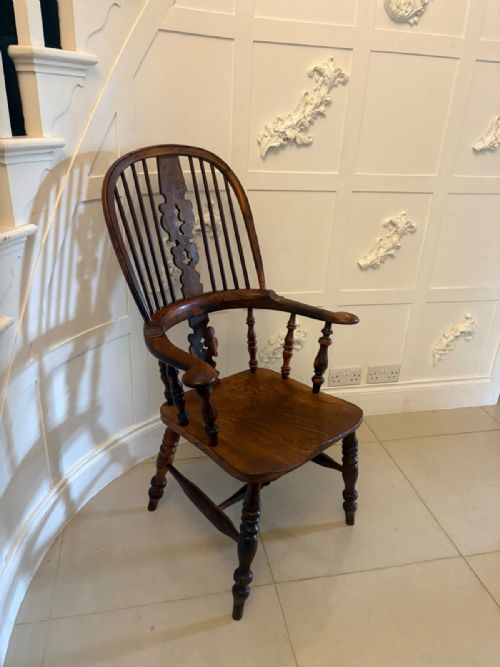
When you search for a vintage hoop back chair, you encounter wooden seating rooted in the vernacular traditions of the eighteenth, nineteenth, and early twentieth centuries. These pieces function primarily as sturdy armchairs, carvers, and kitchen dining seats designed for everyday domestic use.
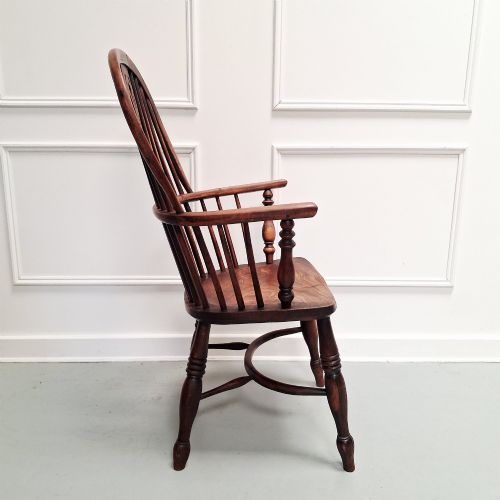
The version you are most likely to meet on this page combines a bentwood or steam-bent hoop frame with a solid timber seat and vertical spindles. Makers constructed these chairs across diverse English regions, utilising local hardwoods to build robust frames that survived centuries of heavy use.
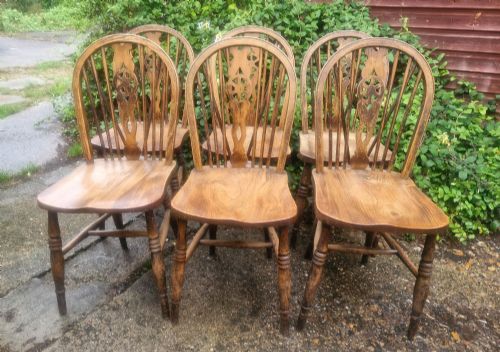
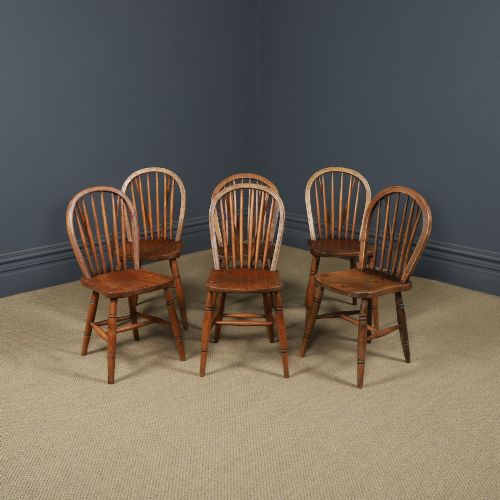
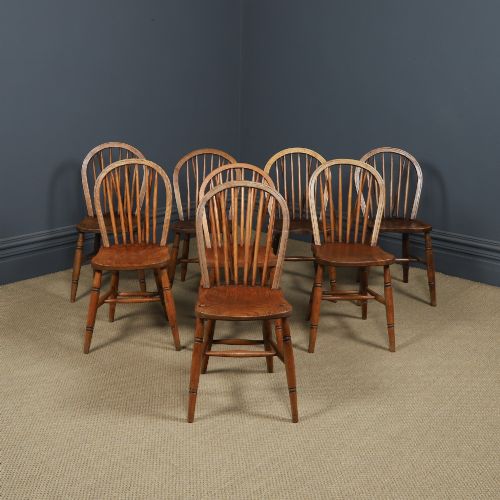
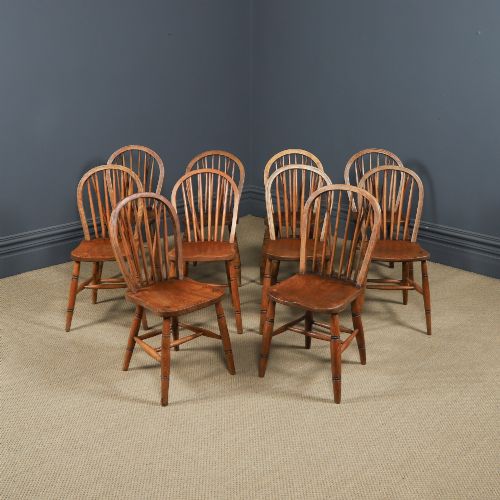
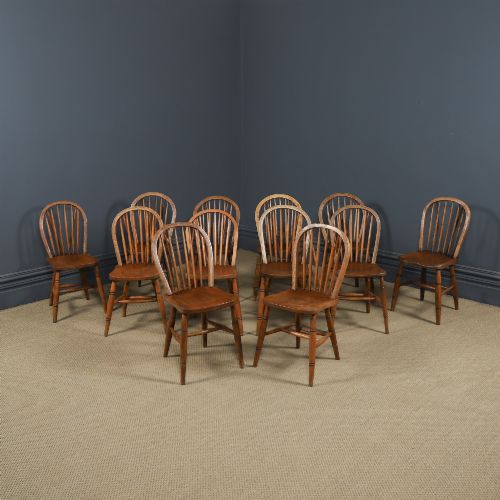
Makers often paired elm seats with ash, beech, or yew frameworks to balance structural rigidity with comfortable weight distribution. Single armchairs, pairs, and large sets appear across the listings, reflecting both individual artisan output and regional workshop production.
Materials and construction
Makers built these chairs using a combination of steam-bent wood and traditional joinery, selecting timber for specific structural demands. Elm provided a stable, non-splitting surface for the saddled seat, while ash, beech, and yew formed the flexible bentwood hoops and slender vertical spindles.
Craftsmen shaped the continuous hoop back by steaming lengths of timber until pliable, then bending them into shape around wooden forms. They secured the spindles, legs, and arm bow directly into drilled sockets within the thick wooden seat using wedge joints.
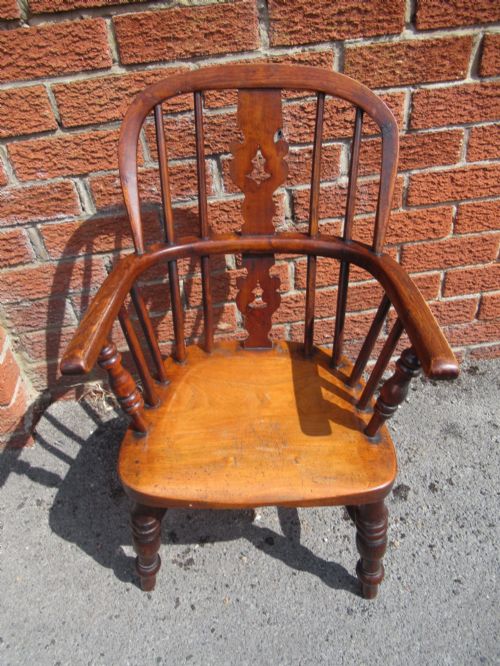
Several chairs include child-sized proportions, built with exact miniature hoops and tiny spindles for young nineteenth-century occupants.
Judging quality and character
Quality in these chairs rests upon the selection of timber and the harmony of proportion between the bentwood hoop and the solid seat. Pieces utilising figured yew wood or well-grained elm command attention through their rich natural patina and careful grain alignment.
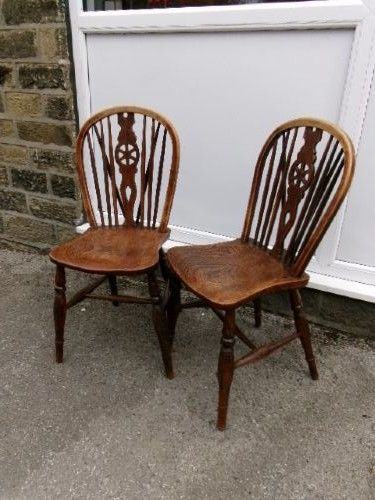
The integrity of the joined components determines structural longevity, distinguishing robust examples from those weakened by poor past repairs. Refined arm shapes, pleasing comb or wheel back splats, and well-turned legs elevate certain provincial chairs above standard utilitarian seating.
J Spencer
The Vintage Hoop Back Chair Glossary
- Hoop back
- A continuous curved wooden bow that forms the upper backrest and arm supports of the chair.
- Windsor chair
- A wooden chair featuring a solid carved seat into which the legs and back sticks are directly tenoned.
- Spindle
- A slender turned or tapered vertical wooden rod fitted between the seat and the back rail.
- Carver
- An armchair designed with elbow rests, often used at the head of a dining table.
- Vernacular
- Objects made by regional artisans following local traditions rather than strict academic design patterns.
Vintage Hoop Back Chair: Frequently Asked Questions
What woods were used for these chairs?
Makers predominantly utilised English hardwoods, pairing thick elm for the seats with ash, beech, or yew for the bentwood hoops and legs.
Contrasting timber tones often indicate different regional workshops and periods of construction.
Are these chairs suitable for daily dining?
Many examples on this page originated as kitchen or farmhouse dining chairs, making them practical for everyday seating around a table.
Their solid construction ensures they withstand regular domestic use while offering sturdy lower back support.
How can I tell the age of a chair?
Age is determined by the construction methods, tool marks on the underside of the seat, and the natural wear accumulated across the timber.
Earlier eighteenth-century variants display distinct vernacular turning, whereas nineteenth and twentieth-century versions often incorporate steam-bent components.