

Vintage Home Office
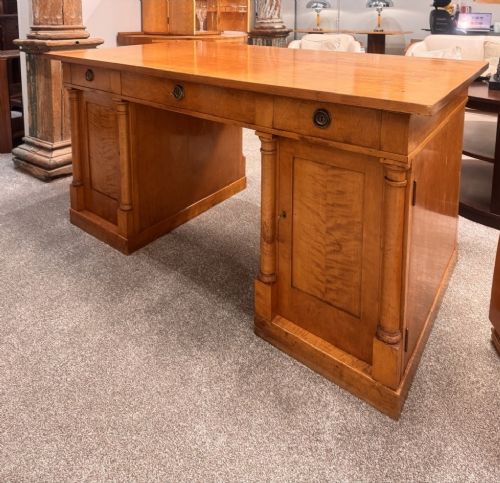
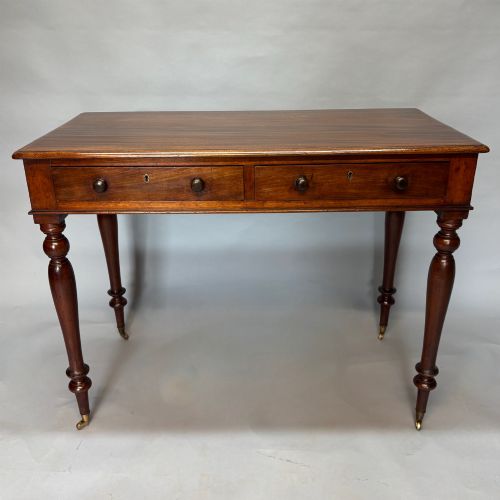
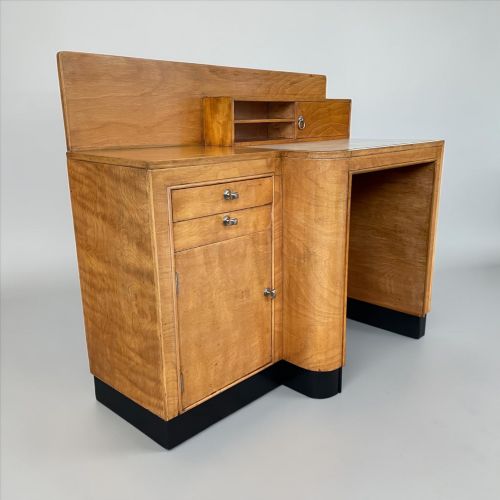
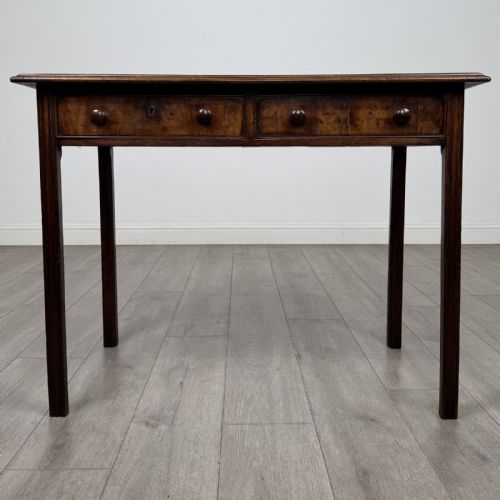
A vintage home office relies on solid timber desks and writing tables built to anchor a room with steady purpose.
Vintage Home Office
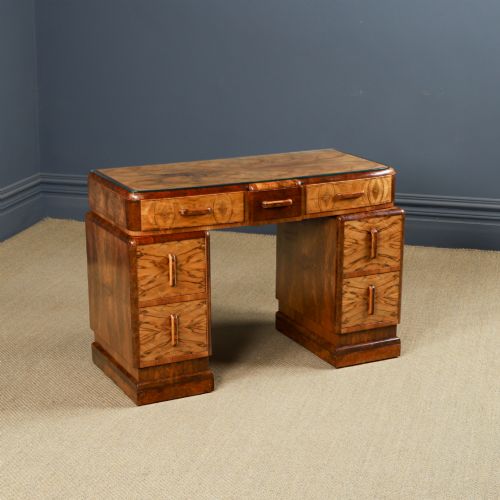
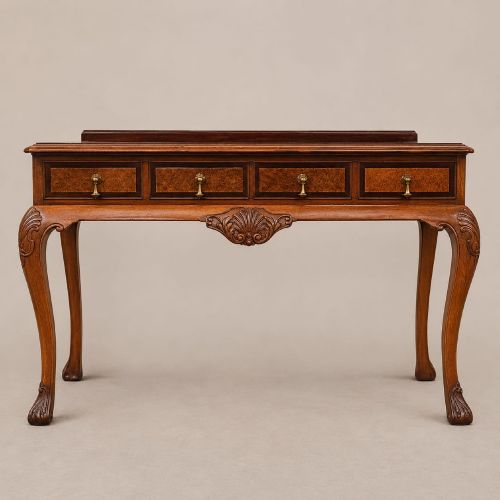
A vintage home office centres on writing furniture designed for daily correspondence and administration across multiple decades. Buyers searching for a vintage home office encounter pedestal desks, writing tables, and bureau bookcases spanning the Victorian, Edwardian, and Art Deco eras.
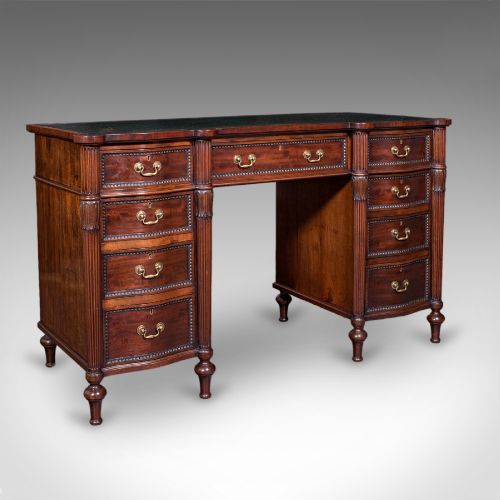
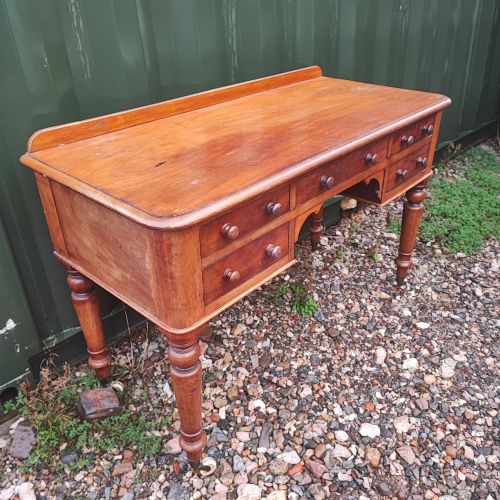
The material selection leans heavily towards robust hardwoods intended for heavy use rather than delicate display. Oak, mahogany, and walnut dominate the offerings, frequently accompanied by inset leather writing surfaces and brass hardware.
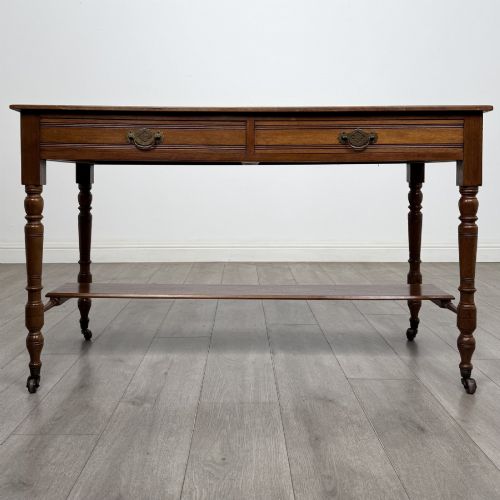
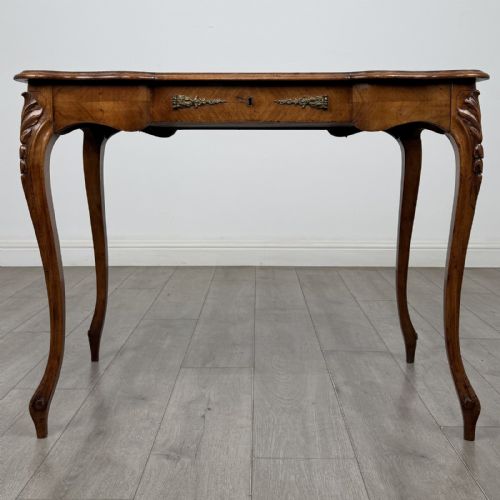
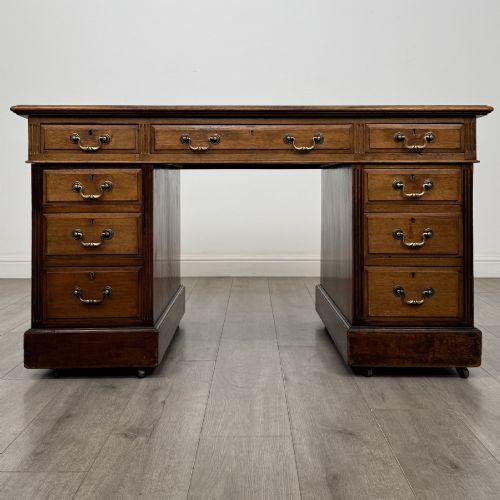
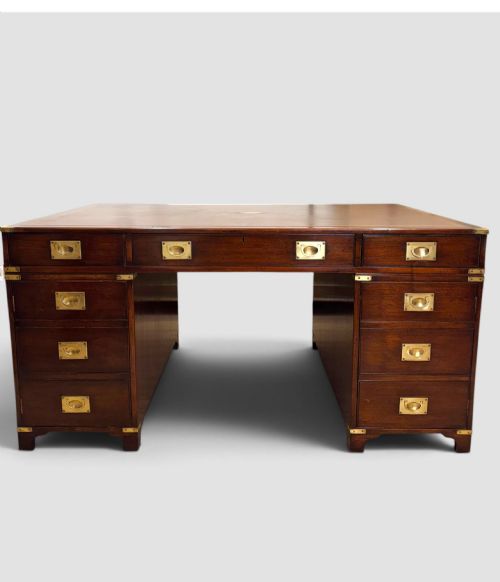
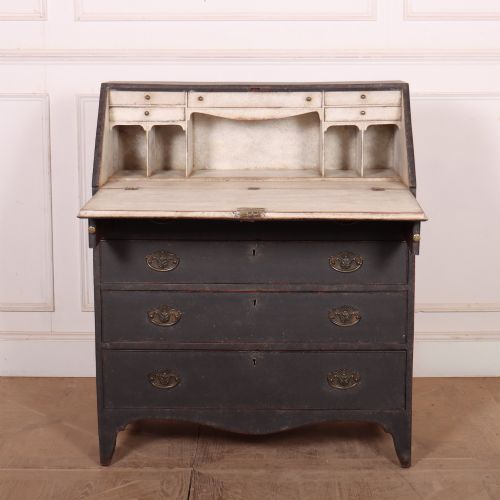
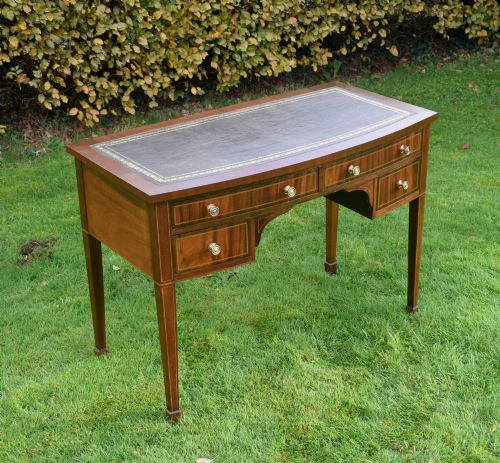
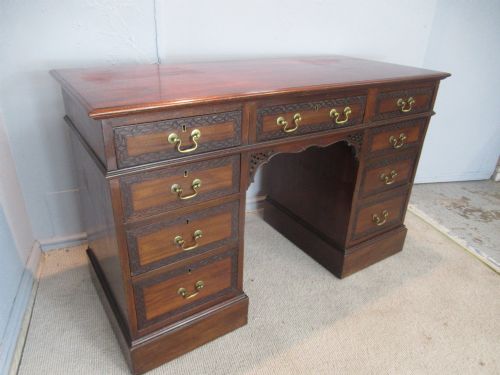
Pedestal desks and twin pedestal forms provide substantial surface area alongside banks of drawers, while writing tables offer a lighter silhouette suitable for domestic settings. Bureau bookcases integrate shelving above a fold-down writing flap to combine storage with workspace.
Materials and Technique
Cabinet makers built these pieces using solid timbers like oak, walnut, and mahogany, often applying burr veneers to writing surfaces and drawer fronts to highlight natural grain patterns. Brass swan neck handles, drop pulls, and escutcheons secure the drawer assemblies.
Writing surfaces frequently incorporate tooled leather inserts, dyed in traditional green or dark tones, providing a durable plane for daily paperwork. Construction methods rely on traditional joinery to ensure structural stability across large pedestal units and bureau bookcases.
Vintage Home Office Retail Price Guide 2026
Typical asking prices for vintage home office among the pieces listed under this phrase on Sellingantiques today, from the lower quarter to the upper quarter. They describe what is for sale here now, not the wider market.
Assessing Quality
Quality reveals itself in the selection of timber veneers and the precision of the underlying joinery, where finely figured burr walnut or substantial solid oak separates standard production from finer workshop output. Maker attribution adds distinction, as pieces bearing stamps from firms like Hobbs and Co. or Wylie and Lochhead demonstrate superior cabinet-making standards.
E Gomme·Hobbs & Co.·Wylie & Lochhead Glasgow·F.H. Marshall & Co Glasgow
The Vintage Home Office Glossary
- Pedestal desk
- A heavy freestanding desk comprising two independent pedestals of drawers supporting a single top. This form provides substantial storage and a commanding presence in a room.
- Bureau bookcase
- A combination furniture piece featuring lower storage drawers beneath a sloping writing flap, surmounted by glazed or panelled upper shelving. It serves both workspace and library functions.
- Partners desk
- A large double-sided desk designed so two people can sit opposite one another. Drawers and cupboards are duplicated on both sides to accommodate multiple users.
- Burr walnut
- A specialised timber veneer taken from the gnarled growth of a walnut tree. It produces intricate, swirling grain patterns highly prized for decorative furniture surfaces.
- Kneehole desk
- A compact desk featuring a central recess for the legs flanked by narrow banks of drawers. This configuration offers a neat footprint for smaller rooms.
Vintage Home Office: Frequently Asked Questions
What is a partners desk?
A partners desk is a large double-sided writing table designed for two people to work face to face. These pieces feature matching drawers and cupboards on both sides.
They offer generous surface area and work best positioned in the centre of a spacious room rather than pushed against a wall.
How do I care for a leather desk top?
To maintain a vintage tooled leather insert, clean it gently with a slightly damp cloth and apply a neutral leather cream periodically. Avoid harsh chemical cleaners that can strip the colour and gold tooling.
Keep the surface away from direct sunlight and excessive heat to prevent the leather from drying out and cracking.
How do I date an antique desk?
Dating relies on examining construction methods, timber choices, and hardware styles across the piece. Victorian examples often utilise mahogany with heavy pedestal bases, while Edwardian pieces frequently feature lighter mahogany writing tables and Arts and Crafts influences.
Maker stamps and patent locks can also provide precise manufacturing dates.