

Vintage Highboy
A vintage highboy is a towering stacked chest providing immense vertical storage, built in walnut or mahogany for grand domestic interiors.
Vintage Highboy
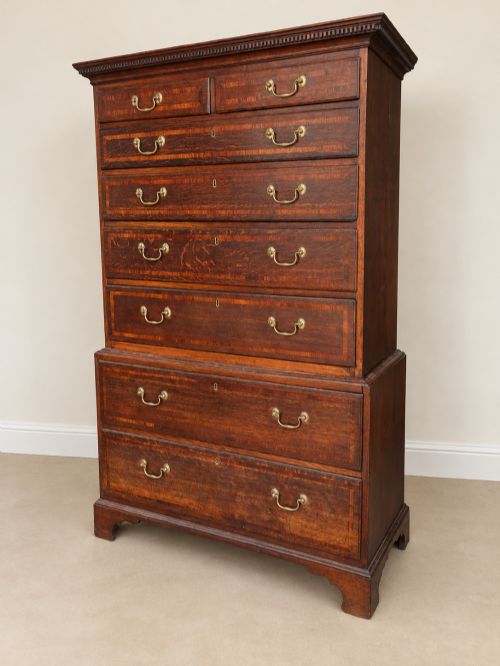
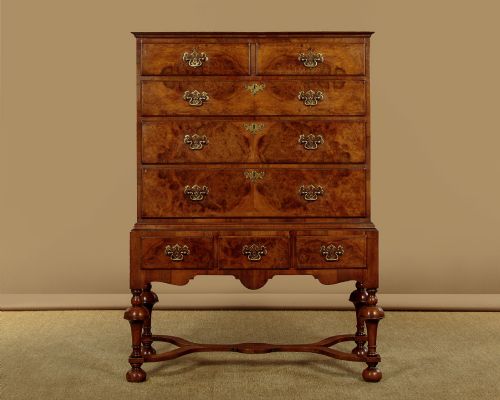
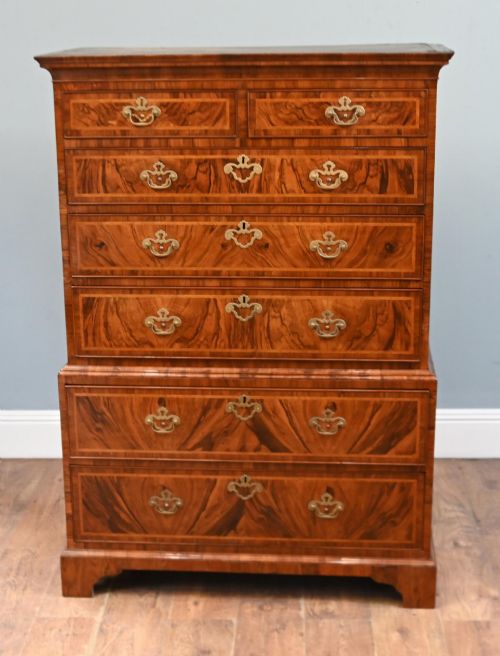
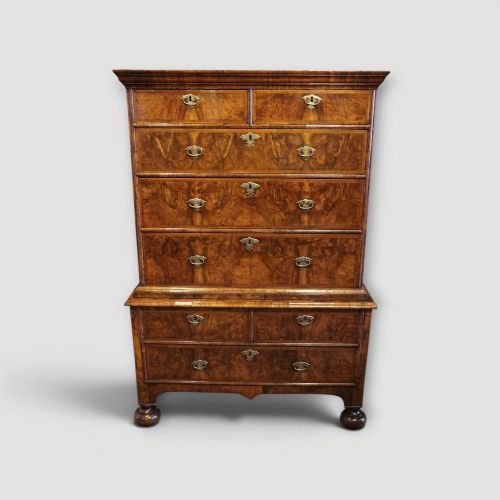
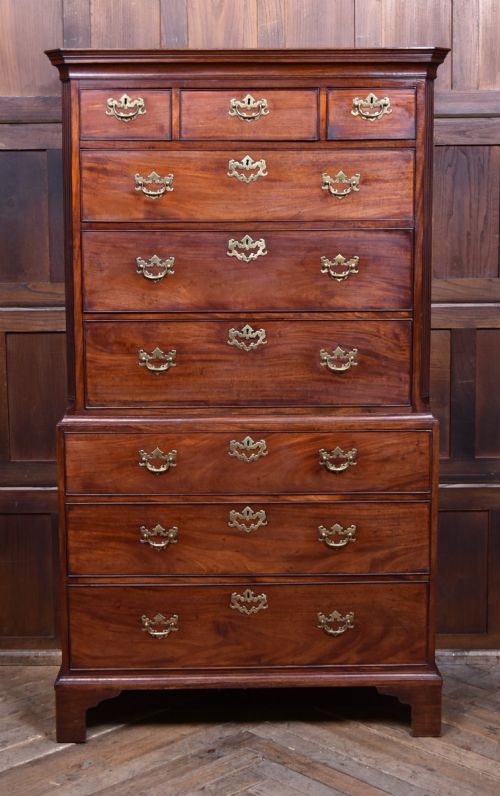
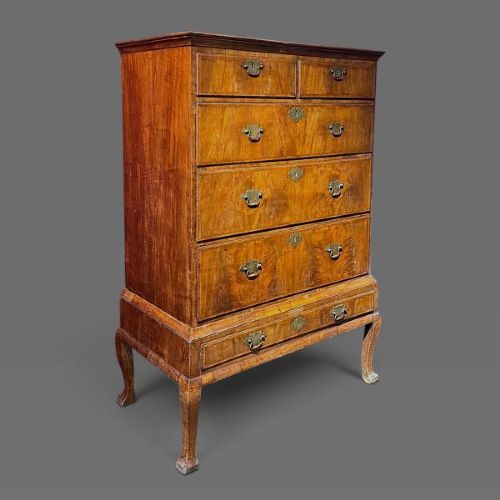
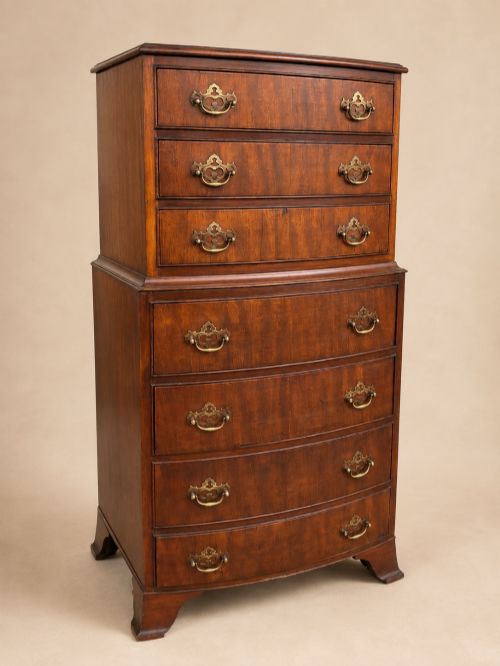
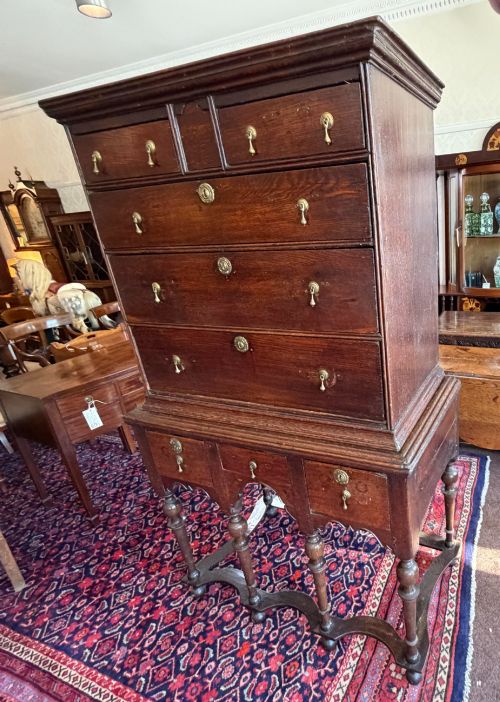
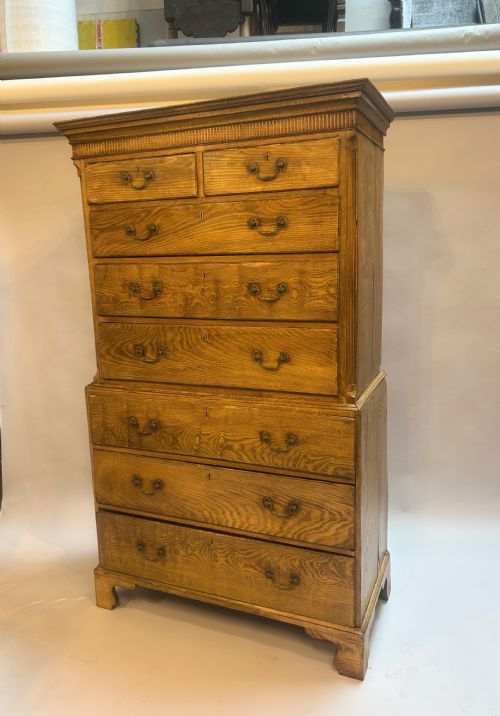
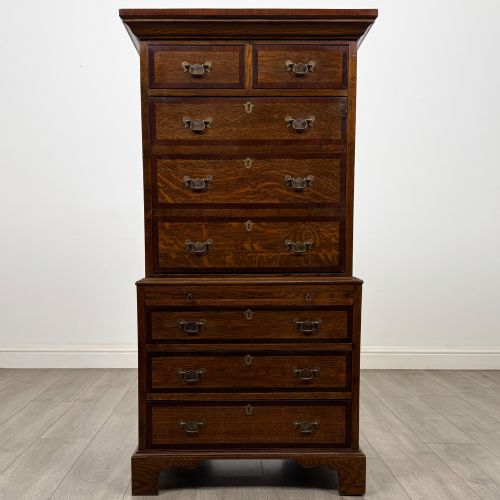
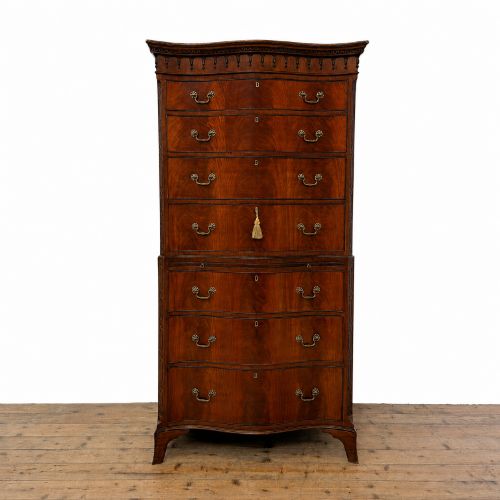
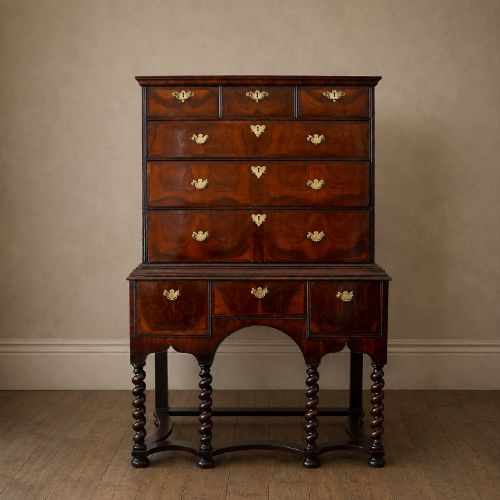
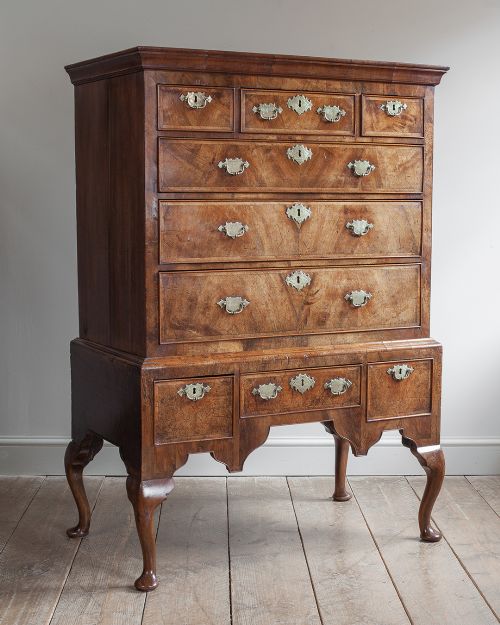
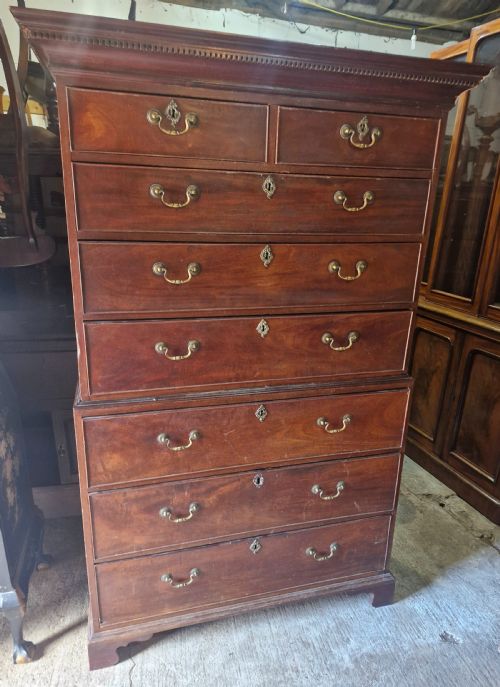
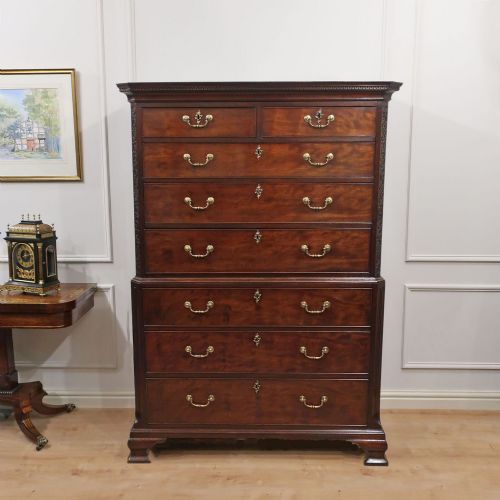
A vintage highboy typically manifests as a chest on chest or a chest on stand, combining a lower cabinet or base with an upper section of multiple drawers. These pieces stretch upwards to maximise floor space while offering compartmentalised storage for linens and garments.
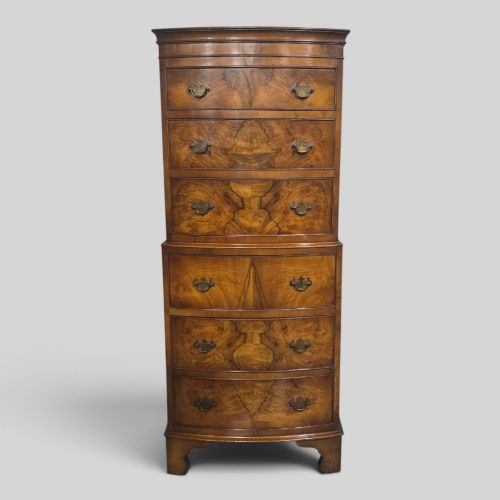
The selections span from early eighteenth century walnut examples through to twentieth century revivals in mahogany and burr walnut. Buyers encounter substantial Georgian period pieces alongside smaller Edwardian and 1920s interpretations designed for compact rooms.
Origins range across British eras from Queen Anne and George I reigns up to later Georgian styles and twentieth century craftsmanship. The tallboy format remains the defining archetype found across these listings.
Materials and Techniques
Cabinetmakers utilised dense timbers such as mahogany, oak, and walnut, often applying highly figured burr walnut veneers to primary display surfaces. Solid pine frequently served as a secondary wood for internal drawer linings and hidden partitions.
Construction relied on traditional joinery methods, including hand-cut dovetails for drawer boxes and mortise and tenon frames. Brass hardware, from teardrop handles to ornate swing plates, secured the drawer fronts while enhancing the decorative scheme.
Vintage Highboy Retail Price Guide 2026
Typical asking prices for vintage highboy among the pieces listed under this phrase on Sellingantiques today, from the lower quarter to the upper quarter. They describe what is for sale here now, not the wider market.
Certain tallboys conceal secret lift-up compartments beneath their top mouldings, keeping midnight correspondence safe from prying eyes.
Evaluating the Pieces
Proportion and timber selection dictate the standing of a piece, particularly where dramatic burr walnut veneer or figured elm creates strong visual depth. Pieces retaining deep, warm patination across the primary wood surfaces command greater attention from discerning collectors.
The integrity of the structural joinery between the upper chest and the lower stand or lower drawers determines mechanical success. Subtle details, such as secretaire drawers with fitted internal writing compartments or clean serpentine fronts, separate standard items from superior examples.
The Vintage Highboy Glossary
- Chest on chest
- A tall storage unit formed by stacking a smaller upper chest directly onto a wider lower chest of drawers. This configuration creates significant vertical capacity without dominating floor space.
- Chest on stand
- A cabinet or set of drawers elevated on an open base with legs, frequently associated with early eighteenth century walnut designs. The elevated frame lightens the overall visual mass of the furniture.
- Tallboy
- A tall vertical chest of drawers, often synonymous with a chest on chest or a single high cabinet unit. The form emerged to accommodate changing fashion and increased storage needs in domestic bedchambers.
- Burr walnut
- Timber sliced from the gnarled growths of a walnut tree, yielding intricate, swirling grain patterns. Cabinetmakers prized this veneer for high-status furniture fronts.
- Secrétaire
- A desk drawer featuring a drop-front mechanism that conceals small pigeonholes and writing surfaces. It integrates concealed functionality into the upper sections of tall chests.
Vintage Highboy: Frequently Asked Questions
Where did people place highboys?
These tall chests stood primarily in principal bedchambers and dressing rooms where vertical storage was essential for folded garments and linens.
Their commanding height meant they occupied prominent wall spaces rather than tight corners, serving both a functional and decorative purpose.
How do I clean wooden surfaces?
Maintain the timber surfaces using microfibre cloths and traditional beeswax formulated specifically for antique furniture.
Avoid chemical sprays and excessive moisture, which can degrade old polish and lift delicate wood veneers over time.
How do I distinguish walnut periods?
Early pieces from the Queen Anne and George I eras display rich walnut grain with crossbanded borders and subtle stretchers on the stands.
Twentieth century revival items adopt similar silhouettes but exhibit more uniform machining and modern internal construction methods.