


Vintage Heart Jewellery
These vintage heart jewellery pieces span Victorian to mid-century designs, offering lasting sentimental appeal through gold and silver padlocks, lockets, and pendants.
Vintage Heart Jewellery
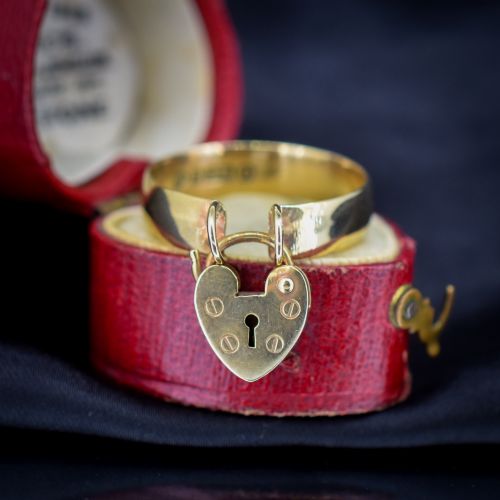
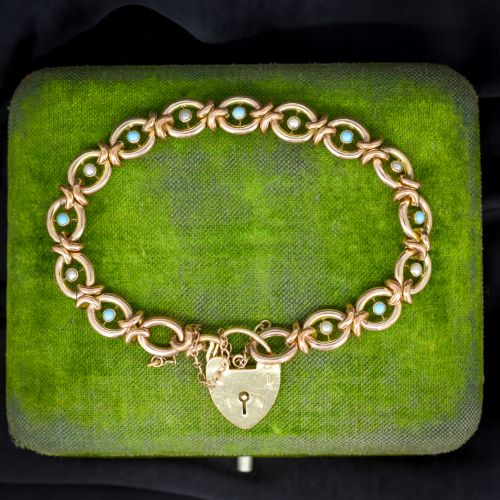
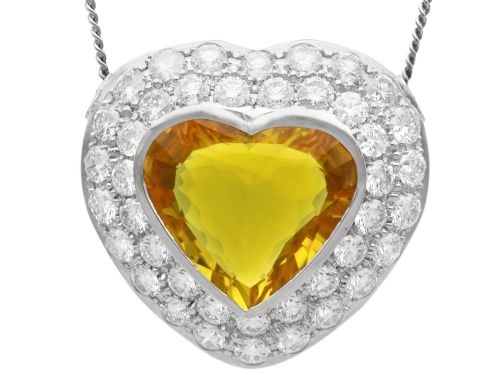
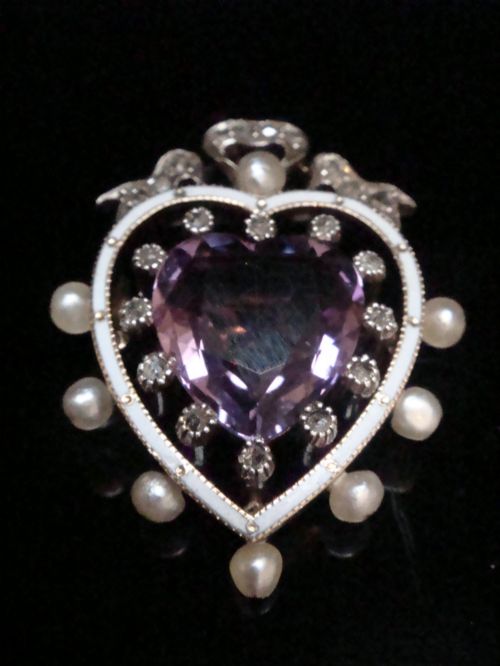
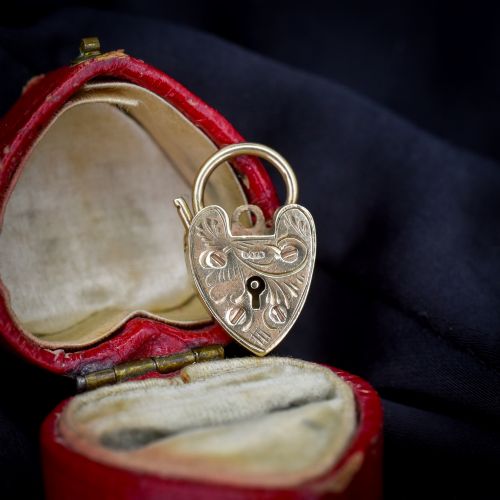
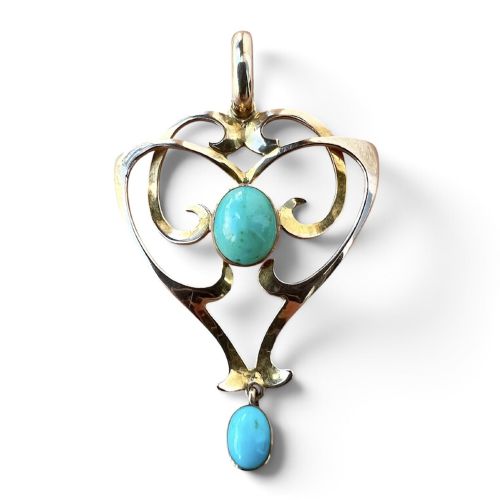
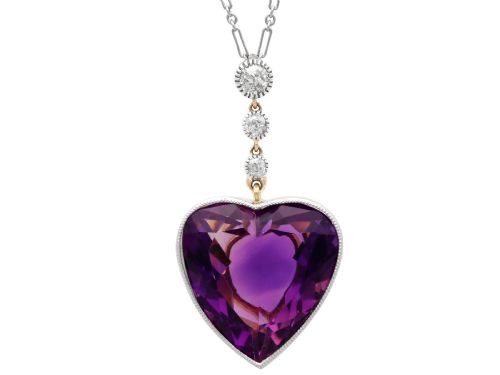
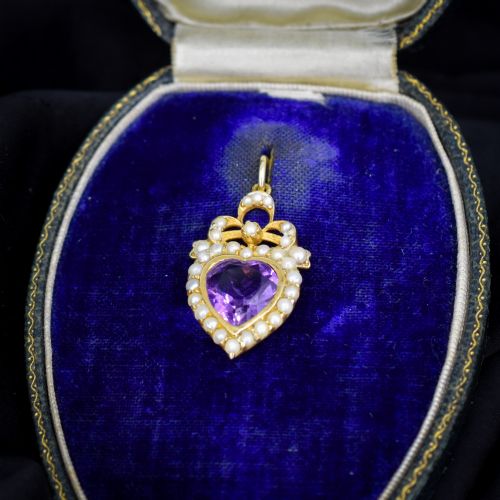
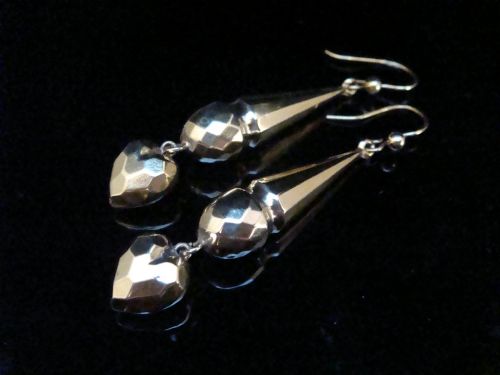
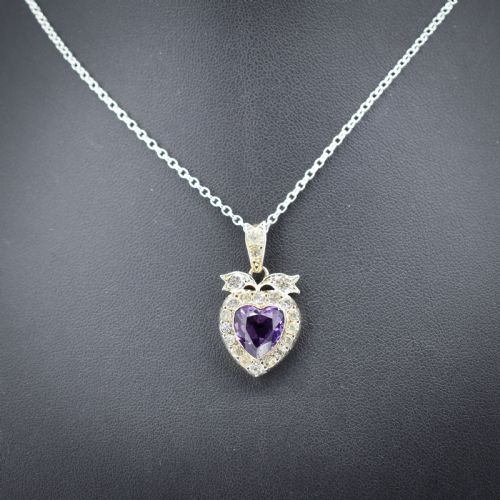
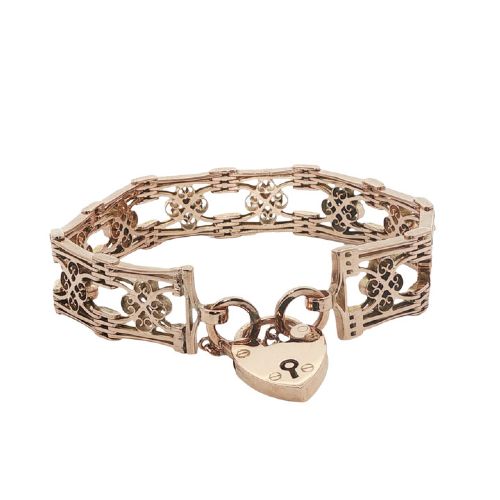
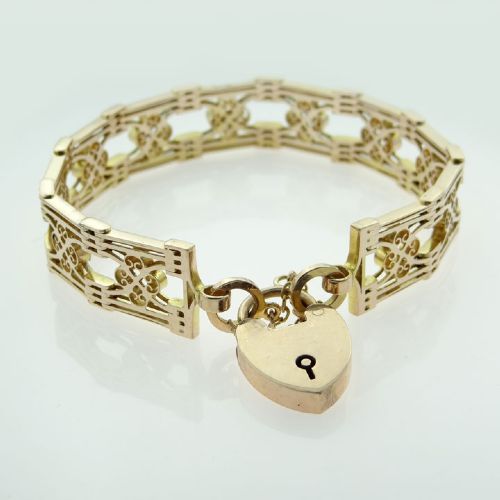
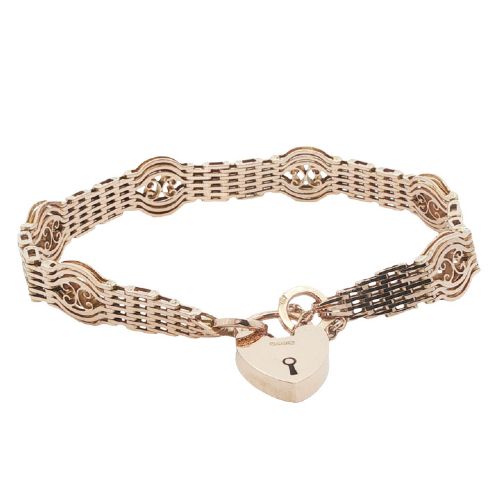
Vintage heart jewellery encompasses a diverse selection of wearable sentiments, spanning rings, bracelets, lockets, brooches, pendants, and trinket boxes. When searching for vintage heart jewellery, buyers commonly encounter charms, gate bracelets secured with padlocks, and gemstone-set pendants.
The objects originate from varied periods, notably the Victorian, Edwardian, and Art Deco eras, extending into the mid-twentieth century. Gold and silver predominate, often shaped into puffy hearts, padlocks, or double-heart motifs.
Materials and construction methods
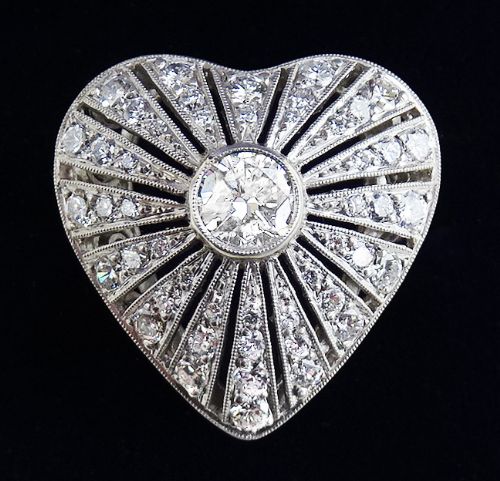
Goldsmiths and silversmiths utilised 9ct and 18ct gold, sterling silver, and platinum, frequently combining them with gemstones like amethyst, garnet, opal, turquoise, and diamond. Metals were cast, stamped, or drawn into wire to form curb chains, gate links, and hollow puffy heart components.
Surface decoration involved hand engraving, guilloche enamel, and millegrain edging. Stones were secured via old-cut paste settings, bezel mounts, or flush settings alongside natural pearls and seed pearls.
Vintage Heart Jewellery Retail Price Guide 2026
Typical asking prices for vintage heart jewellery among the pieces listed under this phrase on Sellingantiques today, from the lower quarter to the upper quarter. They describe what is for sale here now, not the wider market.
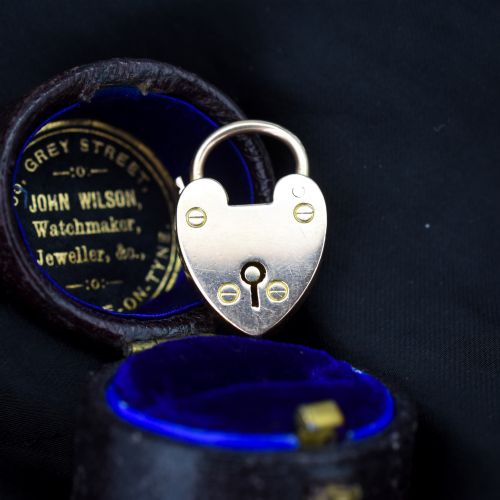
Some Edwardian padlocks conceal tiny secret compartments once used to store locks of hair or miniature painted portraits.
Factors influencing quality
Distinctions in quality arise from the weight and grade of the precious metal, alongside the precision of hand engraving and enamel work. Solid gold components and fully hallmarked pieces demonstrate superior standard compared to hollow or rolled gold alternatives.
The choice and setting of stones further differentiate examples, with natural diamonds, rubies, and clean pastes set in heavy mountings representing finer production than lighter mass-produced variants.
Deakin & Francis·Georg Jensen
The Vintage Heart Jewellery Glossary
- Padlock
- A functional or decorative clasp shaped like a miniature padlock, commonly fitted to Victorian and Edwardian gate bracelets. These padlocks often feature detailed engraving or gemstone settings.
- Puffy heart
- A three-dimensional hollow charm or pendant formed from two convex metal plates soldered together. They gained popularity during the late nineteenth and early twentieth centuries.
- Guilloche enamel
- A decorative technique where translucent enamel is applied over metal engraved with a repetitive geometric pattern. This method creates a shimmering, patterned depth beneath the coloured glass.
- Paste
- Hand-cut glass or lead crystal used as a gemstone substitute in historic jewellery. Fine paste stones display high refractive brilliance and are individually set in metal mounts.
- Gate bracelet
- A flexible linked bracelet constructed from multiple parallel metal bars connected by vertical links. They typically fasten with a heart padlock.
Vintage Heart Jewellery: Frequently Asked Questions
How do I date vintage lockets?
Dating vintage lockets involves examining the style of engraving, the hinge construction, and any accompanying hallmarks or maker stamps. Pieces from the Victorian period often display deep hand-engraved foliage while Edwardian designs favour lighter, lace-like motifs.
Internal frames and glass compartments also offer clues, as manufacturing techniques shifted from hand-fitted bezels to stamped metal frames during the early twentieth century.
What are paste stones in jewellery?
Paste stones are brilliant hand-cut lead glass creations utilised in antique and vintage jewellery as gemstone substitutes. Craftsmen shaped and foiled these stones by hand to mimic diamonds, amethysts, or garnets.
Unlike modern synthetic stones, antique paste displays soft facet edges and distinct internal characteristics visible under magnification. They represent high-quality craftsmanship rather than mere imitation.
How should I care for enamel pendants?
Enamel pendants require gentle handling because the vitreous glass surface can chip or crack upon impact with hard surfaces. Cleaning should be performed using a soft cloth and warm soapy water, avoiding harsh chemical dips or ultrasonic cleaners.
Storage in separate pouches prevents scratching from neighbouring chains or gemstone settings. Protective care preserves the integrity of delicate guilloche patterns.