





Vintage Harvest Artwork
Vintage harvest artwork captures the rustic toil of rural seasons, offering enduring pastoral charm for country interiors.
Vintage Harvest Artwork
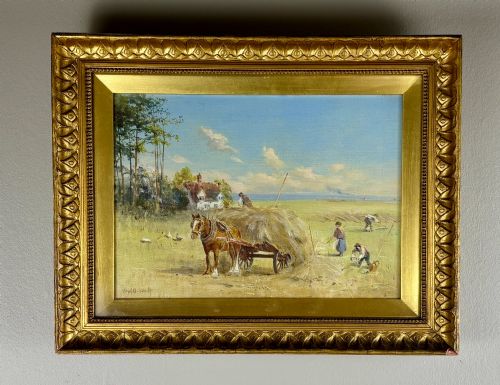
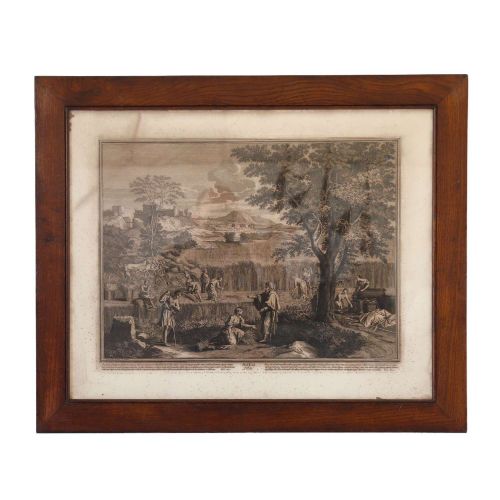
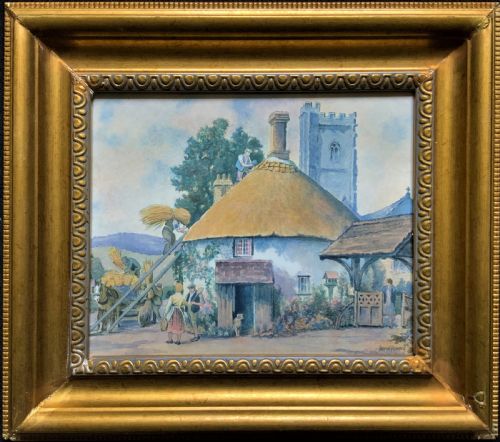
When you search for vintage harvest artwork, you encounter pastoral scenes depicting agricultural labour, haymaking, and rural landscapes across various periods. These works capture agricultural toil and rural traditions, ranging from nineteenth-century realism to mid-twentieth-century naive interpretations.
The pieces you are most likely to meet on this page include watercolours and oil paintings on canvas or paper, often framed and dating from the nineteenth and twentieth centuries. These paintings record historical farming practices and country life through the eyes of British and European artists.
Subjects frequently centre on hay carts, fields, and rural workers during harvest seasons. Such works connect interior spaces to historical agricultural landscapes through traditional artistic mediums.
Materials and techniques
The works rely primarily on oil paint applied to canvas or wood, alongside watercolours and gouache on paper. Artists utilised these fluid mediums to build texture and capture natural light in rural settings.
Many of these paintings feature traditional framing, sometimes incorporating gilt finishes to complement the artwork. The combination of durable canvas and rich oil pigments has ensured the survival of these rural scenes across centuries.
Vintage Harvest Artwork Retail Price Guide 2026
Typical asking prices for vintage harvest artwork among the pieces listed under this phrase on Sellingantiques today, from the lower quarter to the upper quarter. They describe what is for sale here now, not the wider market.
Several artists clearly preferred the rush of getting the last load in before the rain.
Variations in quality
Quality in these rural paintings is determined by the artist's ability to handle light, atmosphere, and natural movement within the landscape. A superior piece demonstrates confident brushwork and a convincing sense of depth, whereas lesser works may feel stiff or formulaic.
The nuance in capturing figures, such as farmers and horses at work, distinguishes accomplished realists from minor provincial painters. Compositional balance and pigment preservation further separate masterworks from standard decorative pieces.
Hugh Barry-Scott·William Manners·James William Booth·William Grant Murray·Herbert Royle·Rowland Henry Hill·Frederick J. Knowles·Joseph Paulman·Frederick William Jackson·Walter Duncan·George Hamilton Constantine·William Greaves·David Heward·William Kay Blacklock·Arthur Heinrich Wilhelm Fitger·George Graham·Reginald Mills·Robert Thorne Waite
The Vintage Harvest Artwork Glossary
- Canvas
- A heavy woven fabric used as a surface for oil painting. It provides a durable and textured base that holds thick applications of pigment.
- Watercolour
- A painting method in which the paints are made of pigments suspended in a water-soluble vehicle. It is typically applied to paper to achieve translucent, luminous washes.
- Gouache
- An opaque water-based paint that produces a heavier, more solid finish than traditional watercolour. It allows for vibrant highlights and flat areas of colour.
- Gilt
- A thin layer of gold leaf or gilt paint applied to picture frames or surfaces. It adds a decorative metallic sheen that enhances the presentation of the artwork.
- Realism
- An artistic movement focused on depicting subjects truthfully without idealisation. In these listings, it manifests as accurate portrayals of rural labour and countryside scenery.
Vintage Harvest Artwork: Frequently Asked Questions
What periods do these paintings come from?
The listings span from the nineteenth century through the mid-twentieth century, capturing shifts in artistic movements like British Impressionism and Victorian Realism.
Most pieces reflect the styles of the Edwardian era and the interwar decades, showing how rural depictions evolved over time.
How were these rural scenes traditionally displayed?
These artworks were typically framed in wood, sometimes with gilt detailing, to hang in domestic interiors as windows onto the British countryside.
They served to bring the colours and tranquillity of agricultural life into Victorian and twentieth-century homes.
How do I distinguish watercolours from oil paintings?
Watercolours are painted on paper, often featuring translucent washes and delicate details under glass. They possess a lighter, more ethereal quality compared to heavier mediums.
Oil paintings utilise thick pigments on canvas or wood panels, allowing for visible brushstrokes and rich, textured layers of colour.
What subjects besides haymaking appear in these works?
Beyond harvesting wheat and hay carts, artists recorded specific regional landscapes, rural villages, and coastal castles. Scenes range from quiet evening meadows to bustling days in Hampshire.
Some pieces explore European subjects and classical themes related to the harvest season.