
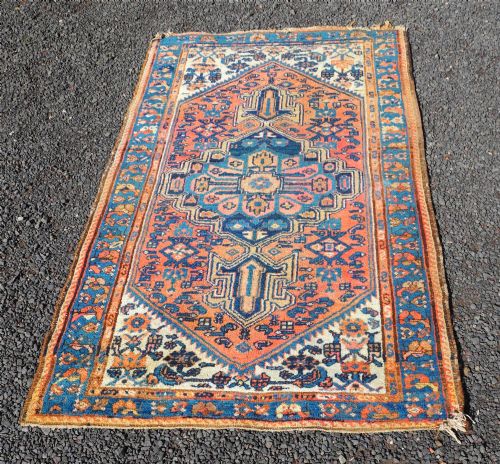
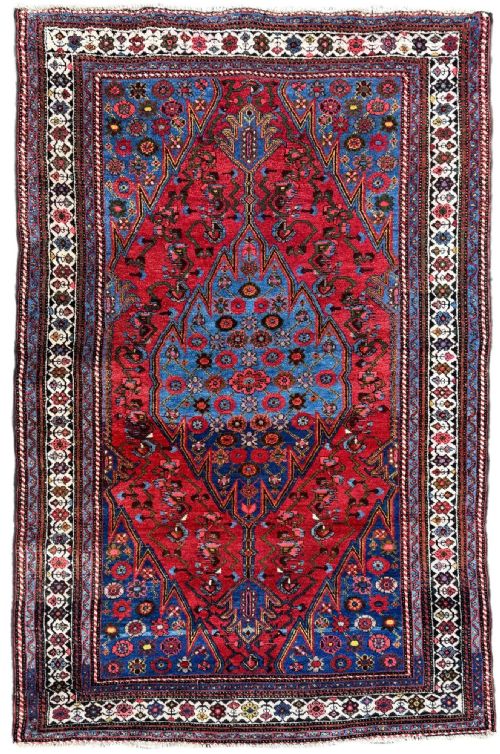
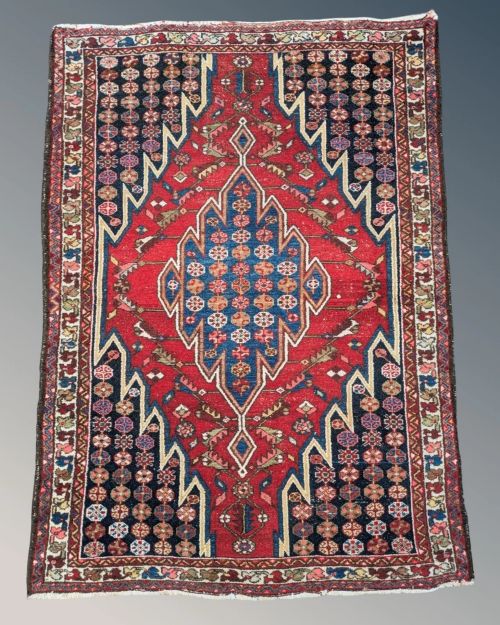
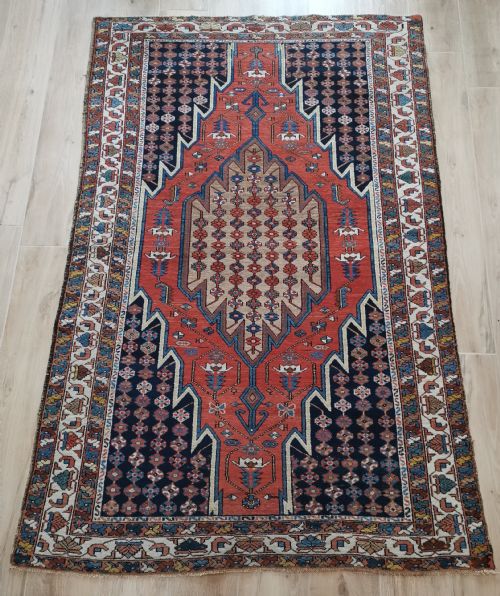




Vintage Hamadan Carpet
A vintage hamadan carpet brings hard-wearing Persian tribal warmth to a hallway or floor, woven by village hands to last for generations.
Vintage Hamadan Carpet
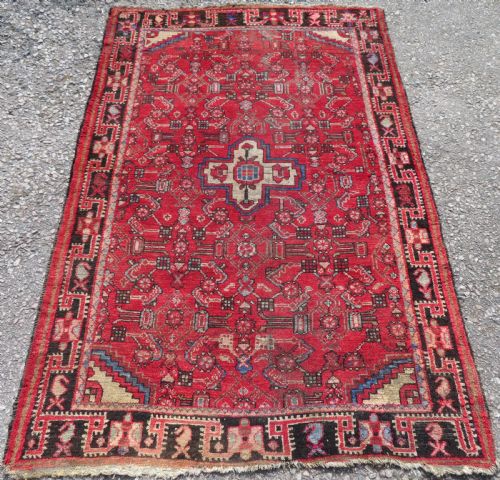
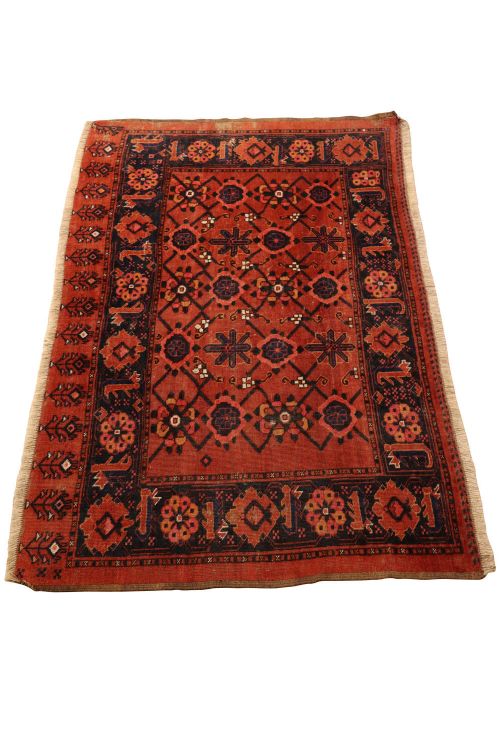
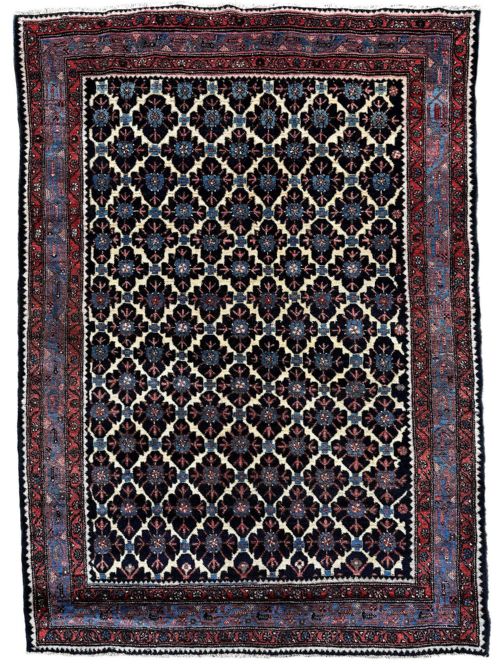
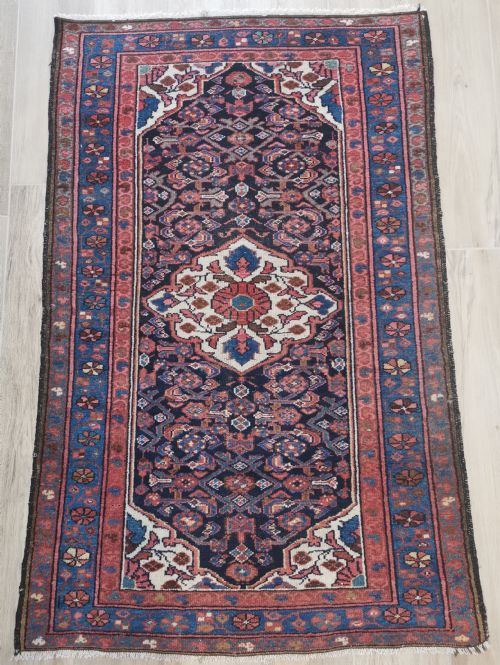
When searching for a vintage hamadan carpet, buyers encounter practical floor coverings woven across West Persian villages and tribal regions. The selection spans distinct formats, from compact area rugs to long hallway runners and large carpets.
Most examples date from the late nineteenth century through the mid-twentieth century, capturing traditional Persian weaving methods. Pieces frequently reflect specific local production centres such as Mazlaghan, Malayer, Borodjert, and Sanjan, alongside Kurdish tribal work.
How they were made
These floor coverings utilise durable wool pile knotted tightly onto sturdy cotton foundations. The construction reflects traditional hand-knotted village techniques designed for daily foot traffic.
Weavers employed natural and traditional dyeing methods, creating varied regional patterns that range from geometric tribal motifs to flowing floral lattice designs.
Materials across the inventory are strictly traditional, combining resilient wool pile with supportive cotton foundations.
What varies in quality
Quality rests in the precision of the hand-knotting, the density of the wool pile, and the crispness of the regional design. A thicker, denser pile retains pattern definition and structural integrity through decades of use.
Condition alters the character of each piece, distinguishing evenly worn village rugs from heavily distressed examples where the foundation shows. The clarity of the original dyes and the balance of the tribal proportions separate standard pieces from finer regional specimens.
The Vintage Hamadan Carpet Glossary
- Hamadan
- A vast market city in West Persia and the collection point for rugs woven in hundreds of surrounding villages. It denotes a sturdy, resilient style of village carpet.
- Runner
- A long, narrow carpet format specifically proportioned for hallways, corridors, and stairs. These pieces often measure over four metres in length.
- Mazlaghan
- A village origin associated with distinct geometric medallion designs and contrasting colour fields within the broader regional grouping.
- Malayer
- A West Persian weaving source known for fine execution, often featuring supple wool and intricate floral or boteh patterns.
- Hand-knotted
- A construction method where individual strands of wool are tied by hand onto the warp threads, creating a durable pile that cannot be replicated by machine.
Vintage Hamadan Carpet: Frequently Asked Questions
Where were vintage hamadan carpets made?
These pieces originate from the city of Hamadan and the numerous surrounding villages in West Persia. Local weavers in settlements such as Malayer, Mazlaghan, and Borodjert produced them using traditional tribal designs.
Production spanned generations in these weaving communities, utilising materials sourced directly from the local flocks and fields.
How do I choose the right size rug?
Consider the traffic and dimensions of the space where the piece will live. Narrow runners suit hallways and corridors, while larger area rugs anchor sitting rooms and dining spaces.
Measuring the floor area carefully ensures the carpet leaves an appropriate border of exposed timber or stone around the edges.
How do I care for a wool rug?
Regular gentle vacuuming without a rotating brush roll keeps dust from settling into the wool pile. Professional cleaning maintains the lanolin and structural integrity of the fibres.
Placing a quality underlay beneath the carpet prevents slipping and reduces friction between the floorboards and the cotton foundation.
How do I tell different village types apart?
Distinctions rely on structural details, knot density, and regional design vocabulary. Specific villages like Mazlaghan feature sharp geometric medallions, whereas Malayer pieces lean towards softer floral motifs.
Examining the weave on the reverse side often reveals the specific Kurdish or village hand that tied the wool.