


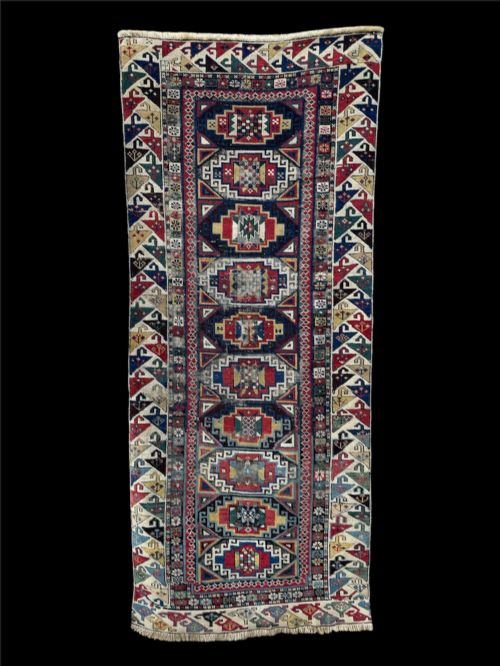
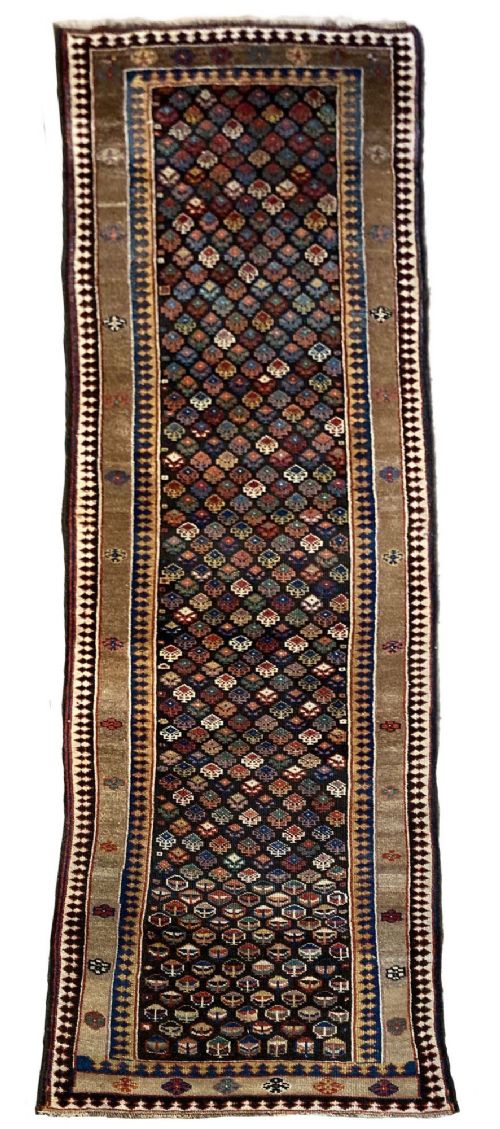


Vintage Hall Carpet
A vintage hall carpet brings warmth and grounded pattern to a narrow corridor.
Vintage Hall Carpet
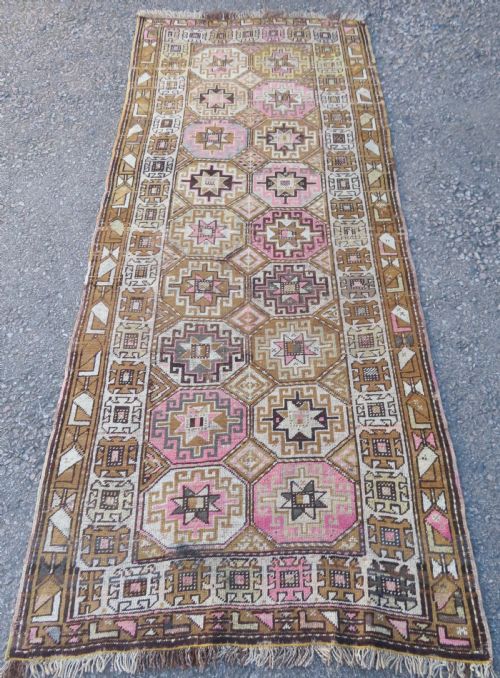
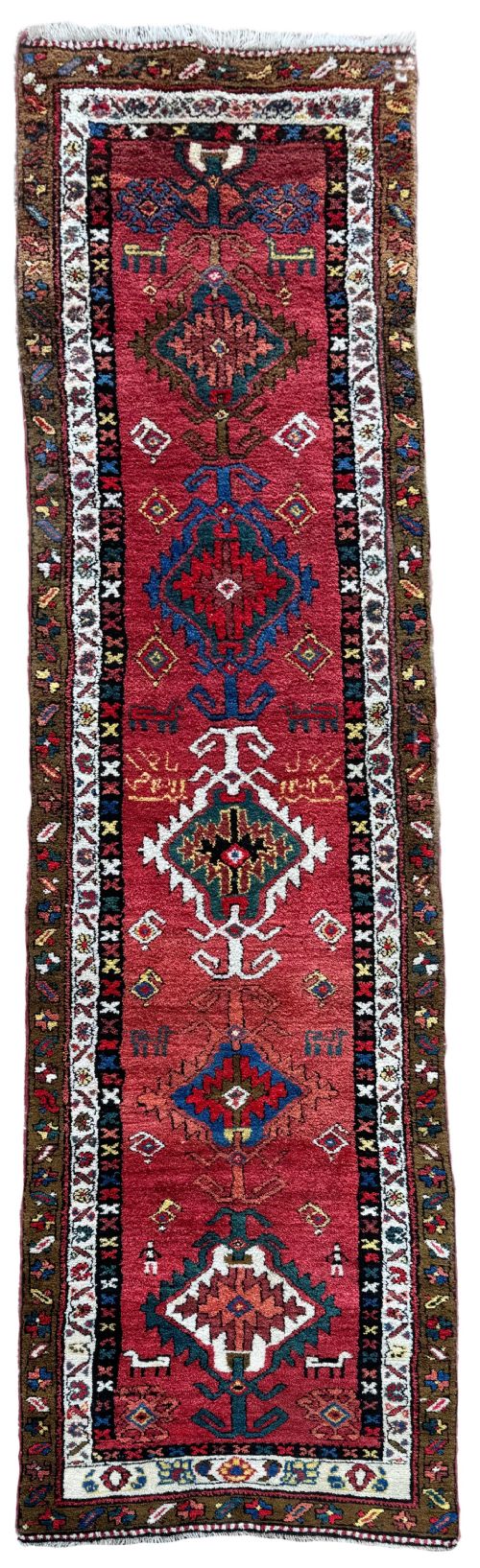
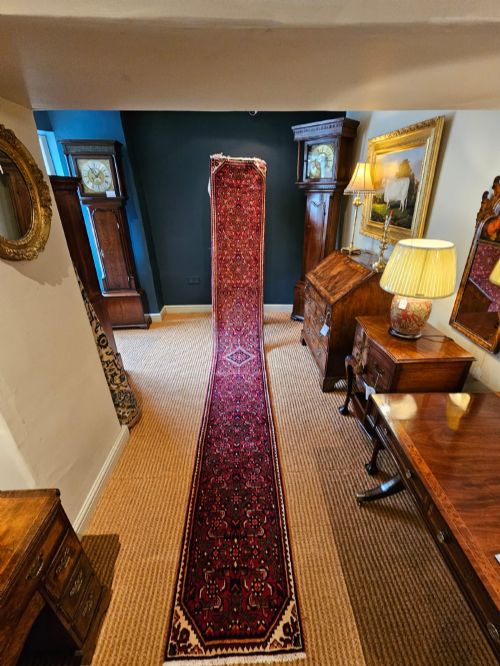
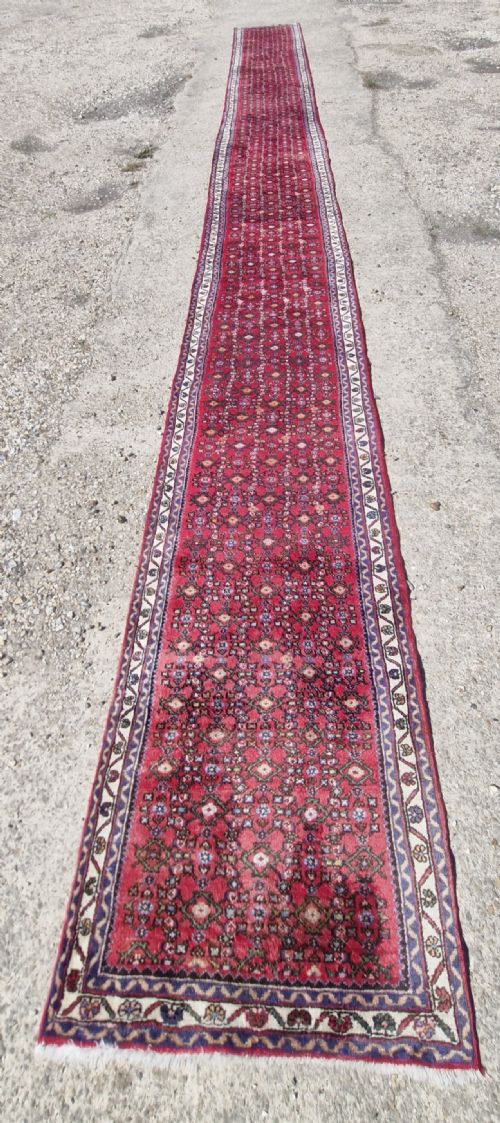
A vintage hall carpet is chosen primarily for long, narrow spaces such as corridors, landings and hallways where standard floor coverings do not fit. These pieces take the form of runner rugs, narrow floor rugs and extended hallway carpets that span lengths from under three metres to over seven metres. Buyers selecting a vintage hall carpet encounter formats designed to soften high-traffic areas while providing linear visual structure.
The selections span traditional regional weaving traditions, with Persian Heriz, Kurdish, Hamadan, Sarouk and Caucasian designs appearing frequently. Pieces originate across the late nineteenth and early twentieth centuries, encompassing styles from tribal geometric formats to structured Persian motifs. A buyer is most likely to meet a wool runner displaying red and blue palettes, traditional medallion arrangements or repeating field patterns.
Makers and weavers across Anatolia, the Caucasus and Persia produced these elongated formats for domestic utility in grand houses and village homes alike. The resulting objects combine practical durability with regional artistry, utilising durable pile structures suited to repeated footfall. Each piece records the specific aesthetic vocabulary of its weaving community, adapted specifically for linear interior spaces.
Materials and Construction
Construction relies upon a foundation of cotton or wool warps and wefts that support a dense wool pile. Artisans knotted the pile by hand onto stretched vertical looms, packing the rows tightly with heavy combs to ensure structural rigidity. This method creates a firm textile that withstands the stretching forces inherent in long, narrow floor coverings.
Dyes derived from natural sources provide the deep red, navy blue and earthy tones characteristic of these runners. Wool fibres accept these colorants with variations in saturation, yielding subtle abrash and tonal shifts across the length of the carpet. The combination of hand-spun wool and traditional dyeing yields a resilient surface that develops a soft patina over decades of use.
Vintage Hall Carpet Retail Price Guide 2026
Typical asking prices for vintage hall carpet among the pieces listed under this phrase on Sellingantiques today, from the lower quarter to the upper quarter. They describe what is for sale here now, not the wider market.
Listings feature long hallway runners produced across nineteenth and twentieth-century traditions, utilising wool pile woven on cotton foundations.
Distinctions in Quality
Quality rests in the precision of the knotting density and the integrity of the structural foundation. Tighter knot counts allow for crisper articulation of tribal motifs and geometric medallions, whereas looser weaves result in softer, more diffuse pattern edges. The stability of the outer selvedges and the evenness of the pile wear determine how well the runner maintains its straight linear geometry over time.
The artistic merit of the design composition separates standard utility pieces from exceptional examples. Superior runners demonstrate confident drawing in the central field, balanced borders and harmonious colour distribution without awkward compression at the ends. The sophistication of the tribal symbolism or classical Persian floral translation dictates the overall visual standing of the textile.
The Vintage Hall Carpet Glossary
- Runner
- A long, narrow carpet format specifically proportioned for corridors, hallways and stairs. These pieces measure significantly longer than they are wide to fit confined architectural spaces.
- Pile
- The vertical or slanted upright loops of yarn that form the usable surface of the carpet. This soft layer absorbs foot traffic and shields the structural foundation underneath.
- Warp
- The stationary longitudinal threads stretched tightly on the loom before knotting begins. These parallel strands form the skeleton of the carpet and carry the fringe at each end.
- Weft
- The horizontal threads passed across the warp strands between rows of knots to bind the structure together. Proper beating of the weft determines the firmness of the woven fabric.
- Abrash
- A natural variation in colour shading caused by changes in dye batches or hand-spun wool lots. This subtle tonal shift across the field is a hallmark of traditional vegetable dyeing.
- Selvedge
- The reinforced outer side edges of a carpet formed by wrapping or binding the outermost warp threads. A sound selvedge prevents the pile from fraying along the linear margins.
Vintage Hall Carpet: Frequently Asked Questions
How do I choose the correct runner length?
Measure the clear floor space of your hallway while leaving a uniform border of exposed wood or tile visible on all sides. Account for doorway clearances and ensure the carpet does not obstruct the smooth swing of interior doors.
For very long corridors, consider whether a single extended piece or a matched pair of runners works better for the visual rhythm of the space. Leaving equal margins at both ends creates a balanced frame within the architecture.
Are these carpets suitable for heavy foot traffic?
Traditional runners were constructed precisely for domestic transit in busy corridors, utilising dense wool pile over sturdy foundations. The natural lanolin present in hand-spun wool provides inherent resistance to dirt and everyday wear.
Using a quality underlay beneath the carpet prevents slipping, cushions the tread and reduces friction against the floorboards. Regular gentle sweeping or suction vacuuming without a rotating brush roll keeps the pile free of trapped grit.
How do I identify a Kurdish tribal runner?
Kurdish pieces from north-west Persia typically feature geometric medallions, repeating boteh motifs or stylized human and animal figures woven with robust wool. The colour palettes often rely on deep indigo blues and rich reds combined with ivory highlights.
These textiles display a sturdy, rustic handle with heavier foundational weaves compared to finer city workshop carpets. Their design vocabulary reflects the regional weaving heritage of Kurdish communities operating across mountain and plateau settlements.
What causes colour variations in vintage wool?
Natural dye ingredients extracted from plants and minerals react differently to water, mordants and sunlight over decades of exposure. Slight shifts in hue occur when weavers switch from one dye batch to another midway through producing a long carpet.
This phenomenon, known as abrash, creates organic visual depth across the field rather than flat industrial uniformity. It serves as an indicator of traditional craft methods utilising hand-prepared materials.
How should I care for an antique hall carpet?
Position a breathable, non-slip underpad beneath the carpet to anchor it firmly to the floor and absorb impact from footsteps. Rotate the runner periodically to distribute wear evenly if one end receives heavier foot traffic than the other.
Professional specialist cleaning is recommended every few years to remove deep-seated dust safely without damaging the wool fibres. Avoid exposing the textile to prolonged direct sunlight to preserve the richness of the natural dyes.