



Vintage Gong Stand
A vintage gong stand holds the brass or bronze disc that once summoned households to dinner, bringing a deep, resonant tone and rich woodwork into the room.
Vintage Gong Stand
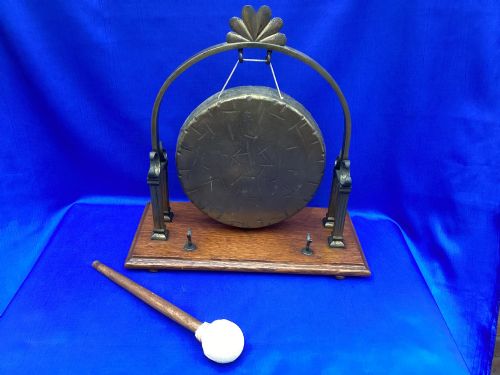
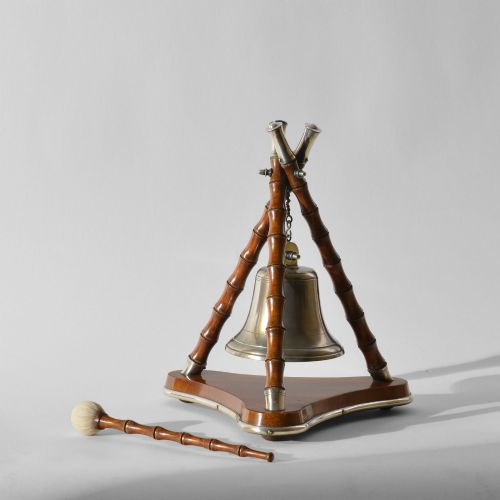
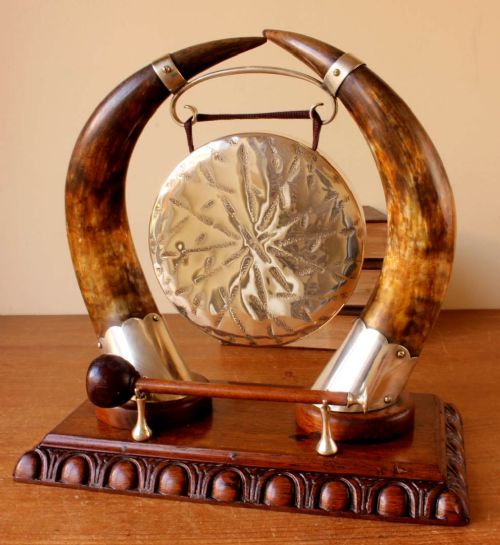
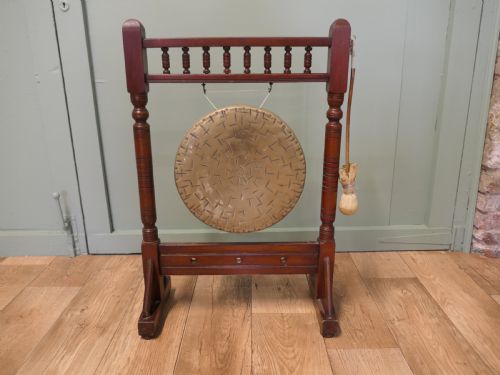
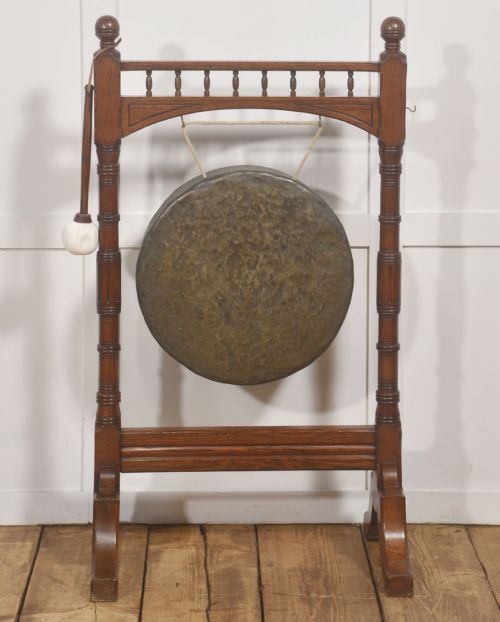
A vintage gong stand serves to suspend a metal disc or bell, most commonly encountered as a table gong or floor standing dinner gong from the Victorian, Edwardian, and later periods. These sturdy frames were designed for domestic use, specifically to announce meals in large country houses and suburban villas alike.
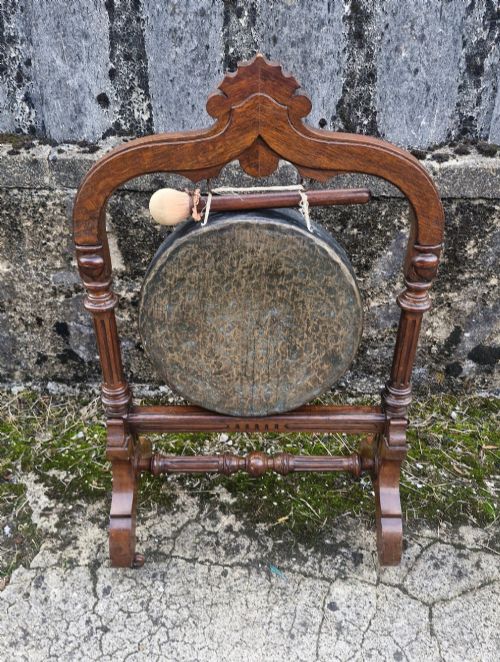
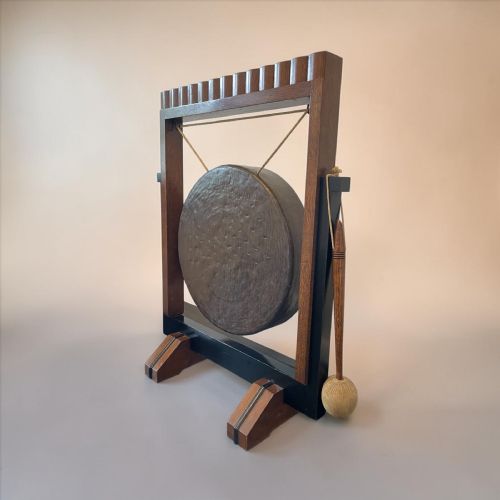
The pieces appearing here span several distinct design movements, including Gothic Revival, Arts and Crafts, Art Nouveau, and Art Deco. Alongside British oak and mahogany frames, the selection incorporates Oriental pieces with carved stands and temple bells from Chinese Qing Dynasty style and Chinese Export traditions.
Forms range from compact table top versions in brass and cast iron to monumental floor standing timber frames. Most examples integrate fitted strikers or mallets, often suspended by cord, leather, or felt to protect the resonance of the hanging metal.
Materials and construction
Makers relied heavily on solid hardwoods like oak and mahogany for the uprights and bases, frequently shaping the timber with carved detailing or architectural motifs. Wrought iron and cast iron also appear in frames, offering a heavier industrial support for the suspended bell.
The hanging components utilise brass, bronze, and silver plating, sometimes paired with intricate oriental carvings on wooden stands. Suspension relies on durable elements such as cord, leather, and felt to secure the bell without deadening its vibration.
Vintage Gong Stand Retail Price Guide 2026
Typical asking prices for vintage gong stand among the pieces listed under this phrase on Sellingantiques today, from the lower quarter to the upper quarter. They describe what is for sale here now, not the wider market.
Some Victorian households relied on these deep-toned bells because servants ignored shouting down long corridors.
Factors of quality
Quality rests in the harmony between the timber frame and the suspended bell, where substantial, well-seasoned oak or mahogany provides a rigid support that allows the metal to resonate clearly. Superior examples display crisp hand-carving and careful joinery rather than hasty assembly.
The metal component dictates much of the character, with heavier brass and bronze bells producing a cleaner, longer-lasting tone than thinner alternatives. Original suspension materials, such as intact leather or cord and matching strikers, elevate the integrity of the piece.
The Vintage Gong Stand Glossary
- Dinner Gong
- A suspended metal disc or bell struck with a mallet to summon guests to a meal. These forms were staples of late nineteenth and early twentieth century domestic life.
- Table Gong
- A smaller version of the hanging bell designed to sit upon a surface such as a sideboard or table. They usually feature compact brass or cast iron frames.
- Gothic Revival
- A design style inspired by medieval architecture, characterised in these pieces by pointed arches, trefoils, and heavy carved oak framework.
- Arts and Crafts
- A movement prioritising traditional craftsmanship and honest materials, reflected in the solid timber construction and visible structural joinery of the stands.
- Temple Bell
- A sacred or ceremonial bell originating from Eastern traditions, often adapted into western interiors within ornate carved wooden stands.
Vintage Gong Stand: Frequently Asked Questions
How were dinner gongs used?
Household staff struck the suspended bell with a wooden mallet to announce that dinner was served. The deep tone carried across large rooms and corridors.
In many homes, different strokes indicated various courses or gathered family members from different parts of the estate.
Where should I place a gong stand?
These pieces suit entrance halls, living rooms, or dining spaces where their architectural woodwork adds visual weight and historical interest. Floor standing versions require a dedicated corner.
Table top gongs sit comfortably on sideboards, desks, or occasional tables alongside other decorative objects.
How do I date a gong stand?
Stylistic clues such as Gothic Revival arches, Art Nouveau curves, or Art Deco geometric lines point directly to specific periods like the Victorian era or the 1930s. Materials and construction methods also help.
Heavier carved oak frames frequently align with late nineteenth century country house aesthetics, while lighter polished woods often suggest Edwardian manufacture.
Do the gongs still ring?
Most brass and bronze bells retain their resonant acoustic properties when struck gently with a suitable mallet. The sound depends on the metal alloy and how freely the bell hangs.
Checking the suspension cord or leather strap ensures the bell vibrates without restriction against the frame.