






Vintage Gold Shirt Studs
These vintage gold shirt studs and related fasteners bring refined detail to formal cuffs and collars through enduring materials.
Vintage Gold Shirt Studs
Vintage gold shirt studs and cufflinks form a distinct category of gentleman's accessories designed for formal attire. The pieces appearing here span the Victorian era, the Edwardian period, and the mid-century decades.
Most examples combine precious metal foundations with decorative faces featuring enamel, pearl, or hardstone elements. While single shirt studs appear alongside boxed sets, double-sided links dominate the selection.
Makers shaped these functional fasteners in styles ranging from Victorian belt motifs and Edwardian platinum settings to geometric Art Deco designs. The resulting items reflect the prevailing aesthetic of each successive decade.
How they were made
Goldsmiths utilised yellow gold, white gold, and higher carat alloys such as 18ct and 15ct gold as the primary structural frameworks. Platinum also appears in combination with gold during the Edwardian era to securely mount diamonds and sapphires.
Surface decoration relied on hand-applied enamel, precise geometric moulding, and the integration of natural materials like mother of pearl, banded agate, and pearls. Artisans secured these components using traditional bezel settings, chain links, and detailed belt motif engravings.
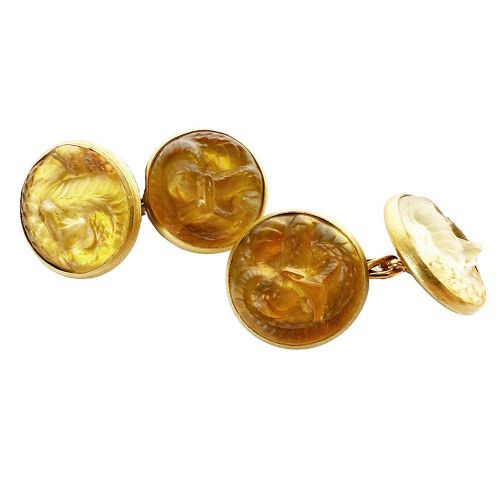
Serpents coil quietly through glass and gold, reminding us that even the stiffest Victorian collars occasionally hid a reptile.
What varies in quality
The distinction between standard items and superior examples lies in the complexity of the materials and the precision of the metalwork. Hand-engraved motifs and flawless enamel panels indicate a higher degree of workshop skill.
Weight and metal purity further separate ordinary production from exceptional pieces, particularly where higher gold carats and integrated gemstones like diamonds are present. The preservation of original chain links and fitted boxes contributes significantly to the integrity of the surviving object.
R Lalique
The Vintage Gold Shirt Studs Glossary
- Cabochon
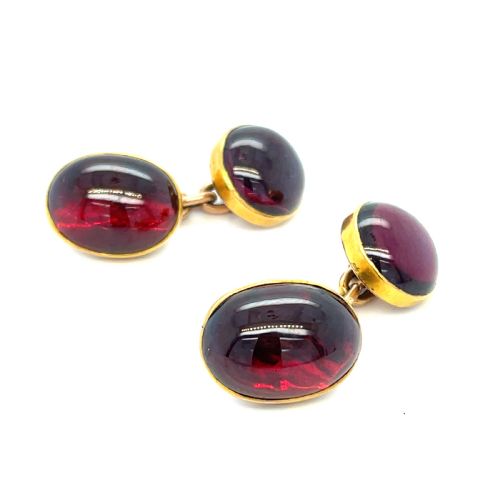
- A gem polished into a smooth, convex dome rather than faceted with flat planes. This style highlights the natural banding of agate or the deep red tone of garnets.
- Enamel
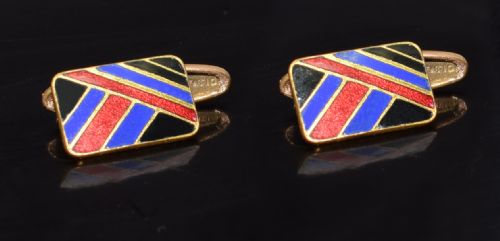
- A durable vitreous substance fused to metal through high-temperature firing. It provides vibrant colour fields across Art Deco and Victorian geometric designs.
- Double-sided links
- Cufflinks featuring two decorative faces connected by a short chain or bar. This design ensures both ends display finished metalwork and ornamentation.
- Mother of pearl
- The iridescent inner layer of mollusc shells utilised for its luminous surface quality. It forms the central panels of many Edwardian and 1910s dress sets.
Vintage Gold Shirt Studs: Frequently Asked Questions
How do you wear vintage shirt studs?
Shirt studs slip through the vertical buttonholes of a formal stiff-bosom dress shirt to replace standard buttons. They secure the front opening while adding a discreet accent of precious metal.
Most traditional sets pair with matching cufflinks to complete evening wear. Inserting them requires gentle manipulation through stiff fabric layers without bending the stems.
Can these studs be worn daily?
These pieces suit formal occasions and evening gatherings rather than rugged daily wear. The delicate nature of enamel and mounted pearls requires thoughtful handling.
Storing them in soft-lined boxes protects the metal surfaces from scratches. Regular care preserves the integrity of the gold settings and hinges.
How do you date gold studs?
Dating relies on stylistic clues, manufacturing techniques, and official hallmarks stamped onto the metal. Victorian examples often feature heavy engraving and garnet or agate stones.
Later Art Deco pieces introduce strict geometric enamel work and white gold or platinum. Comparing these characteristics against known historical periods clarifies the timeline.
What is the difference between studs and cufflinks?
Shirt studs fasten the front placket of a formal shirt where buttons would normally sit. Cufflinks secure the folded cuffs at the wrists.
While both share similar decorative materials like gold and enamel, their specific functions and placement on garments differ entirely. Complete formal sets coordinate both items for uniform style.