



Vintage Gold Peridot Drops
These vintage gold peridot drops bring together luminous green olivine stones and warm gold work in drop earrings and dangling pendants.
Vintage Gold Peridot Drops
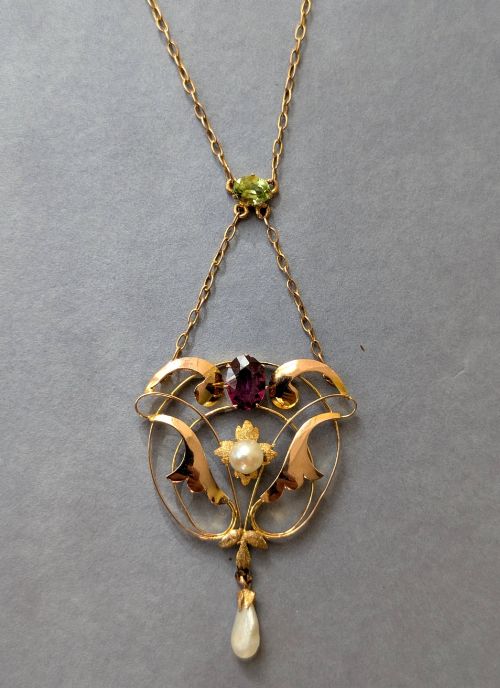
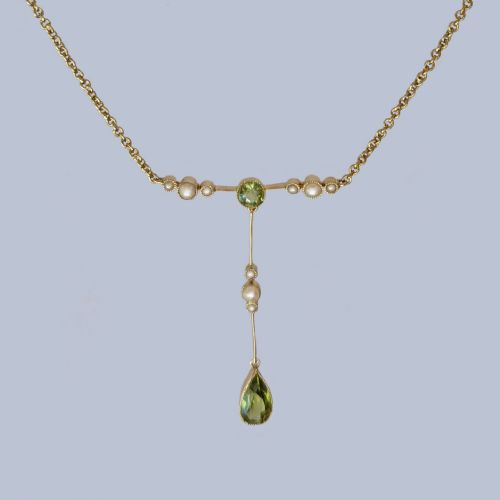
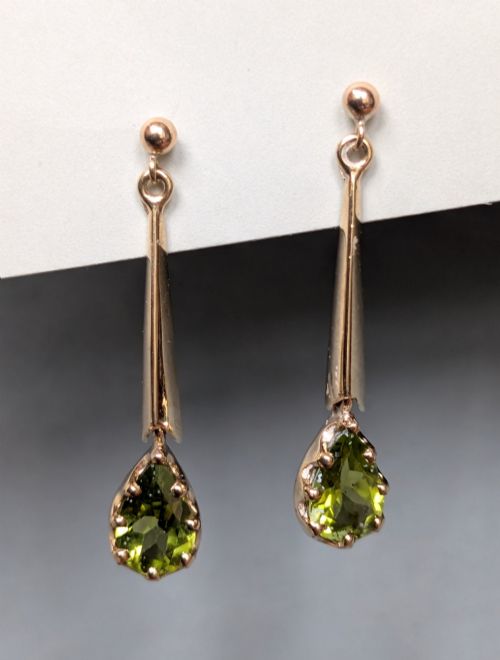
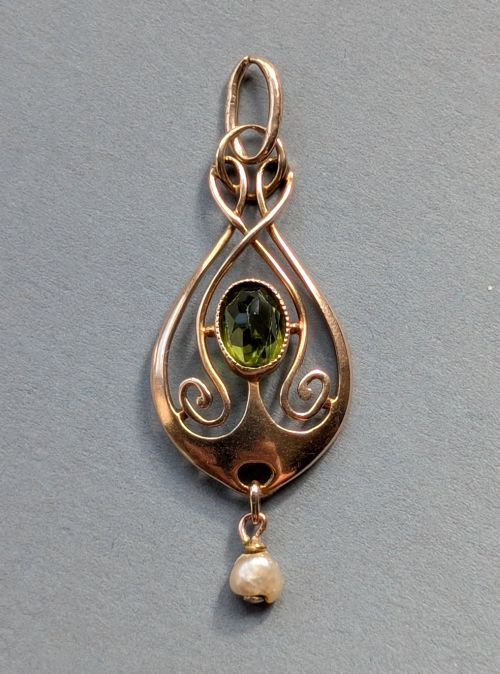
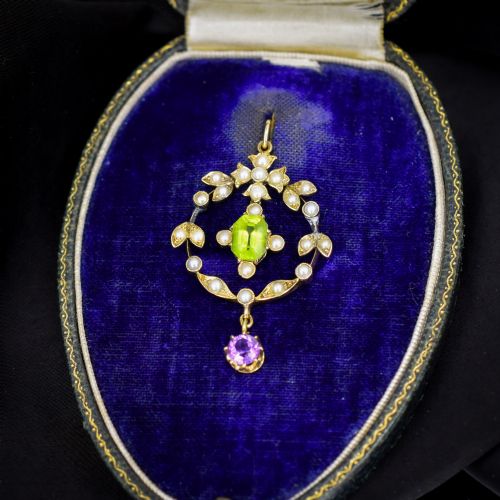
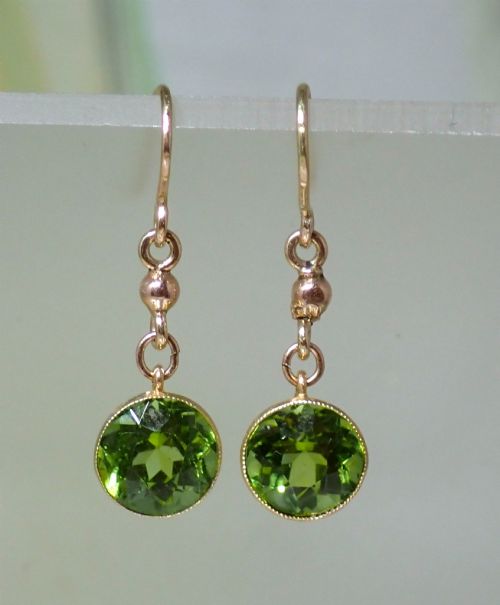
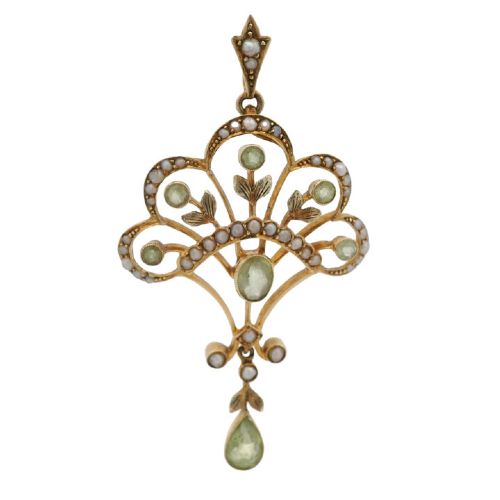
When you search vintage gold peridot drops, you encounter a selection of Edwardian, Victorian, and mid-century items that showcase vibrant green peridot stones set in precious gold. The form takes shape predominantly as drop earrings, pendants, and lavalier necklaces designed to sway with movement.
Edwardian and Victorian examples dominate the selection, often pairing the central peridot with delicate seed pearls in intricate openwork frames. You also find mid-century cluster designs and charms that bring a different scale to the bright green hue.
How they were made
The construction relies on 9ct and 15ct gold, occasionally combined with platinum in Edwardian settings to hold the stones securely. Goldsmiths shaped the metal into fine bezels, delicate claw settings, and articulated drops that allow the peridots to catch the light.
Seed pearls are frequently threaded or pegged alongside the main stones, while gold wirework forms the characteristic lavalier drops and pendant mounts of the early twentieth century.
Vintage Gold Peridot Drops Retail Price Guide 2026
Typical asking prices for vintage gold peridot drops among the pieces listed under this phrase on Sellingantiques today, from the lower quarter to the upper quarter. They describe what is for sale here now, not the wider market.
What varies in quality
The depth and saturation of the peridot stones dictate the visual impact, alongside the clarity of the crystal and the crispness of the surrounding gold work. Edwardian pieces with balanced proportions of seed pearls and intricate metal piercing stand apart from simpler later productions.
The integrity of the original settings and the weight of the gold, whether 9ct or the richer 15ct standard, influence the substantial feel and longevity of each drop and pendant.
The Vintage Gold Peridot Drops Glossary
- Peridot
- A transparent green variety of olivine that serves as the primary gemstone in these drops and pendants. Its characteristic yellowish-green hue defines the palette of Edwardian jewellery.
- Lavalier
- A pendant featuring a swinging drop suspended from a fine chain or necklace structure. This style gained immense popularity during the Edwardian period.
- Seed Pearl
- A very small, naturally small saltwater pearl, often half-drilled and glued or pegged onto gold settings. They provide a soft white contrast to bright peridots.
- Cluster
- An arrangement of smaller gemstones clustered closely around a central stone. This configuration maximises sparkle and colour density in earrings and pendants.
Vintage Gold Peridot Drops: Frequently Asked Questions
What periods do these pieces come from?
The selection spans the Victorian and Edwardian eras, stretching from the nineteenth century into the early nineteen-hundreds, with occasional mid-century items.
Edwardian pieces feature prominently, marked by delicate goldwork and the pairing of peridot with seed pearls.
How do I wear a peridot pendant?
Peridot pendants and lavalier necklaces suspend from fine gold chains, making them well-suited for necklines that highlight the dangling drop. They pair easily with both formal attire and everyday wear.
The swinging motion of the drop design draws the eye, so simpler necklines allow the stone to take centre stage.
What gold carats are used?
You will find both 9ct and 15ct yellow gold across the items on this page, reflecting the manufacturing standards of the Victorian and Edwardian periods.
Higher carat gold offers a richer yellow tone that complements the lively green of the peridots.
Are pearls always included with peridot?
Seed pearls frequently accompany peridots in Edwardian and Victorian designs, creating a traditional botanical or geometric contrast against the green stones.
Not every piece includes pearls, as some focus solely on peridot clusters or single drops set in plain gold.