


Vintage Glove Box
These vintage glove box items are practical hallway furnishings and small containers designed to keep daily accessories tidy, offering period charm for the home.
Vintage Glove Box
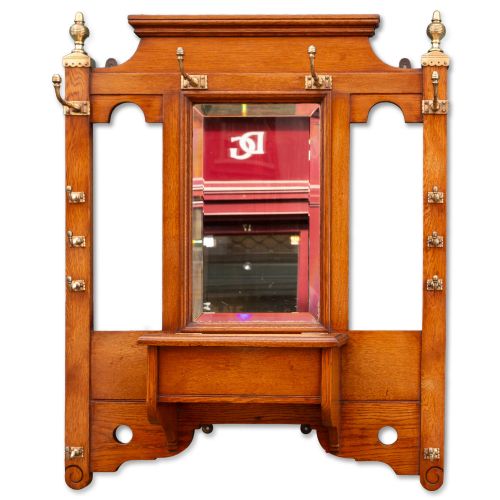
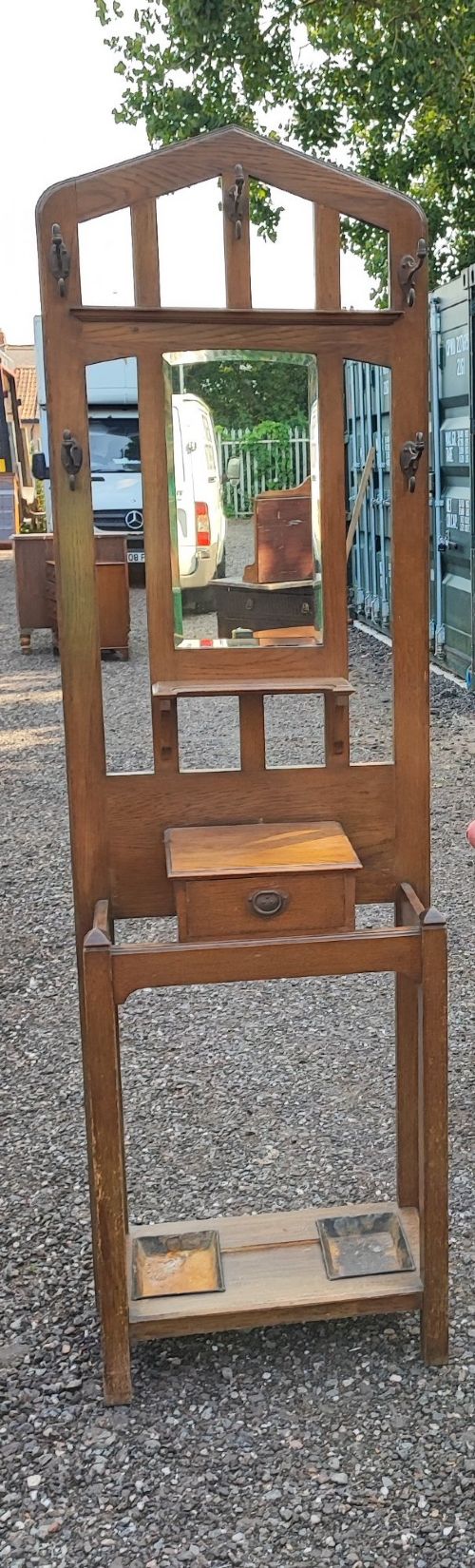
When buyers search for a vintage glove box, they often encounter larger hallway pieces such as hall stands and umbrella stands that incorporate storage compartments for accessories alongside hooks and mirrors. The listings here predominantly feature hall stands and umbrella stands from the Victorian and Edwardian eras, alongside related containers.
The objects span multiple decades from the nineteenth century into the early twentieth century, capturing distinct aesthetic shifts. Pieces range from robust mid-nineteenth-century examples to lighter early twentieth-century designs.
Forms include wall-mounted coat racks and freestanding hall stands featuring provisions for hats, coats, sticks, and smaller personal items. These domestic items reflect the functional requirements of Victorian and Edwardian entrance halls.
Materials and construction methods
Cabinet makers utilised a variety of timbers including oak, walnut, mahogany, and rosewood to construct these hall furnishings and boxes. Golden oak and light oak appear alongside darker hardwoods.
Metal elements such as brass and iron provide structural support, hooks, and decorative highlights on wooden frames. Glass and mosaic inlay also feature in specific decorative styles.
Carved detailing, fretwork, and turning define the surface ornamentation across the pieces. Joinery techniques connect the wooden frameworks to withstand the weight of coats and umbrellas.
The listings span from 1850 to 1910, encompassing Victorian, Edwardian, and Arts and Crafts aesthetics.
Assessing quality in construction and design
The refinement of the carved detailing and the choice of timber grain distinguish standard utilitarian items from more ambitious works. Dense hardwoods like walnut and figured mahogany indicate a higher grade of manufacture.
Stylistic coherence within revival periods, such as Jacobean Revival or Gothic Revival, dictates the success of the piece. Arts and Crafts examples rely on clean lines and honesty of material rather than heavy ornamentation.
The Vintage Glove Box Glossary
- Hall stand
- A piece of hallway furniture combining coat hooks, a hat shelf, a mirror, and a umbrella stand with a drip tray. These items often include small lidded compartments for gloves and keys.
- Arts and Crafts
- A design movement prioritising traditional craftsmanship, simple forms, and visible construction methods. Pieces from this style often feature light oak without heavy historical revival ornament.
- Tunbridge Ware
- A type of decorative woodwork characterised by tiny mosaic tiles formed from differently coloured woods to create pictorial designs. This technique appears on small nineteenth-century boxes.
- Jacobean Revival
- A nineteenth-century style drawing inspiration from seventeenth-century English woodwork, featuring heavy turned spindles and deep geometric carving. Furniture in this style exhibits a robust, dark appearance.
Vintage Glove Box: Frequently Asked Questions
What is a hall stand?
A hall stand is a multi-functional piece of entrance hall furniture designed to hold outdoor wear such as hats, coats, sticks, and umbrellas. They frequently incorporate mirrors and small compartments.
These items served as the primary storage station for visitors and residents upon entering a nineteenth or early twentieth-century home.
How do I date a piece?
Dating relies on identifying stylistic markers, timber choices, and construction techniques associated with periods like the Victorian era or Edwardian era. Heavier carved walnut points to the nineteenth century, while lighter oak often indicates the early twentieth century.
Examining the fixings and secondary woods provides further clues to the manufacturing decade.
Where were these placed?
These furnishings stood directly in the entrance hall or vestibule of a house to receive outdoor garments immediately upon arrival. Wall-mounted variants were fixed near doorways to save floor space in smaller hallways.
Their placement ensured guests could deposit hats and umbrellas conveniently.
What is Tunbridge ware?
Tunbridge Ware refers to wooden items decorated with mosaic patterns made from many small blocks of naturally coloured timbers. These intricate geometric or floral designs create striking mosaic surfaces on small wooden boxes.
The technique originated in Kent during the nineteenth century.