






Vintage Globe Decor
Vintage globe decor brings geography and history into a room through globes and terrestrial spheres.
Vintage Globe Decor
When buyers search for vintage globe decor, they look for geographical spheres, terrestrial globes, and table globes that reflect centuries of cartography. These decorative items serve as striking focal points in a study or library.
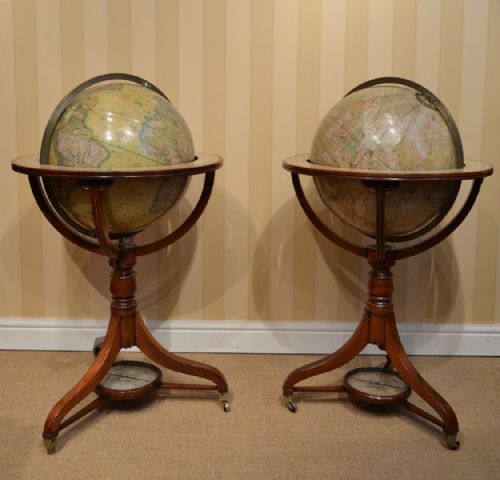
The pieces on this page span several distinct periods, including the eighteenth century, nineteenth century, Victorian era, and nineteen-thirty. Forms range from miniature table globes to larger floor models and desktop globes.
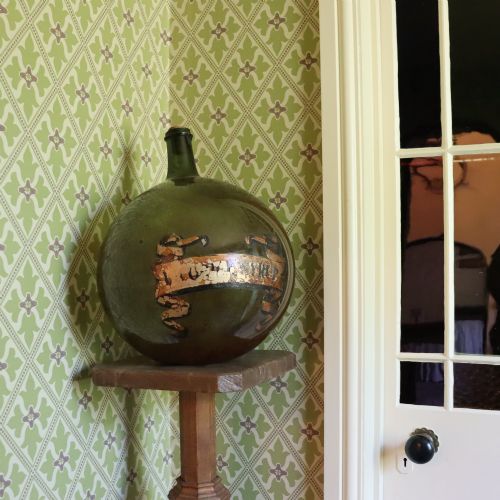
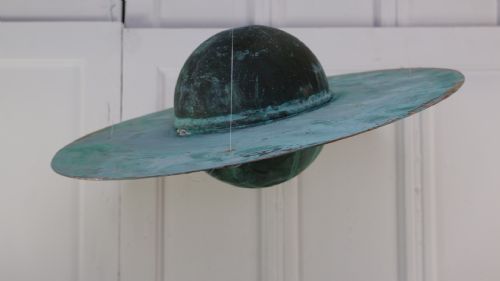
Makers such as Geographia, J. Forest, Bacons, Thomas Malby, and Crunchley appear across the inventory. Alongside standard terrestrial globes, the selection includes related scientific and astronomical forms such as apothecary carboys and copper Saturn models.
Materials and construction
Makers constructed these items using paper maps mounted over plaster spheres or paper mache. Artisans then fitted these globes into wooden, brass, or metal mountings.
Cabinetmakers utilised mahogany for stands and bases, whilst other pieces incorporate blown glass, gold leaf, and copper components. This combination of materials gave each piece structural integrity and decorative weight.
Vintage Globe Decor Retail Price Guide 2026
Typical asking prices for vintage globe decor among the pieces listed under this phrase on Sellingantiques today, from the lower quarter to the upper quarter. They describe what is for sale here now, not the wider market.
Listings feature pieces spanning the eighteenth century, nineteenth century, and nineteen-thirty, utilising paper, brass, wood, metal, and mahogany.
Quality differences
Quality rests upon the clarity of the cartographic engraving and the precision of the gores applied to the sphere. Finer examples display meticulous hand-colouring and detailed geographical labelling.
The integrity of the supporting stand also dictates the grade of the piece. Solid mahogany bases and intricate brass meridians indicate superior craftsmanship compared to simpler metal or plaster mountings.
Geographia·J. Forest·Bacons·Thomas Malby·Crunchley
The Vintage Globe Decor Glossary
- Terrestrial globe
- A spherical map representing the earth. These items show political and geographical boundaries of specific historical periods.
- Gores
- Sector-shaped paper strips printed with cartographic details. Artisans paste these precisely onto the sphere to form a seamless map.
- Meridian
- A graduated brass or metal ring surrounding a globe. This component allows the sphere to tilt and rotate along specific axes.
- Table globe
- A small globe designed for placement on a desk or table. These pieces often feature dedicated wooden or metal stands.
Vintage Globe Decor: Frequently Asked Questions
What is vintage globe decor?
Vintage globe decor encompasses historical geographical globes, terrestrial spheres, and related scientific models used for display. These pieces combine cartographic history with decorative utility.
Items range from miniature table globes to larger nineteenth-century examples mounted on mahogany or brass stands. They offer a tangible link to past geographical knowledge.
How were old globes used?
Historically, globes served as practical reference tools for navigation, education, and understanding world geography. Libraries, studies, and classrooms utilised them daily.
Over time, their function shifted toward decorative display. Today, they bring academic charm and historical depth into residential and office interiors.
How do I date a globe?
Dating a globe involves examining the political boundaries, country names, and shipping routes printed on the cartographic gores. Changes in national borders provide clear chronological markers.
Additionally, the style of the wooden stand, the metal of the meridian, and the typography on the map help place the piece within periods such as the Victorian era or nineteen-thirty.
Where should I place a table globe?
Table globes suit placement on desks, bookshelves, sideboards, or dedicated wooden stands. Their compact size allows them to integrate easily into existing room layouts.
Positioning them away from direct sunlight protects the paper gores and delicate colours from fading. This ensures the cartographic details remain clear for viewing.