



Vintage Glass Sphere
These vintage glass sphere pieces bring distinct decorative presence and period charm to a room.
Vintage Glass Sphere
A vintage glass sphere encompasses a varied collection of decorative objects, lighting, and mirrors found across the nineteenth and twentieth centuries. Buyers seeking a vintage glass sphere will encounter diverse forms ranging from solid paperweights and witch balls to figural lamps incorporating spherical elements.
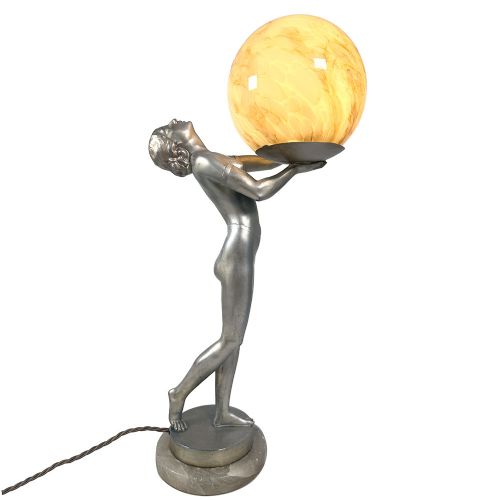
The pieces represented span multiple eras, with strong representation from the Art Deco period alongside Victorian, Regency, and Louis XVI styles. Common forms include table lamps featuring figures standing on spheres, wall mirrors with convex glass, and multi-armed candelabras.
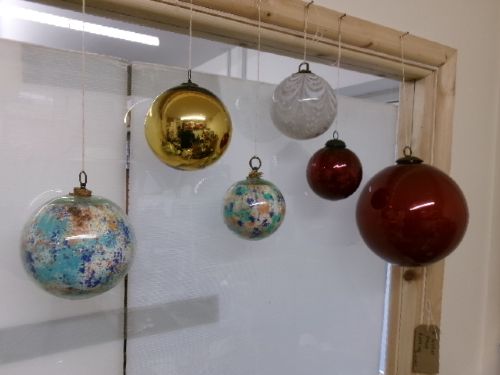
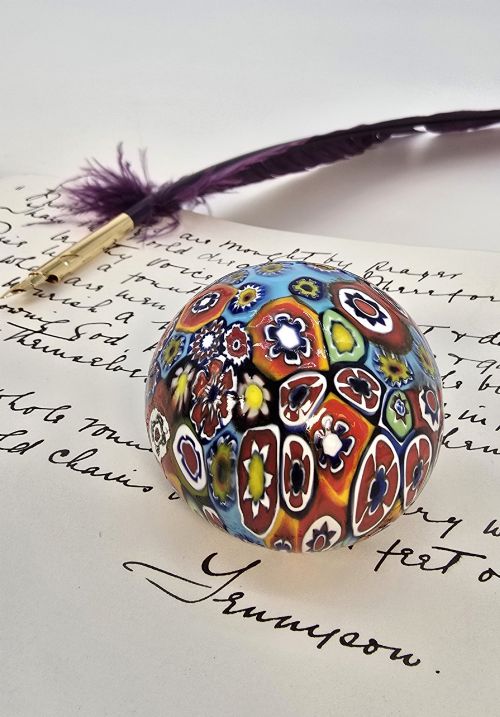
Murano glass paperweights and English Regency convex mirrors appear alongside French Art Deco figural lighting and Victorian potichomania witch balls. Each iteration demonstrates how makers utilised glass spheres as focal points within domestic interiors.
How they were made
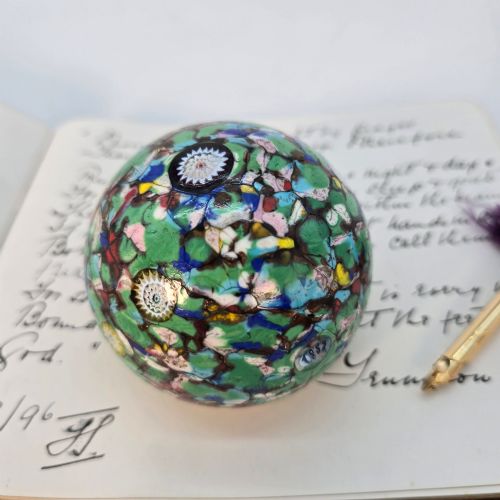
Makers combined blown and moulded glass with structural elements of brass, chrome, spelter, marble, and onyx. Glass spheres were shaped by hand or in moulds, often incorporating internal colour techniques such as millefiori work.
Metal components were cast and finished to support heavier glass elements, particularly in sculptural table lamps and ceiling lights. Bases utilised materials like marble and onyx to provide stable foundations for spherical glass components and figural mounts.
Vintage Glass Sphere Retail Price Guide 2026
Typical asking prices for vintage glass sphere among the pieces listed under this phrase on Sellingantiques today, from the lower quarter to the upper quarter. They describe what is for sale here now, not the wider market.
Greyhounds cast in bronze stand watch beside glowing night lights, keeping silent guard over polished marble plinths.
What varies in quality
Distinction across the range rests on the execution of the metalwork and the clarity or complexity of the glass. Pieces featuring detailed figural casting in spelter or bronze display greater artistic ambition than simpler utilitarian mounts.
The refinement of internal glass patterns, such as millefiori work in paperweights or the silvering quality in convex mirrors, dictates the visual depth of the spherical surface. Superior examples demonstrate harmonious integration between the glass sphere and its supporting base or frame.
The Vintage Glass Sphere Glossary
- Millefiori
- A glasswork technique producing distinctive patterned mosaic canes within the material. This method appears frequently in decorative paperweights.
- Potichomania
- An interior decoration craft involving the coating of glass surfaces with printed paper cutouts to imitate Chinese porcelain. Victorian examples utilise this method on spherical witch balls.
- Convex mirror
- A spherical reflector that curves outward to provide a wide-angle panoramic reflection of the room. Regency examples often feature gilt frames surrounding this curved glass.
- Spelter
- An alloy of zinc and other metals used as a substitute for bronze in decorative figures and lamp bases. It provides a sturdy substrate for patination.
- Witch ball
- A hollow glass sphere traditionally hung in windows to ward off evil spirits and misfortune. Victorian versions often display colourful internal decoration.
Vintage Glass Sphere: Frequently Asked Questions
What is a witch ball?
A witch ball is a hollow glass sphere historically hung in windows to ward off malevolent spirits and bad luck. Victorian examples often feature decorative internal glass threads and colourful patterns.
These pieces doubled as decorative objects that caught the light within domestic interiors. They represent a distinct tradition of decorative glassware from the nineteenth century.
How do I date an Art Deco lamp?
Art Deco lamps from the 1920s and 1930s typically feature geometric styling, stylised figures, and materials such as chrome, onyx, and spelter. Designers often incorporated spherical glass shades or bases into these figural compositions.
Examining the construction methods and the materials used helps determine the era of manufacture. Many pieces from this period celebrate the human form balanced upon or beside glass spheres.
Where were Murano paperweights made?
Murano paperweights originate from the islands of Murano near Venice, a historic centre of Italian glassmaking. Artisans utilised specialised techniques like millefiori to create intricate patterns within the solid glass sphere.
These Italian pieces are noted for their vibrant use of colour and refined glassblowing skills. Collectors prize them for their distinct artistic heritage.
How do convex mirrors function?
Convex mirrors use a curved spherical glass surface to reflect a wide field of view across an entire room. Regency versions are typically set within round gilt frames with decorative mouldings.
Beyond their optical properties, these mirrors served as prominent decorative wall fixtures in formal interiors. They distribute light and create the illusion of expanded space.