






Vintage Glass Prisms
Vintage glass prisms refract candlelight and daylight through cut crystal chandeliers, wall lustres and mantel pieces.
Vintage Glass Prisms
Vintage glass prisms form the sparkling hanging drops, pendants and swags that define decorative lighting and mantel ornaments from past centuries. When you search for vintage glass prisms, you encounter items designed to catch and scatter light across a room.
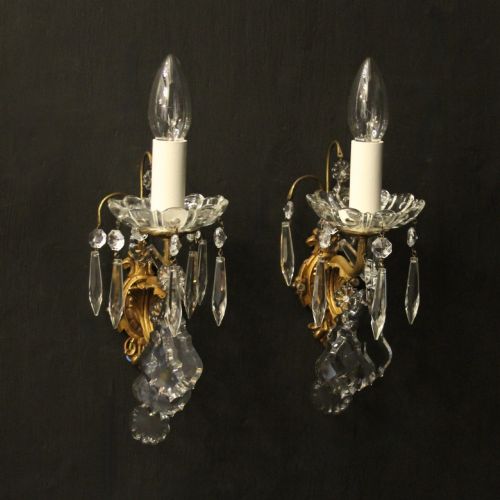
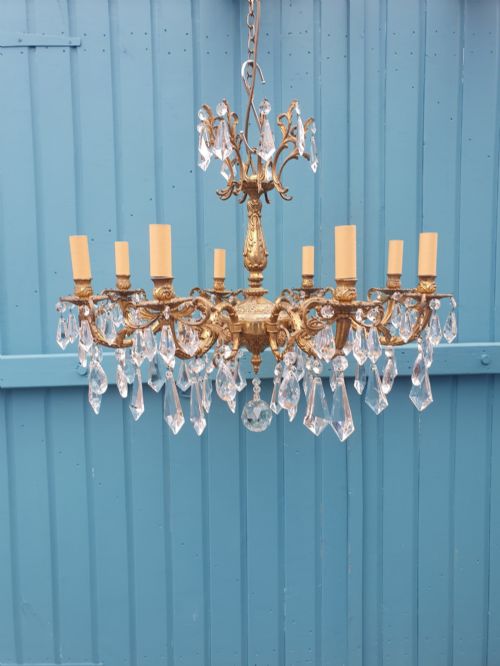
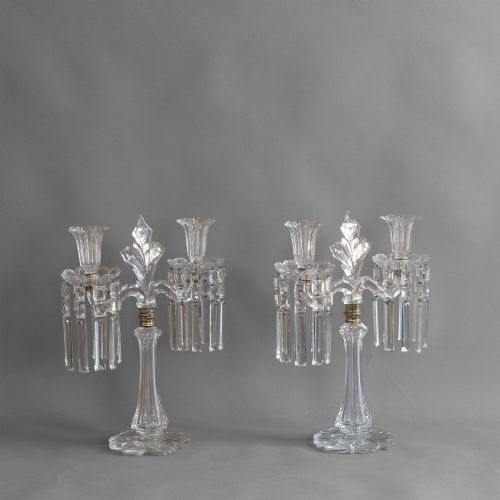
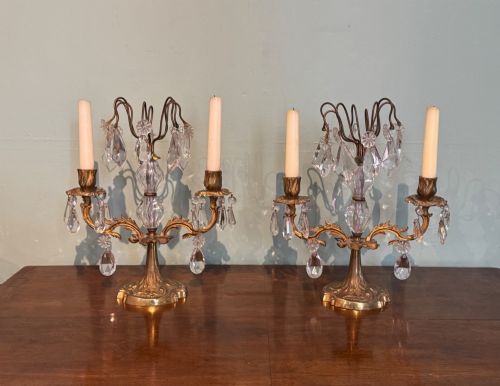
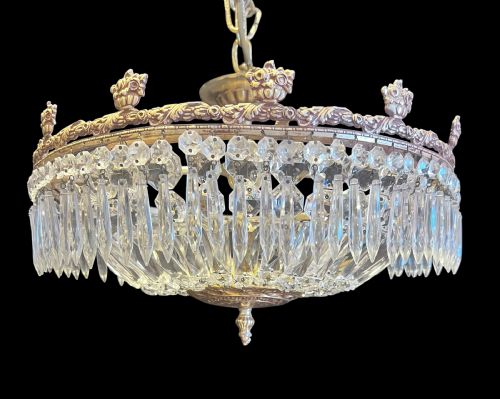
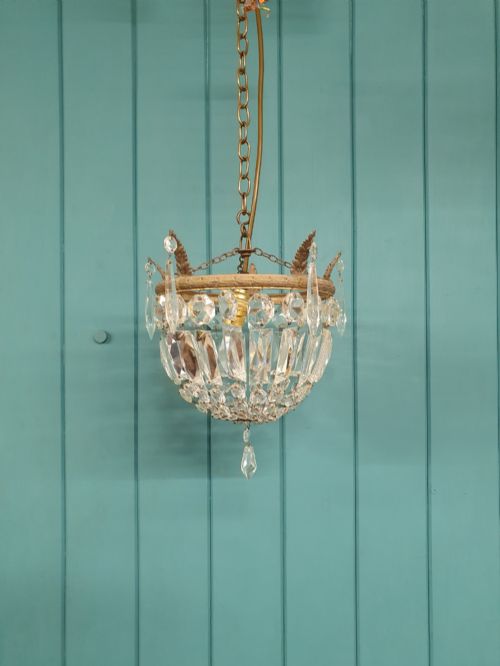
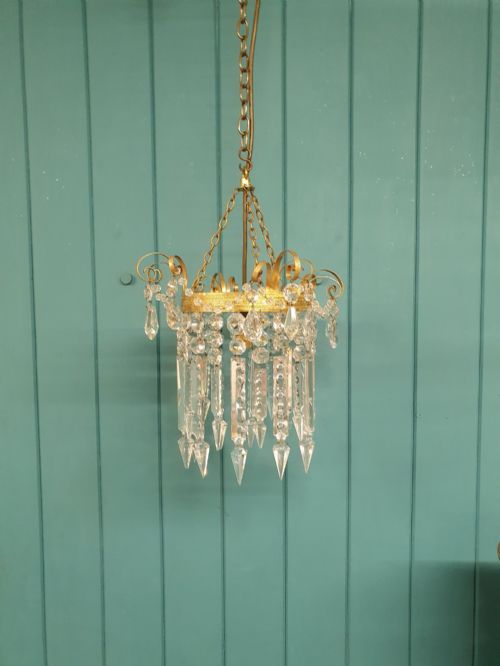
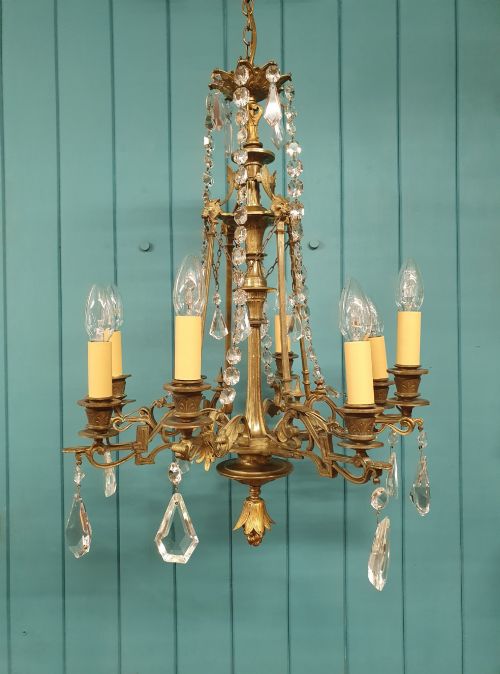
The pieces appearing here span ceiling lights, chandeliers, and table lustres dating from the nineteenth century through the Art Deco era and the 1930s. French styles and English Victorian designs dominate the selection, often incorporating intricate brass, gilt bronze, and cut crystal elements.
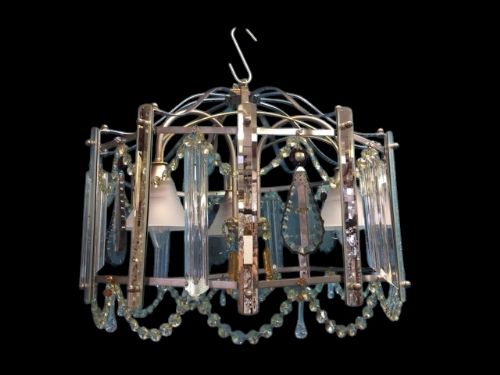
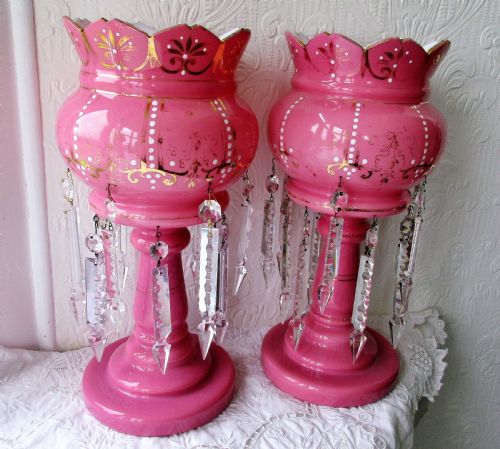
Most examples take the form of multi-armed chandeliers, basket fixtures, or pairs of mantel lustres hung with long drops, coffin prisms, and delicate glass beads. These items served both a functional lighting purpose and a decorative role in formal interiors.
How they were made
Makers shaped these components from clear and coloured glass or heavy lead crystal, cutting facets by hand to maximise light refraction. Metalwork frameworks utilised cast brass, gilt bronze, and gilt metal to support the hanging glass elements.
Individual prisms, spikes, and oblong drops attached to the main body using fine wire loops or pinned metal connectors. Enamel details and painted highlights occasionally decorated the bodies of Victorian table lustres alongside applied crystal drops.
Vintage Glass Prisms Retail Price Guide 2026
Typical asking prices for vintage glass prisms among the pieces listed under this phrase on Sellingantiques today, from the lower quarter to the upper quarter. They describe what is for sale here now, not the wider market.
Some Victorian mantel lustres were made in striking green and pink glass to add bold colour to formal rooms.
What varies in quality
Quality reveals itself in the depth of the hand-cutting on the crystal drops and the crispness of the casting in the brass or gilt bronze frames. Superior pieces maintain matching sets of original prisms rather than mixed replacement drops collected over time.
The complexity of the metal armature, such as multi-tiered waterfalls, basket frames, or detailed lion mask mounts, separates standard domestic lighting from grander salon fixtures.
The Vintage Glass Prisms Glossary
- Lustre
- A decorative tabletop ornament featuring a central vase or candlestick hung with long crystal pendants. These pieces were popular on Victorian mantelpieces.
- Coffin prism
- A flat-backed, wedge-shaped hanging glass drop with a pointed tip, commonly found on early twentieth-century and Edwardian chandeliers.
- Plafonniere
- A ceiling-mounted light fixture that sits close to the surface, often constructed with a brass frame and crystal drops.
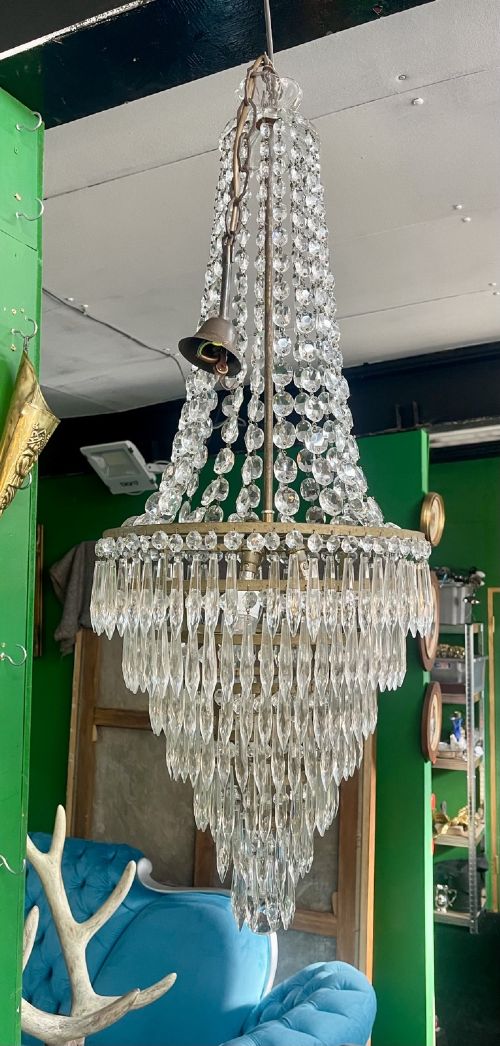
- Tent and waterfall
- A chandelier style featuring an upper conical section of glass beads above a cascading shower of hanging prisms.
Vintage Glass Prisms: Frequently Asked Questions
How do I clean a crystal chandelier with prisms?
Remove dust gently using a feather duster before wiping individual glass prisms with a diluted solution of warm water and mild dish soap. Dry each piece thoroughly with a lint-free cloth to restore its sparkle.
Take care not to twist the delicate wire connectors holding the glass drops to the brass or bronze frame while you clean.
Where were table lustres placed?
Victorian households traditionally displayed pairs of table lustres on mantelpieces above fireplaces, where candle flames caught the hanging glass drops.
They also appeared on sideboards and entrance hall consoles to amplify the ambient light of the room.
What is the difference between a chandelier and a lustre?
Chandeliers hang from the ceiling to illuminate an entire space from above using multiple arms and suspended glass prism swags. Lustres are self-contained tabletop decorative objects that combine a candle holder with hanging crystal drops.
While both utilise vintage glass prisms, lustres sit on furniture surfaces rather than hanging overhead.
How can I date a prism chandelier?
Examine the metalwork and the specific cut of the glass drops to determine the era of manufacture. Edwardian and 1930s pieces often feature simpler brass frames and distinct prism shapes like coffin drops, while nineteenth-century examples tend toward heavier gilt bronze and intricate basket designs.
Wiring methods and ceiling attachments also provide clues regarding whether a fixture retains its original electrical conversion or period components.