


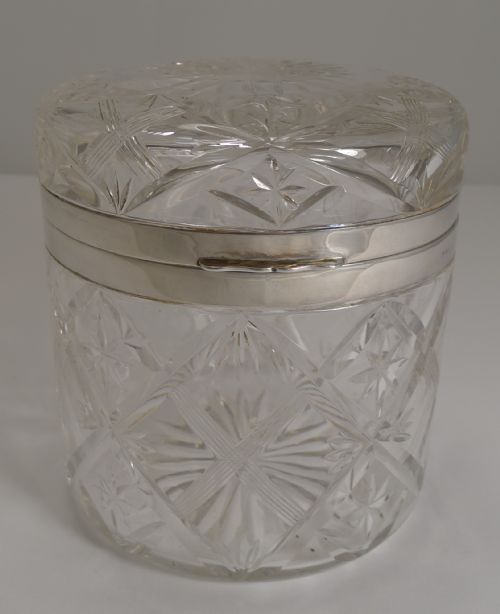

Vintage Glass Powder Bowl
These vintage glass powder bowls sit heavy on the dressing table, catching light through cut crystal and coloured enamel.
Vintage Glass Powder Bowl
When you search for a vintage glass powder bowl, you are looking at vanity vessels designed to hold loose cosmetic powder or dressing table items. These pieces span from the early twentieth century through the Art Deco period and into the mid-century modern era.
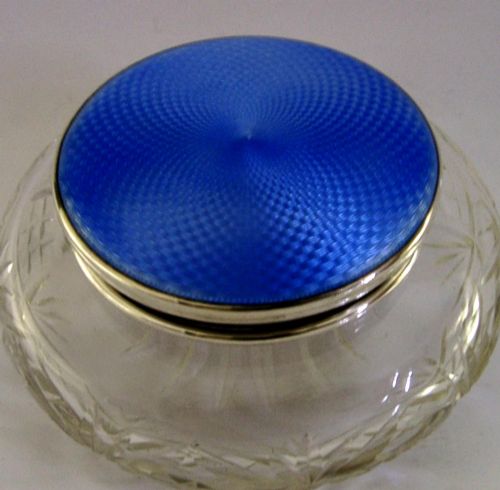
The versions you are most likely to meet on this page take the form of lidded bowls, vanity jars, and trinket boxes. They combine heavy glass or crystal bodies with decorative covers made from sterling silver, enamel, and sometimes tortoiseshell.
Originating as essential dressing table accessories for twentieth-century dressing routines, these containers often arrive alongside perfume bottles or as part of wider vanity sets. Their forms range from simple circular vessels to large, faceted crystal jars.
How they were made
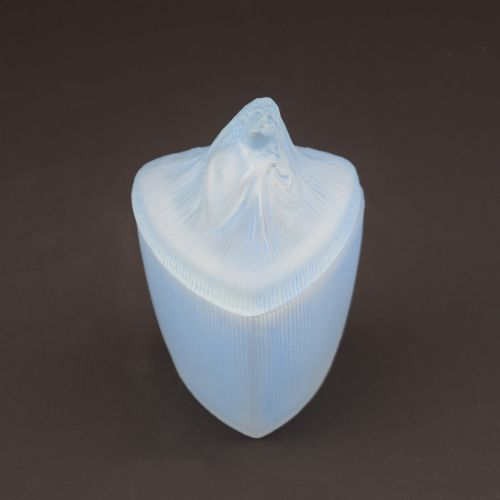
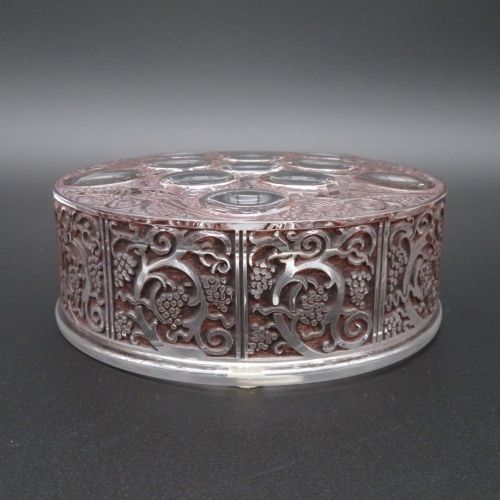
Makers shaped the vessels using heavy glass, frosted glass, cut crystal, and opalescent glass, often employing moulding and deep cutting techniques to catch the light. These glass bodies provide a solid, substantial weight that grounds the piece on the dressing surface.
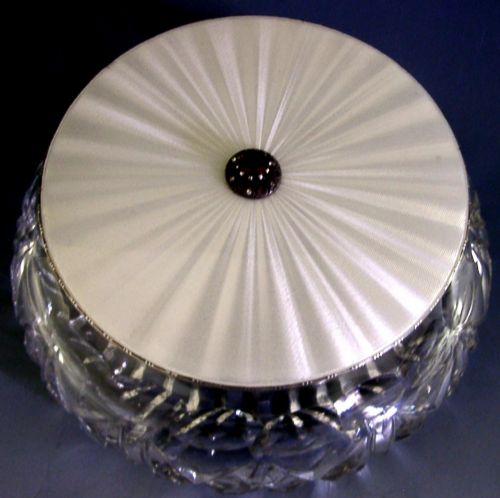
The lids and mounts rely on sterling silver, frequently paired with coloured enamel in blue, pink, or red tones. Some workshops incorporated intricate guilloche engraving beneath the enamel or fitted panels of tortoiseshell into the silver framework.
Listings feature pieces spanning from the Edwardian era through the Art Deco period to the mid-twentieth century.
What varies in quality
The distinction between standard examples and superior pieces rests on the depth of the glass cutting and the crispness of the moulding. Heavier cut crystal and intricate opalescent relief work indicate a higher grade of manufacture.
Quality also shows in the metalwork and decoration of the lid, where thick sterling silver mountings and undamaged, hand-applied enamel elevate the piece. Pieces bearing clear hallmarks for silversmiths and specific assay towns offer greater certainty of origin.
Rene Lalique
The Vintage Glass Powder Bowl Glossary
- Opalescent glass
- Glass that displays a milky, translucent appearance with milky-blue or fire-like highlights at the edges. This effect was favoured by French glassmakers in the early twentieth century.
- Guilloche
- A decorative mechanical engraving technique that produces precise, intricate geometric patterns beneath a translucent layer of coloured enamel. It appears frequently on silver vanity lids from the period.
- Cut crystal
- High-clarity glass containing lead oxide, shaped with deep geometric facets that refract light sharply. It provides the heavy, resonant body found in finer dressing table jars.
- Hallmark
- An official stamp applied to precious metals, indicating the standard of purity, the assay office, and the year of manufacture. These marks help date the silver mounts on glass bowls.
- Enamel
- A smooth, glossy substance fused to metal surfaces through high-temperature firing. In these pieces, it provides vibrant splashes of colour across silver lids.
Vintage Glass Powder Bowl: Frequently Asked Questions
What were vintage glass powder bowls used for?
These vessels held perfumed face powder on dressing tables before the advent of modern cosmetic packaging. Women used a fluffy powder puff stored inside the bowl to apply powder during daily grooming routines.
Over time, many of these containers transitioned to holding smaller trinkets, hairpins, or jewellery as cosmetic habits changed through the decades.
How do I date a silver lidded powder bowl?
You can date the silver components by examining the hallmarks stamped into the metal mounts or the rim of the lid. These small marks indicate the assay office, such as Birmingham, and include a date letter corresponding to the exact year of testing.
Stylistic clues like Art Deco geometric facets or Edwardian floral motifs also help place the piece within a specific decade.
Are these powder bowls fragile for daily use?
While the glass bodies are typically thick and heavy, the protruding edges of cut crystal and the applied enamel on silver lids require careful handling. They are durable enough for display on a dressing table but benefit from gentle placement.
Lids with tortoiseshell or delicate enamel deserve particular care to prevent surface scratching or chipping during removal.
How should I clean a glass powder bowl?
Wash the glass body gently in warm, soapy water using a soft cloth to remove residual cosmetic dust. Avoid submerging silver lids that feature glued elements, enamel, or tortoiseshell panels.
Polish the silver mounts sparingly with a non-abrasive cloth, keeping metal polishes away from the glass and enamel surfaces.