




Vintage Glass Lustre Lamp
These vintage glass lustre lamp pieces bring striking sparkle and period presence to a room, catching the light in a way few other fittings manage.
Vintage Glass Lustre Lamp
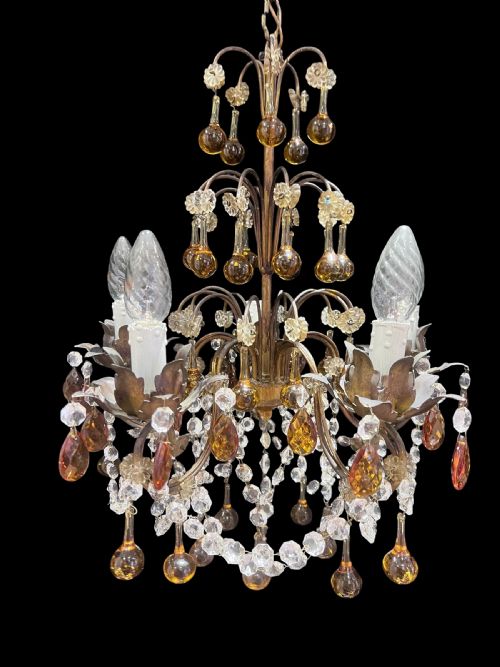
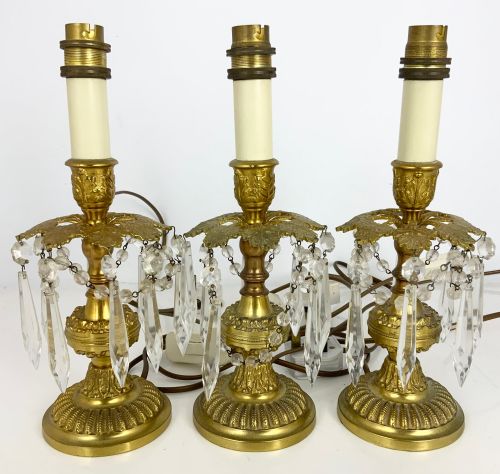
When you search for a vintage glass lustre lamp, you are looking at decorative lighting and mantel ornaments designed to catch and refract light through suspended crystal drops. The pieces on this page span the Victorian and Edwardian periods up to the nineteen-thirties, taking forms such as candle lamps, table lamps, mantle lustres, and small chandeliers.
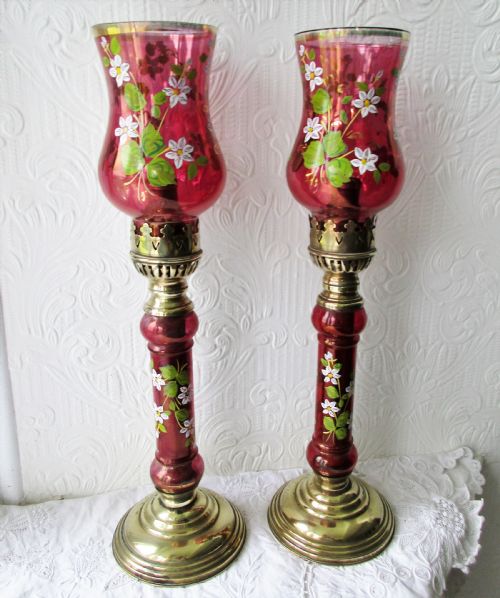
You are most likely to meet pairs of mantle lustres or table lamps featuring cranberry glass, clear crystal glass, and enamel details mounted on brass or gilt metal bases. Styles range from French classical and Italian antique to English Victorian and early twentieth-century designs.
How they were made
The construction relies on heavy glass bodies paired with brass, gilt brass, or gilt metal mounts to support the weight of the components. Hand-cut crystal glass drops and pendants hang from the rims, joined to the main body by small wire loops or pins.
Coloured glass, particularly cranberry glass, is combined with enamel decoration and clear crystal to create rich visual contrast. Some variants incorporate fitted storm shades of glass above brass and glass candle-lamp structures.
Materials across these listings include cranberry glass, crystal, brass, and enamel.
What varies in quality
The distinction between the ordinary and the exceptional lies in the depth of the glass colour, the precision of the hand-cutting on the crystal drops, and the crispness of the brass or gilt metal casting. Lustres with rich cranberry tones and heavily faceted crystals show a finer hand in the workshop than those with plain glass and simple pressed drops.
Proportion and completeness also define the standard of a piece, particularly where matching pairs of mantle lustres or table lamps retain their original complement of hanging crystal drops without replacement substitutions.
The Vintage Glass Lustre Lamp Glossary
- Lustre
- A decorative glass or porcelain vase or candlestick fitted with hanging crystal pendants designed to sparkle in candlelight or gaslight. These drops multiply the reflection of light within a room.
- Cranberry glass
- A rich red-pink transparent glass created by adding gold chloride to the molten batch during production. It remains a defining feature of nineteenth-century decorative glassware.
- Storm shade
- A tall cylindrical glass shade placed around a candle or burner to protect the flame from drafts. They appear on certain nineteenth-century candle-lamps.
- Gilt metal
- Base metal treated with a thin layer of gold leaf or gilt paint to simulate solid or heavy ormolu. It provides a bright metallic contrast to coloured glass bodies.
Vintage Glass Lustre Lamp: Frequently Asked Questions
How do I clean a lustre lamp?
Remove the hanging crystal drops individually and wash them in warm soapy water using a mild detergent, drying them carefully with a soft cloth before rehanging. Wipe the glass body and brass mounts gently with a dry or barely damp cloth to protect any enamel work or gilding.
Avoid submerging mounted metal bases or parts with glued elements in water, as moisture can weaken old adhesives or discolour brass surfaces.
Were these originally for candles or electricity?
Many early pieces, including mantle lustres and candle lamps from the Victorian period, were designed specifically to hold candles or burn oil before domestic electricity became common. Later twentieth-century examples and chandeliers often incorporated electrical wiring from the outset.
Numerous antique lamps have since been adapted for modern electrical use by running a cord through the centre, while others remain purely decorative candle holders or mantel ornaments.
How do I date a glass lustre?
Examine the materials, the method of glass cutting, and the style of the metal mounts to determine the likely period of manufacture. Victorian pieces often feature heavy brass bases and deep cranberry glass, while Edwardian and early twentieth-century examples lean towards lighter frames and French-influenced crystal drops.
The shape of the hanging prisms and the composition of the metal work offer further clues to distinguish a nineteenth-century origin from a later twentieth-century reproduction.
Can missing crystal drops be replaced?
Replacement crystal drops can be sourced from specialist dealers and matched to the approximate size, cut, and age of the originals. Finding an exact match for nineteenth-century hand-cut prisms requires patience due to variations in glass tint and cutting styles.
Matching the attachment method, whether wire loops or small brass pins, ensures the replacement drops hang correctly alongside the surviving originals.