


Vintage Glass Dressing Pot
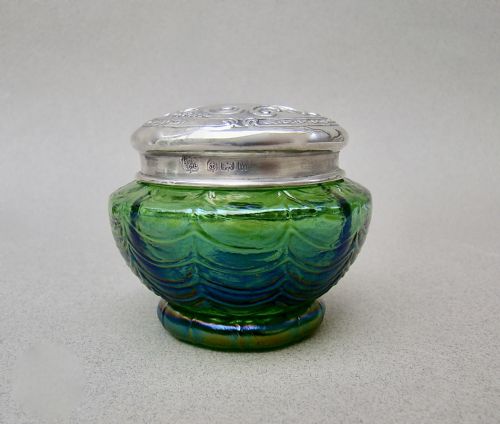
A vintage glass dressing pot sits on the dressing table to hold small trinkets, powder, or pins.
Vintage Glass Dressing Pot
A vintage glass dressing pot is a small container designed for the dressing table, holding vanity accessories, powder, or trinkets. These pieces span several decades, reaching from the Edwardian period through the 1920s and Art Deco era up to the mid-twentieth century.
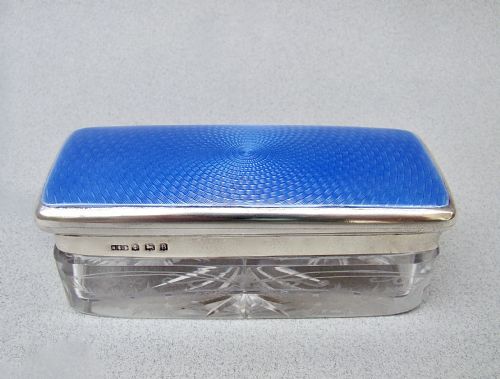
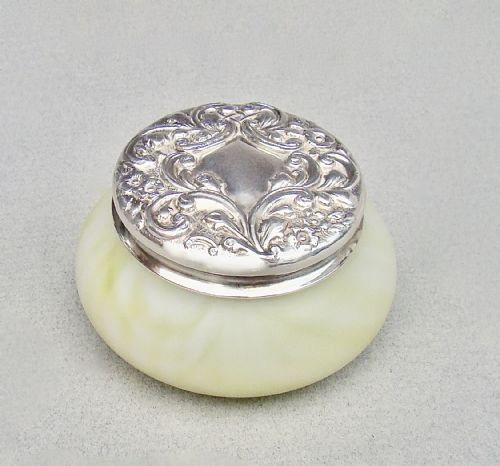
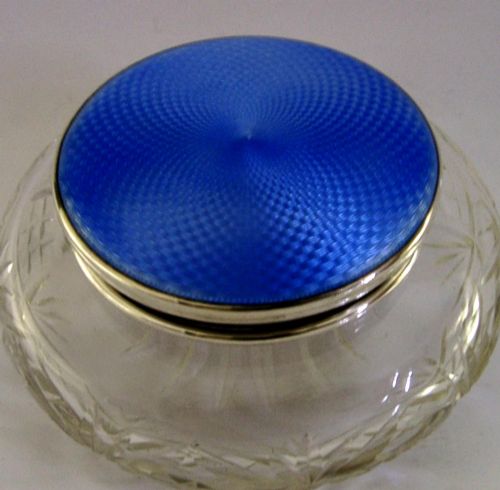
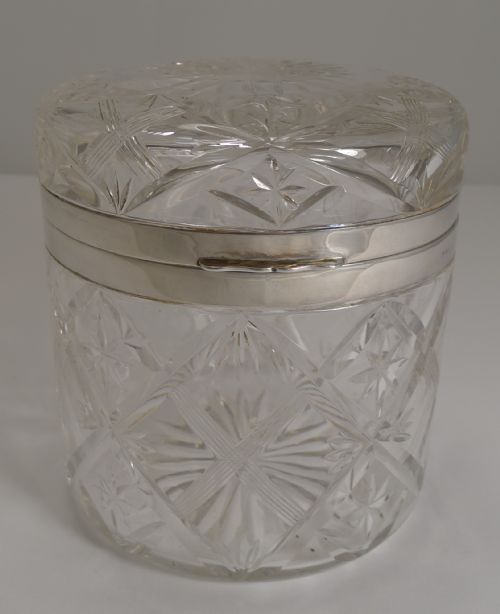
The versions most commonly found here pair a glass body with a fitted metal lid, frequently cast in sterling silver. Formats range from simple cut crystal jars to specialised rouge pots and heart-shaped vanity boxes.
Makers and silversmiths of the early twentieth century produced these items in various geometric and floral styles, reflecting Edwardian, Art Nouveau, and Art Deco aesthetics. They served as both functional containers and decorative dressing table accessories.
How they were made
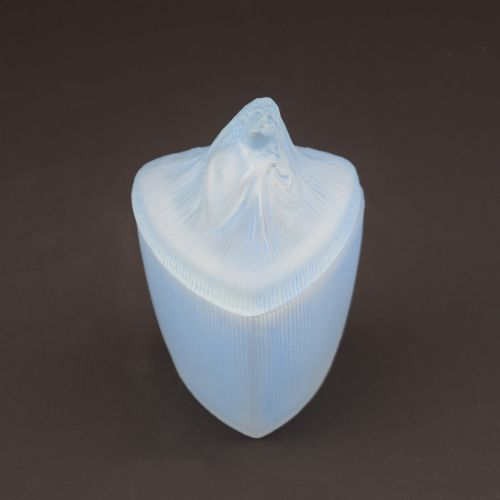
Makers formed the vessels using clear or coloured glass, including satin glass, cranberry glass, and overlay amethyst glass, often shaping them with deep cut crystal facets. Heavy pressing and hand-cutting techniques created robust walls capable of supporting metal mounts.
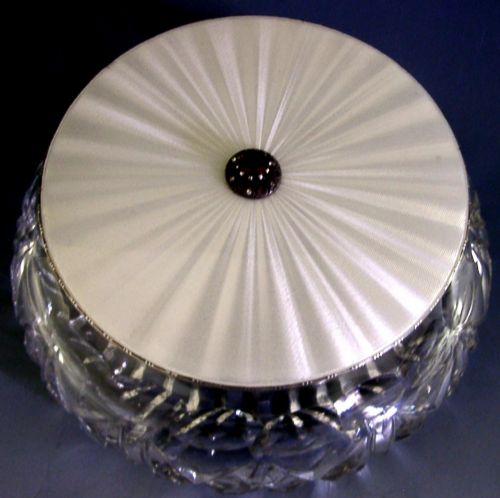
Lids and collars typically consist of sterling silver, fashioned by silversmiths working in Birmingham and other centres. Many pieces feature added surface decoration such as guilloche enamel, pink enamel, blue enamel, or tortoiseshell set into the silver.
Heart-shaped boxes and rouge pots reveal how Victorians and Edwardians kept their cosmetics safely concealed under gleaming silver lids.
What varies in quality
Quality shows in the weight and clarity of the glass, where deeply cut crystal and specialist coloured glass finishes such as satin or overlay indicate higher production standards. The crispness of the cutting and the absence of heavy surface wear distinguish the better vessels.
The metalwork and applied decoration also set pieces apart, particularly the precision of the sterling silver mounts and the intact condition of delicate guilloche or coloured enamel on the lids. Silversmith work bearing clear hallmarks denotes recorded provenance.
A. J. Pepper & Co·Henry Clifford Davis·A. Bromet & Co·Rene Lalique
The Vintage Glass Dressing Pot Glossary
- Guilloche enamel
- A decorative technique where translucent enamel is layered over engine-turned metal engraving. This creates repetitive geometric patterns that show beneath the coloured surface.
- Cut crystal
- High-clarity glass containing lead oxide, faceted by grinding and polishing. The cutting produces sharp light refraction across the body of the pot.
- Sterling silver
- An alloy of silver containing ninety-two point five percent pure silver by mass. It forms the standard material for the fitted lids and mounts on these jars.
- Satin glass
- Glass treated with an acid dip to produce a velvety, matte texture. It diffuses light softly across the surface of the container.
- Trinket box
- A small lidded container used for storing jewellery and personal items. They appear in circular, heart-shaped, and panelled forms on the dressing table.
Vintage Glass Dressing Pot: Frequently Asked Questions
What are vintage glass dressing pots used for?
These vessels held cosmetics, powder, pins, and small jewellery items on Edwardian and mid-century dressing tables.
Today they function as decorative storage for small daily accessories in bedrooms and bathrooms.
How do I date a silver-lidded glass pot?
Birmingham hallmarks on the sterling silver lid provide specific assay office letters and date stamps for the metal mount.
Stylistic indicators such as Edwardian floral motifs or Art Deco geometric enamel help narrow the production era of the glass body.
What materials make up these dressing pots?
The main bodies consist of clear cut glass, heavy crystal, or coloured glass such as cranberry and satin finishes.
Lids are predominantly sterling silver, often embellished with guilloche enamel, blue or pink enamel, and tortoiseshell.
How should I clean my glass dressing pot?
Wash the glass body gently in warm soapy water, avoiding harsh abrasives that could scratch the surface.
Polish the sterling silver mount with a soft cloth while taking care to protect any enamel or tortoiseshell inserts from moisture.