


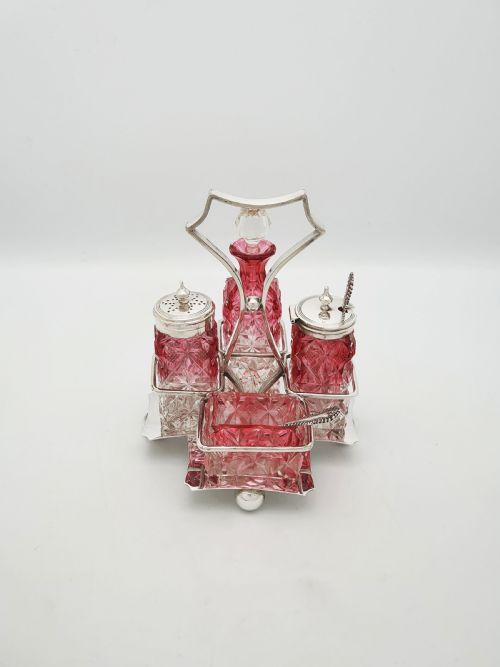


Vintage Glass Condiment Bottle
A vintage glass condiment bottle brings practical elegance to the table, offering a sturdy yet refined vessel for oils, vinegars, and sauces.
Vintage Glass Condiment Bottle
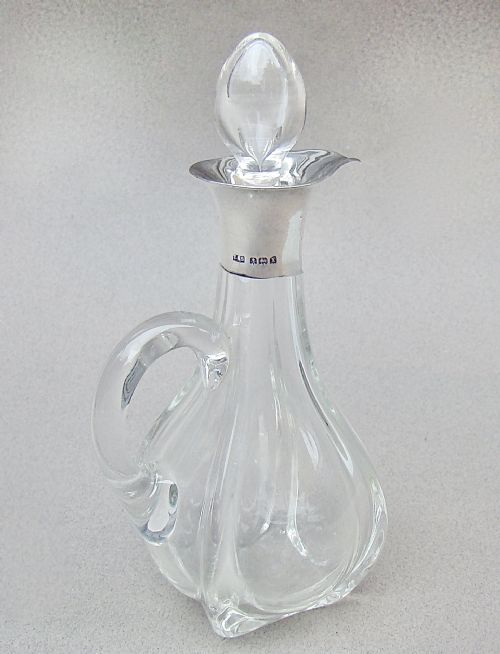
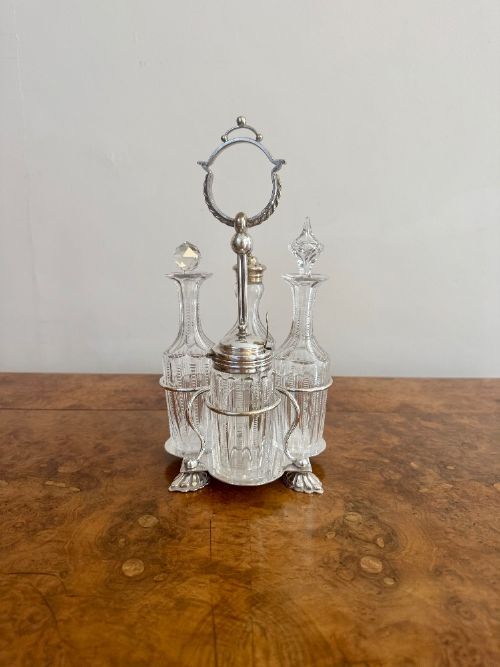
A vintage glass condiment bottle serves as a tabletop container for liquids or seasonings, frequently found within larger cruet sets or stands from past centuries. These pieces originate across the eighteenth, nineteenth, and early twentieth centuries, spanning Georgian, Victorian, Edwardian, and Art Deco eras.
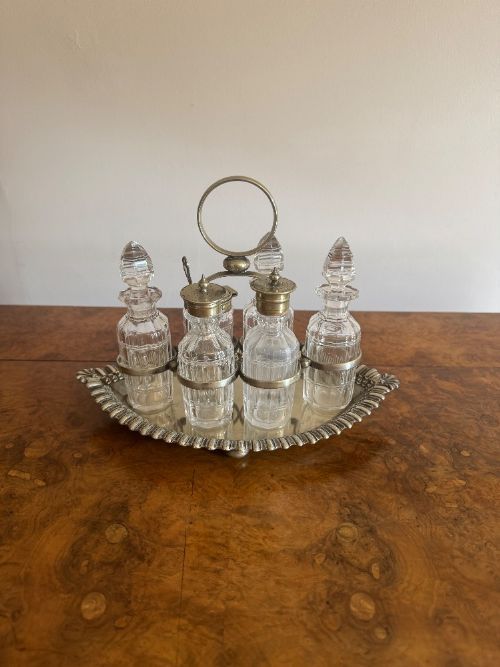
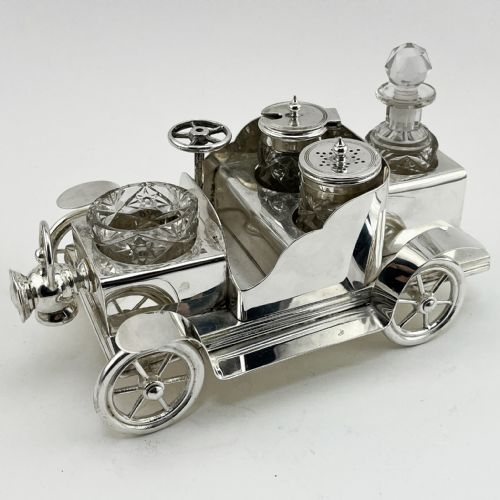
The selections on this page appear predominantly as individual cruet bottles, pairs of oil and vinegar bottles, or complete multi-bottle cruet sets housed in silver plated, sterling silver, Sheffield plate, or ebonised stands. Forms range from simple standalone containers to decorative six-bottle or seven-bottle arrangements designed for formal dining.
Makers and origins include British workshops alongside continental pieces, demonstrating a steady evolution in dining table accessories from the George III period through the modernist designs of the 1930s.
How they were made
Makers shaped the bottles using clear glass, crystal, lead crystal, or cranberry glass, often applying hand-cut facets or flash colouring to achieve distinct optical effects. The glass bodies frequently incorporate silver plate, sterling silver, or Old Sheffield Plate mounts, collars, and stoppers.
Techniques combine traditional glassblowing and hand-cutting with metal smithing and plating. Artisans fitted metal mounts securely to the glass necks, pairing utilitarian durability with ornamental refinement.
Vintage Glass Condiment Bottle Retail Price Guide 2026
Typical asking prices for vintage glass condiment bottle among the pieces listed under this phrase on Sellingantiques today, from the lower quarter to the upper quarter. They describe what is for sale here now, not the wider market.
What varies in quality
Quality rests upon the clarity and weight of the glass, the depth and precision of hand-cut facets, and the integrity of any metal mounts or stands. Heavier lead crystal and deeply cut designs represent a higher standard of manufacture than lighter, plain pressed glass.
The sophistication of the accompanying metalwork - whether substantial silver plate, genuine sterling silver, or early Old Sheffield Plate - distinguishes standard utility pieces from finer dining table appointments.
Walker & Hall·Wade Wingfield Wilkins
The Vintage Glass Condiment Bottle Glossary
- Cruet set
- A matched collection of glass bottles or jars for holding condiments, typically housed in a metal frame or stand. These sets sat centrally on dining tables for easy access during meals.
- Cranberry glass
- A rich red glass created by adding gold chloride to the molten mixture during production. This decorative material appears frequently in Edwardian cruet bottles.
- Sheffield plate
- An early form of fused metal created by melting a sheet of sterling silver onto a heavier copper base. This technique preceded modern electroplating.
- Lead crystal
- Glass containing a high proportion of lead oxide, which increases weight, brilliance, and light refraction. It provides a resonant ring when struck gently.
Vintage Glass Condiment Bottle: Frequently Asked Questions
What is a vintage glass condiment bottle used for?
These bottles held oils, vinegars, and liquid condiments for seasoning food directly at the dining table. They provided a clean, controlled pour during meals.
Over time, their role shifted from active dining accessories to decorative display items that reflect historical table settings.
How do I clean an antique glass bottle?
Wash the glass gently in warm, soapy water using a soft bottle brush to remove internal residue. Avoid harsh scrubbing on any cut glass facets or silver mounts.
Dry the pieces thoroughly with a lint-free cloth to preserve the clarity of the glass and prevent water spots on the metal.
How can I tell a Georgian bottle from a Victorian one?
Georgian bottles often feature simpler, heavier hand-blown forms with pontil marks on the base and restrained cutting. Victorian and Edwardian examples frequently display more elaborate cut patterns and integrated silver plated stands.
Examining the style of the metal mounts and the weight of the glass helps clarify the period of manufacture.
Can I use these bottles for daily dining?
Many sturdy glass bottles remain entirely functional for serving oils and vinegars at modern meals. Care must be taken with delicate antique glass and older silver plated mounts during washing.
Hand washing is essential to protect the historic materials from damage.