


Vintage Glass Bead Light
A vintage glass bead light brings complex sparkle and historic illumination into a room, spanning Edwardian, Art Deco, and French Empire styles.
Vintage Glass Bead Light
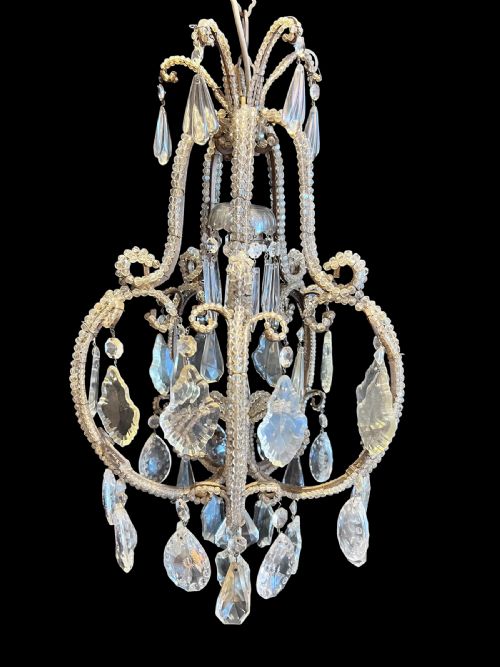
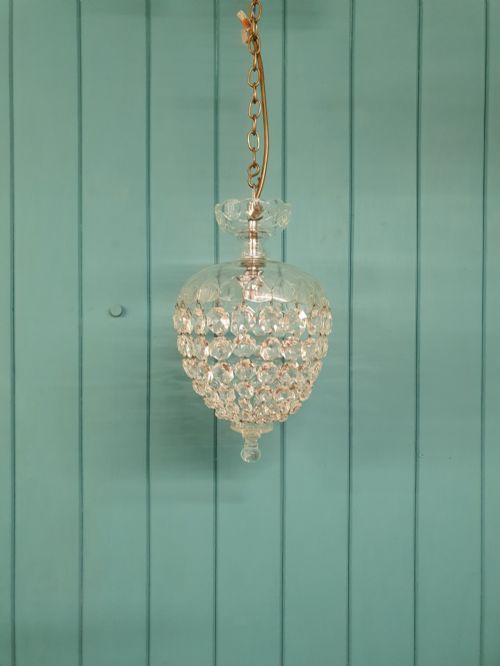
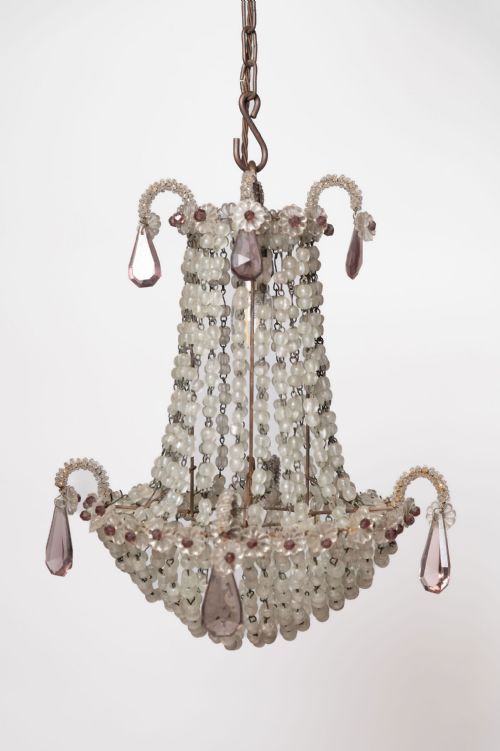
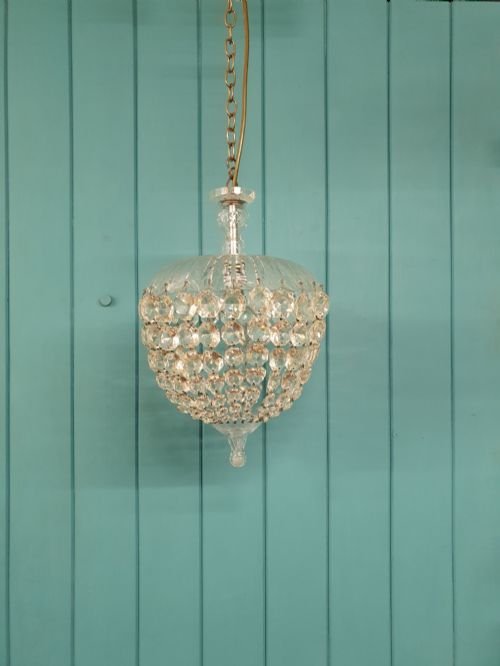
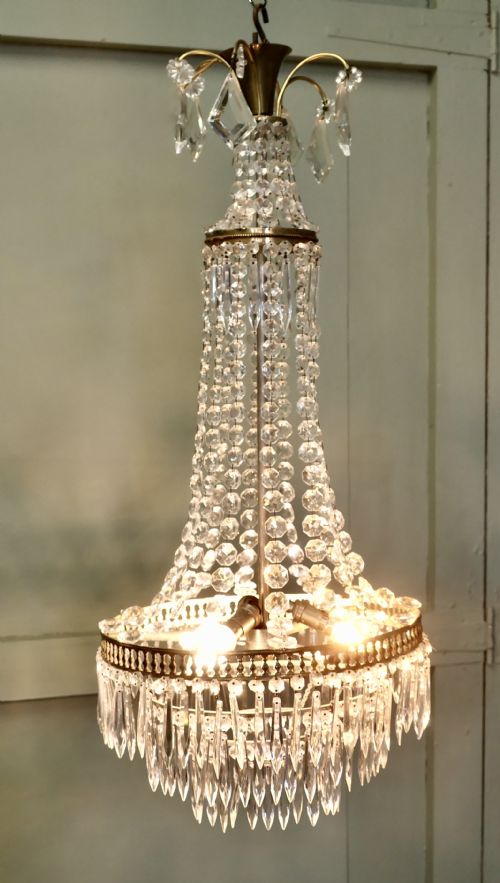
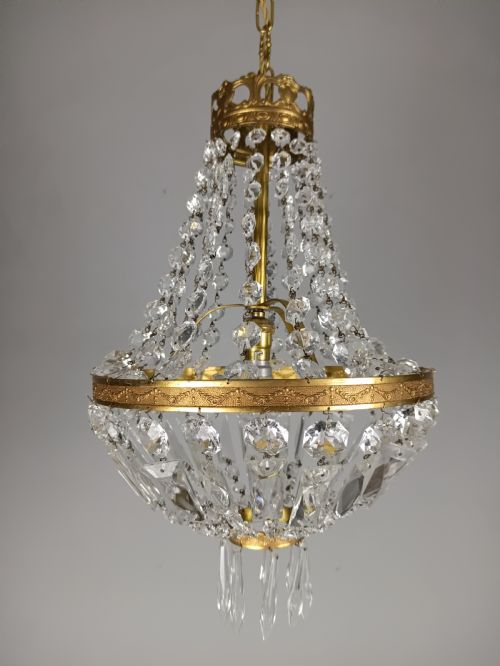
When searching for a vintage glass bead light, buyers encounter a diverse selection of hanging fixtures, flush domes, and table lamps originating from the nineteenth century through the 1930s. These pieces encompass Edwardian bag chandeliers, French Empire tent and waterfall designs, and Italian Florentine creations.
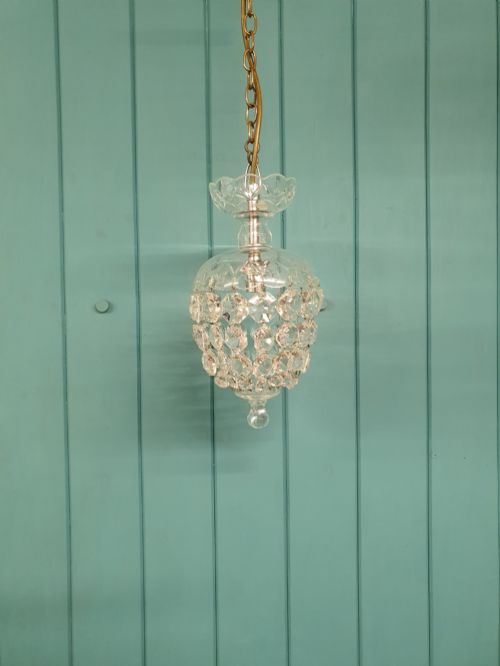
The most frequently met examples on this page are early twentieth-century Italian chandeliers and Edwardian cut glass fixtures incorporating wired drops, beads, and prisms. Brass and gilt metal frames commonly support these glass components across ceiling lights, wall lights, and pendant forms.
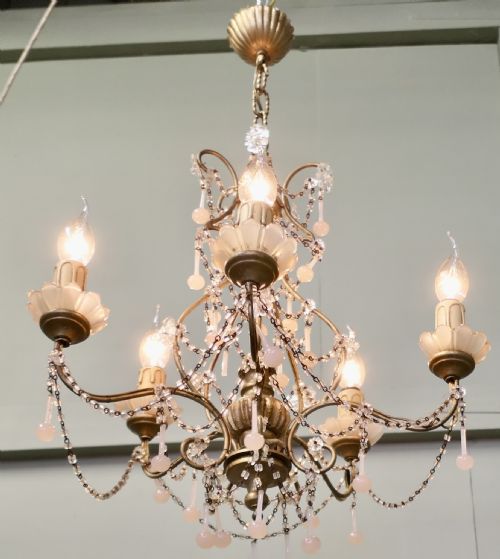
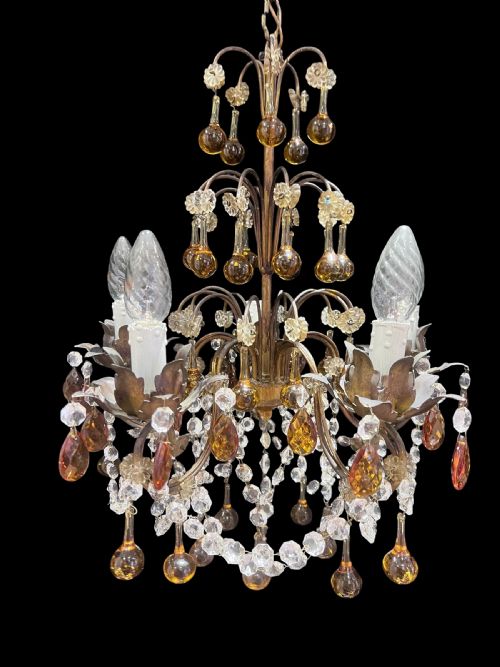
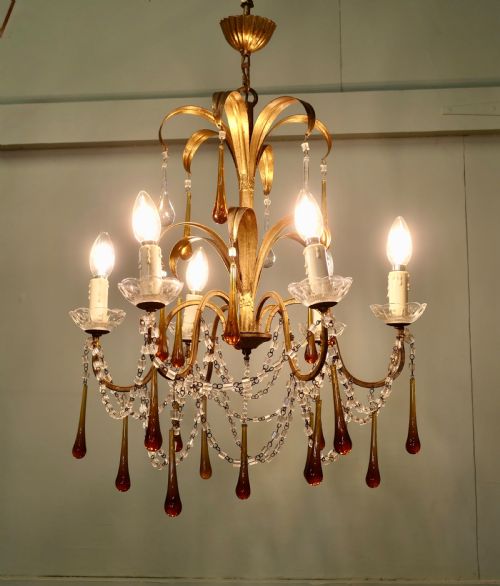
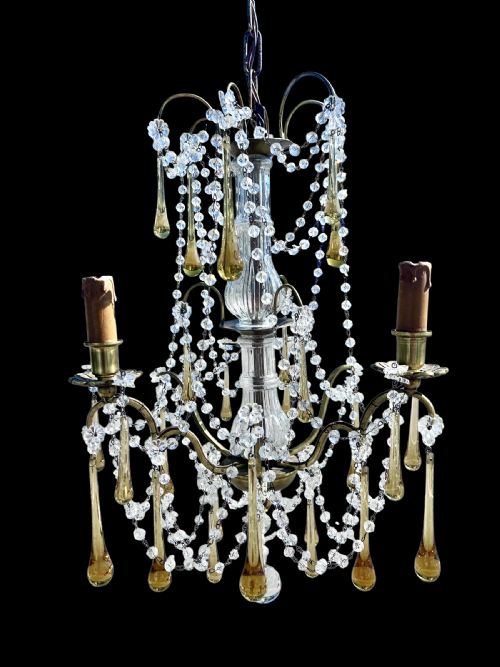
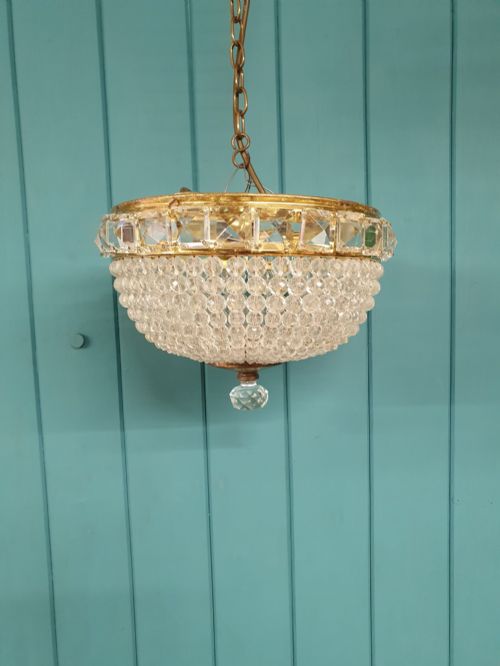
Makers and designers working within the French and Italian traditions produced varied configurations, from galleon-shaped chandeliers to simple dome tops. Regional styles range from Venetian pink glass branches to ornate gilt tolewear hung with amber teardrops.
Materials and construction methods
Makers constructed the foundational frames using brass, bronze, gilt metal, iron, and wire to support the weight of extensive glass elements. These structural metals were shaped into bag forms, tent and waterfall frames, or multi-branched chandelier arms.
Cut glass, crystal, and glass beads were hand-strung or wired directly onto the metal skeletons alongside individual prisms, drops, and cabochons. Coloured crystals in amber, red, blue, and cobalt were frequently integrated to create varied light reflections.
Materials documented across the listings include brass, bronze, cut glass, gilt metal, iron, and fabric.
Distinctions in craftsmanship and design
Quality in these lighting fixtures rests upon the density and cut of the glass components, the structural integrity of the metal frame, and the complexity of the arrangement. Denser crystal drops and heavier brass or bronze mountings distinguish the finer productions from simpler wire and glass bead assemblies.
The finesse of the metalwork, such as detailed casting on bronze lamps or intricate gilt framing on Florentine chandeliers, elevates an object above standard commercial output. Cohesion in the colour palette and completeness of the original bead strands also determine the standing of each piece.
Georges Leleu
The Vintage Glass Bead Light Glossary
- Bag chandelier
- A lighting fixture featuring a flattened top that tapers down into a basket or bag shape formed of cascading glass beads and crystals.
- Tent and waterfall
- A chandelier style characterised by an upper canopy of glass beads gathered into a tent shape above a cascading lower section of drops.
- Tolewear
- Painted or lacquered sheet metal utilised in lighting frames and decorative accessories, frequently associated with French designs.
- Cabochon
- A polished, convex piece of glass or gemstone cut without facets, often set into bronze or metal lamp bases.
- Prism
- A cut glass pendant designed to refract light into spectral colours, suspended from the arms or rim of a chandelier.
Vintage Glass Bead Light: Frequently Asked Questions
How do I install a vintage glass bead light?
These fixtures require professional electrical installation due to their historic wiring and heavy metal frames. An electrician must secure the ceiling mount to a proper joist to support the combined weight of the metal and glass.
Modern ceiling boxes and appropriate conversion fittings often facilitate safe hanging while preserving the original decorative structure of the light.
What rooms suit a vintage glass bead light?
Compact dome top chandeliers and smaller bag fixtures fit well in hallways, bedrooms, or powder rooms where lower ceilings benefit from flush or semi-flush hanging. Larger tent and waterfall chandeliers suit principal reception rooms and high-ceilinged dining spaces.
Table lamps and wall lights provide accent illumination in sitting rooms and studies, echoing the primary overhead fixtures.
How do I clean a vintage glass bead light?
Cleaning requires removing dust with a soft brush and wiping individual glass beads and prisms with a mild solution of warm water and gentle soap. Leaving the crystals attached while cleaning prevents damage to the delicate wire fixings.
Submerging entire frames is generally avoided to protect historic metal patinas and prevent moisture retention in the wiring channels.
How can I tell Edwardian pieces apart from 1930s pieces?
Edwardian lighting often incorporates intricate brass frames, delicate cut glass drops, and traditional bag or dome shapes reflecting earlier nineteenth-century proportions. These pieces frequently feature clear crystal paired with polished brass.
Fixtures from the 1930s sometimes display bolder Art Deco geometric influences, coloured crystal fruits, or streamlined iron frameworks alongside traditional beaded cascades.