





Vintage Glass Ball
These vintage glass ball pieces encompass decorative spheres and vessels from the nineteenth century onwards, offering a touch of reflective charm for interiors.
Vintage Glass Ball
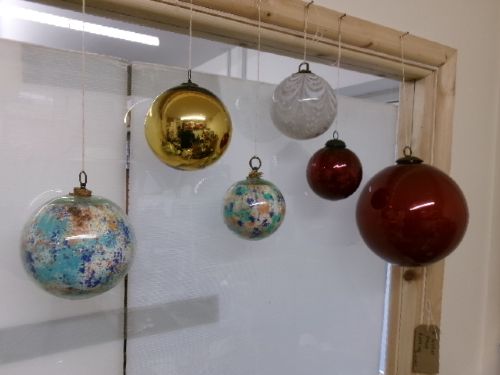
When you search for vintage glass ball, you encounter an eclectic selection of items ranging from nineteenth century mercury glass kugels to witch balls and decorative bowls. These items serve primarily as striking decorative objects rather than utilitarian vessels.
The assortment on this page includes nineteenth century examples alongside pieces from the Edwardian, Art Deco, and mid twentieth century periods. Forms vary from hanging ornaments and table lamp bases to bowls resting on small feet.
Origin details in the inventory point towards diverse European production, including French manufacturing houses and English decorative arts. Each piece displays distinct characteristics shaped by the prevailing design ethos of its specific decade.
How they were made
Glassmaking techniques for these objects involve free-blowing and mould-blowing processes, often utilising internal silvering compounds to achieve reflective metallic surfaces. Craftsmen manipulated molten material to create consistent spherical geometry.
Several items incorporate secondary materials such as metal mounts, gilt components, and carved wood bases to support the glass elements securely. These mounts demonstrate period-specific metalworking and joinery standards.
Vintage Glass Ball Retail Price Guide 2026
Typical asking prices for vintage glass ball among the pieces listed under this phrase on Sellingantiques today, from the lower quarter to the upper quarter. They describe what is for sale here now, not the wider market.
Listings incorporate nineteenth century mercury glass and twentieth century Art Deco table lamps featuring spherical glass elements.
What varies in quality
Quality differences reside in the purity of the glass metal, the uniformity of the spherical form, and the preservation of internal silvering or surface iridescence. Superior examples retain their original finish without extensive degradation or cloudy oxidation.
The craftsmanship of any accompanying mounts, bases, or decorative feet also dictates the overall standard of the piece. Finer items exhibit crisp casting, secure fittings, and harmonious proportions between the glass ball and its support.
Loetz·Portieux Vallerysthal
The Vintage Glass Ball Glossary
- Kugel
- A heavy glass bauble, often mercury-silvered internally, originally produced in central Europe during the nineteenth century. These heavy spheres were hung in windows or on trees.
- Witch ball
- A hollow glass sphere traditionally hung in windows to ward off evil spirits, witches, and ill fortune. They frequently feature interior filaments or bright reflective silvering.
- Iridescence
- A rainbow-like play of colour caused by the interference of light on micro-thin surface layers of glass. This optical effect is particularly noted in Art Nouveau productions.
- Mercury glass
- Double-walled blown glass coated internally with a silvering liquid to mimic polished metal. Despite the name, elemental mercury was rarely used in the final manufacturing solution.
Vintage Glass Ball: Frequently Asked Questions
What is a vintage glass ball used for?
These glass spheres primarily function as decorative interior objects, historically placed in windows or on stands to catch and reflect light.
Some examples also serve as sculptural bases for table lamps or form the central decorative element of ornamental bowls.
How do I care for antique glass balls?
Keep them out of direct sunlight to prevent fading or thermal shock to aged glass structures. Dust gently with a dry microfibre cloth and avoid liquid cleaners that might penetrate compromised silvering.
How can I tell the age of these items?
Examine the pontil mark on the base, which indicates the method of detachment from the blowing iron. Surface wear patterns, the type of internal silvering, and accompanying metal mounts also provide strong chronological clues.
Are all glass balls silvered inside?
Not all pieces feature internal silvering, as some utilise transparent coloured glass or iridescent finishes applied to the exterior. Witch balls and kugels typically rely on interior silver linings for their reflective properties.