






Vintage Glass Apothecary Storage
Vintage glass apothecary storage brings together old chemist bottles, sweet jars and shop display cabinets for practical use at home.
Vintage Glass Apothecary Storage
Vintage glass apothecary storage spans functional vessels and larger cabinets created for chemists, shops and archives during the nineteenth and early twentieth centuries. These pieces reflect utilitarian origins where durability and clarity mattered most to working trades.
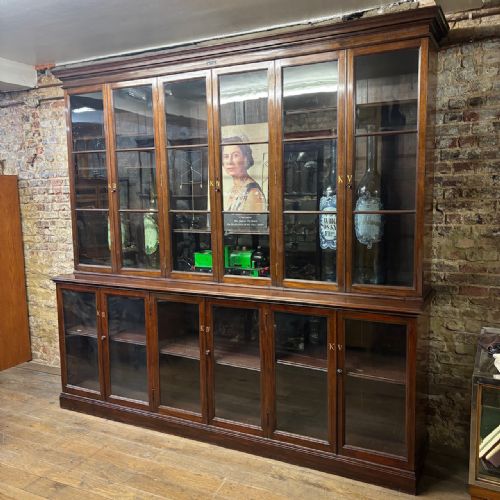
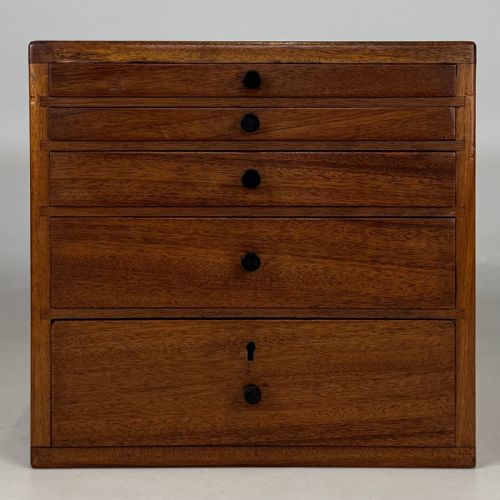
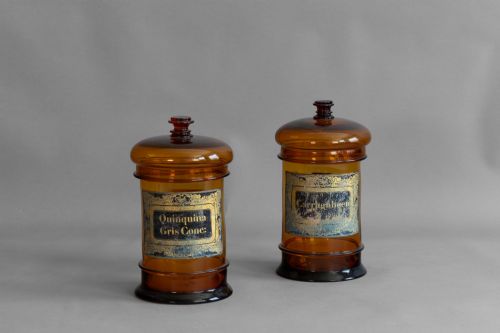
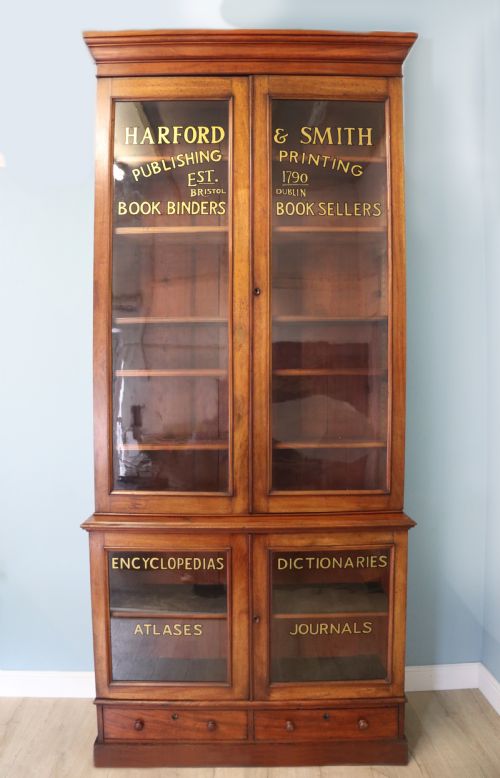
The selection on this page centres primarily on glass apothecary jars, chemist bottles and sweet jars alongside larger mahogany and wood cabinets lined with milk glass. Pieces originate from Victorian, Edwardian and French nineteenth-century periods, showing varied forms from tall carboys to multi-drawer collector units.
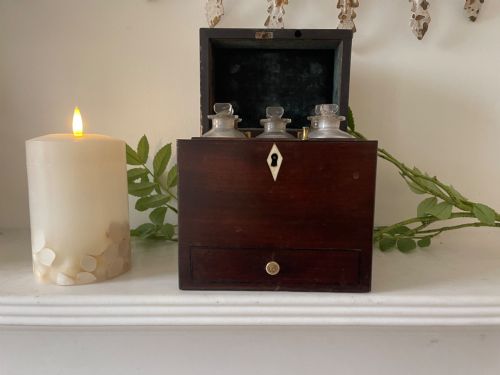
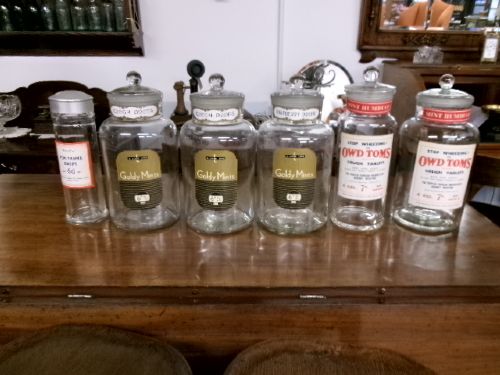
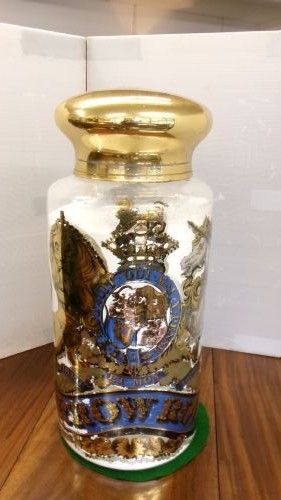
Buyers encounter distinct forms such as labelled sweet jars, etched glass vessels and amber or green pickling jars designed for specific storage needs. Travelling cases with internal bottles also appear alongside tall display cabinets.
Materials and construction methods
Vessels are formed from heavy glass, often blown or moulded, paired with paper labels, gold leaf, paint and occasional metal fittings. Cabinets and storage cases utilise solid timbers such as mahogany, sometimes incorporating brass hardware and milk glass linings.
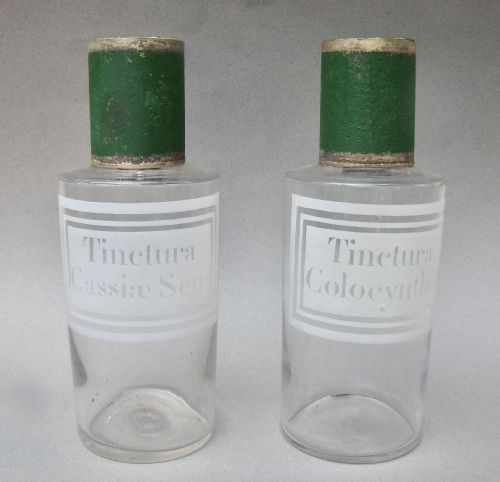
Surface finishes include etched lettering on glass fronts and hand-painted or paper labels identifying contents such as arrowroot or gelatine. Wood components show traditional joinery suited to housing fragile glass contents securely across decades of daily handling.
Vintage Glass Apothecary Storage Retail Price Guide 2026
Typical asking prices for vintage glass apothecary storage among the pieces listed under this phrase on Sellingantiques today, from the lower quarter to the upper quarter. They describe what is for sale here now, not the wider market.
Arrowroot and gelatine once shared shelf space with scientific slides inside these very cabinets.
Distinguishing quality across pieces
Quality rests on the survival of original components, such as matching glass covers, undamaged paper labels and untouched painted details. Pieces retaining their matching sets of bottles or original milk glass linings hold greater integrity.
The weight and clarity of the glass, alongside the precision of cabinet joinery and multi-drawer arrangements, divide standard utility items from higher-grade archive and collector pieces.
The Vintage Glass Apothecary Storage Glossary
- Carboy
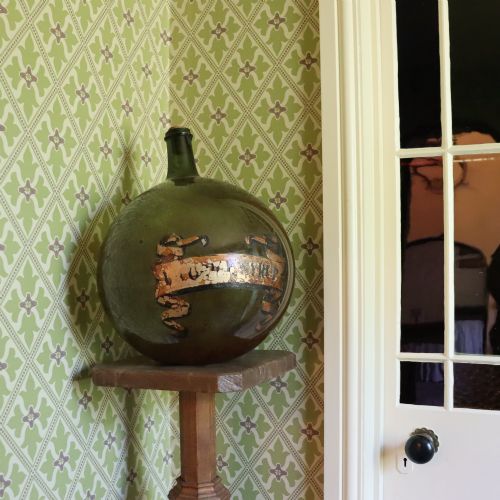
- A large rounded glass bottle with a narrow neck, historically used for holding liquids in bulk in a dispensary or laboratory. These vessels often stand alone as decorative display objects due to their substantial scale.
- Milk glass
- An opaque or translucent white glass used for lining drawers or creating sanitary surfaces inside medical and dental cabinets. It provides a clean, washable background for sorting small items.
- Haberdashery cabinet
- A multi-drawer shop display unit featuring glass fronts or shallow compartments designed for organising small dry goods. These pieces translate well to modern storage for collections or accessories.
- Pickling jar
- A heavy glass storage vessel with a wide mouth, often identified by the French term bocal, used originally for preserving foodstuffs. They feature thick walls designed for repeated sealing and washing.
- Chemist bottle
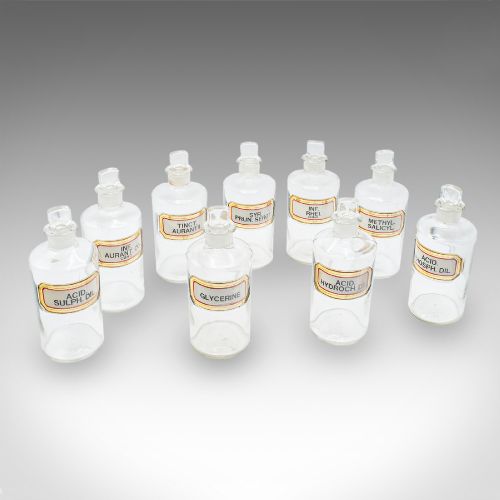
- A smaller glass vessel produced for pharmacies to hold individual compounds, frequently accompanied by ground glass stoppers. Collectors look for surviving paper or painted labels detailing the contents.
Vintage Glass Apothecary Storage: Frequently Asked Questions
What were apothecary jars used for?
Apothecary jars held dried herbs, powders, liquids and chemical compounds in working pharmacies and dispensaries.
Their tight-fitting covers protected sensitive contents from moisture and contamination in busy shop environments.
How do I clean antique glass jars?
Warm water and mild soap suit old glass best, avoiding harsh scrubbing that damages aged surfaces.
Porter labels and painted lettering require special care to keep moisture away from fragile paper components.
Are the glass covers original?
Many jars retain their matching lids, though replacements happen frequently due to centuries of daily handling.
Examining the glass tint and wear around the rim helps confirm if the cover belongs to the base.
How do I date a glass jar?
Pontil marks, bubbles in the glass and the style of lettering on labels point towards specific production eras.
Victorian and Edwardian examples often feature distinct proportions and typography compared to later twentieth-century pieces.