

Vintage Gilt Pendant
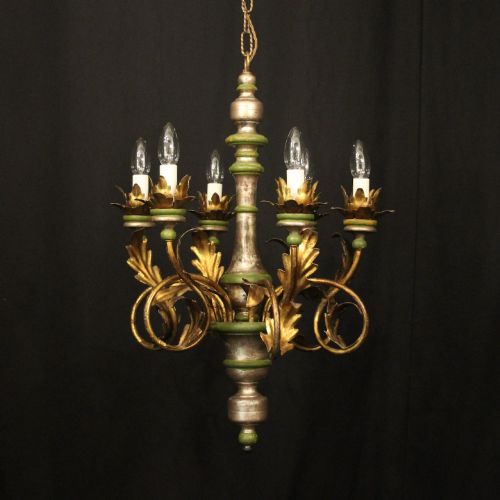
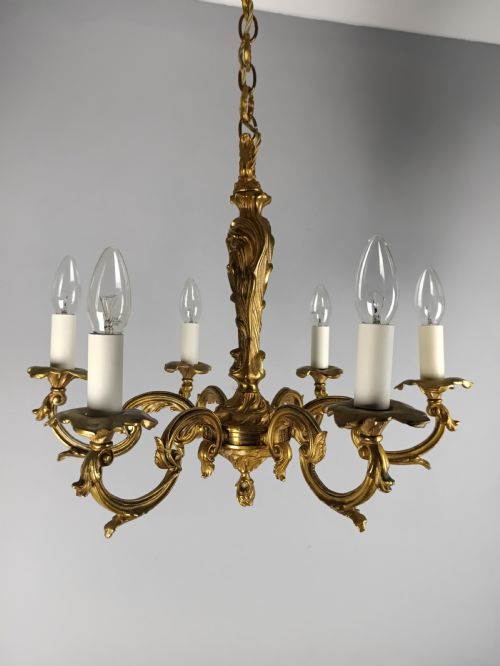
These vintage gilt pendant pieces range from French bronze chandeliers to hall lanterns, offering bright metallic illumination for period interiors.
Vintage Gilt Pendant
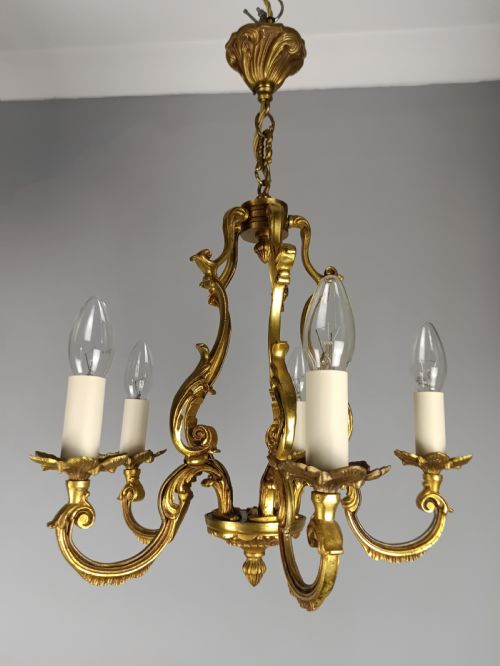
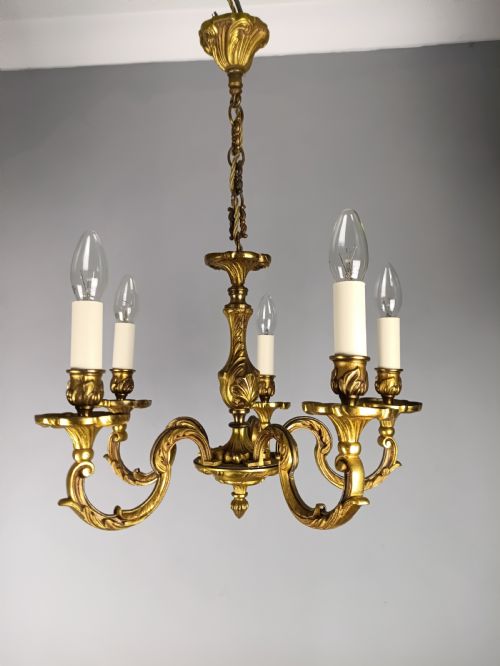
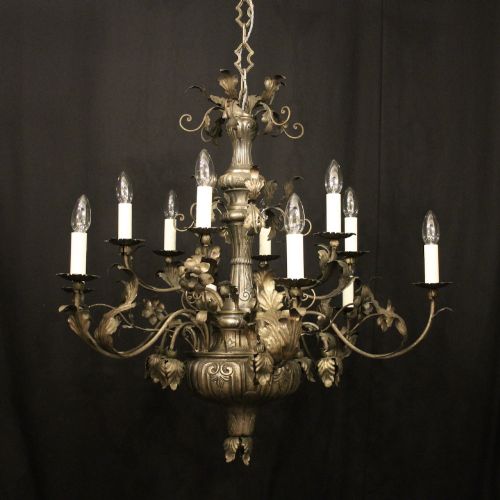
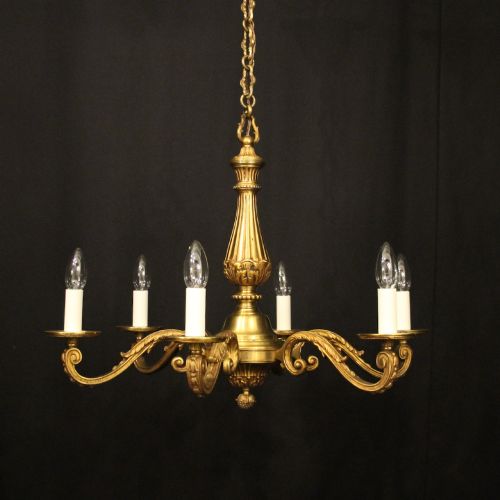
A vintage gilt pendant search brings up a variety of hanging illumination and ceiling fixtures, predominantly chandeliers, hall lanterns, and hanging lanterns originating from the nineteenth and early twentieth centuries. The selection leans heavily towards French and Italian designs, spanning styles from French Empire and Rococo to Edwardian and Art Deco.
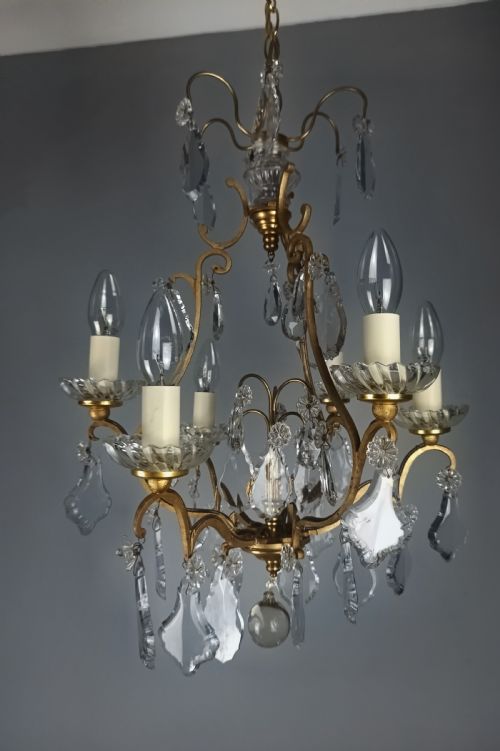
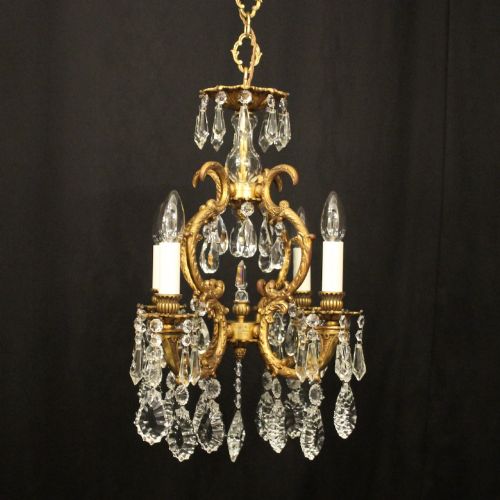
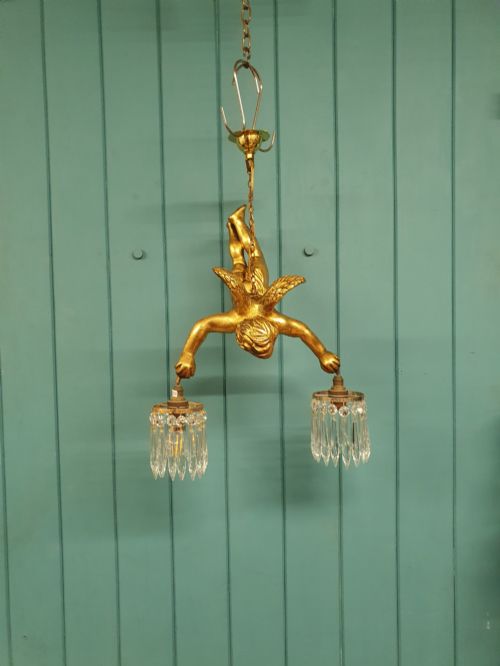
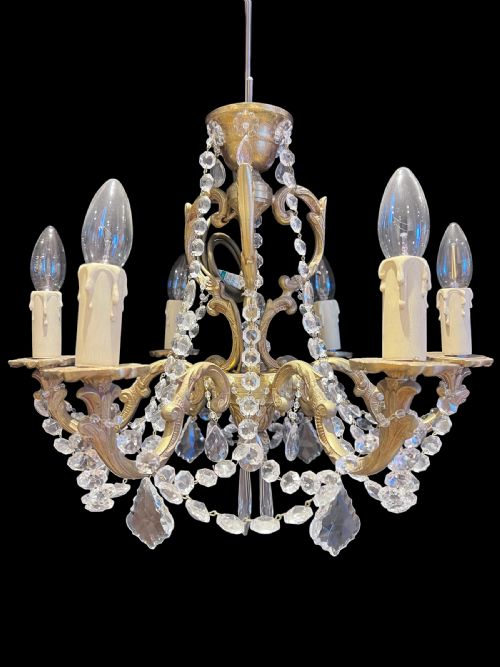
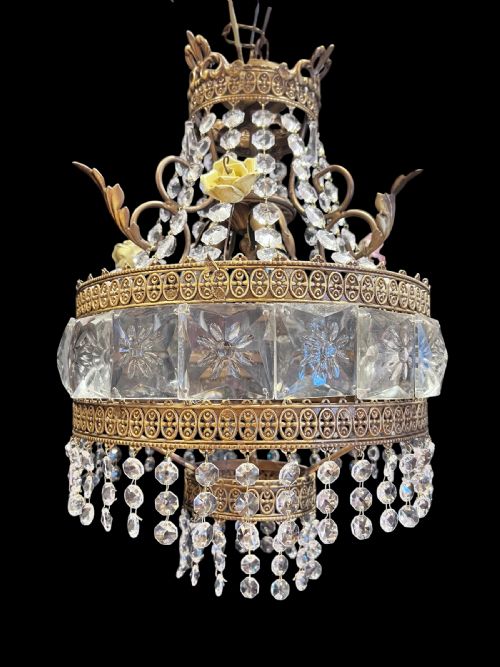
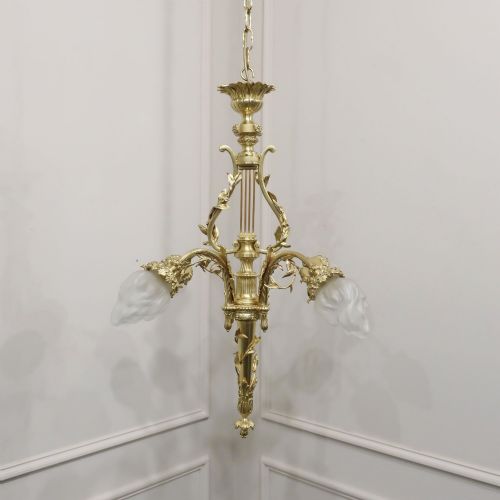
Buyers will encounter multiple light sources housed in gilt bronze, brass, or gilded metal frameworks, frequently paired with cut glass, crystal spikes, or etched glass globes. Fixtures range from intimate single-bulb convex hall lanterns to grand twelve-light chandeliers adorned with porcelain flowers or winged cherubs.
Materials and construction
The primary structural elements utilise cast or forged metals including bronze, brass, and spelter, which receive a gold-coloured gilt finish either through fire-gilding, plating, or paint. This metallic framework supports optical elements such as lead crystal prisms, drop crystals, and moulded or etched glass shades.
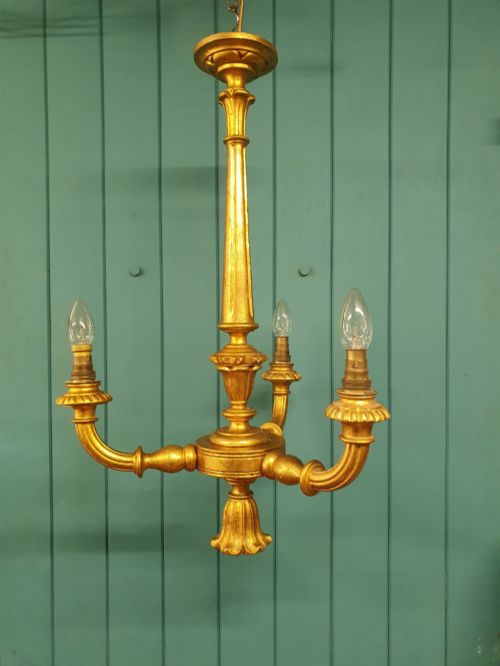
Decorative details often incorporate hand-carved giltwood, applied porcelain flowers, ceramic elements, and toleware. Frames are assembled with pinned joints, threaded rods, and wire bindings to secure the heavy glass components to the metal armature.
Listings feature items spanning the Georgian era through the 1930s, constructed from brass, crystal, bronze, and toleware.
Markers of distinction
Quality rests in the crispness of the metal casting and the depth of the gilding, where chased details on bronze exhibit superior definition compared to simpler stamped brass or painted finishes. The integration and completeness of original glass drops, such as coffin prisms or cut crystal spikes, heavily influence the integrity of the piece.
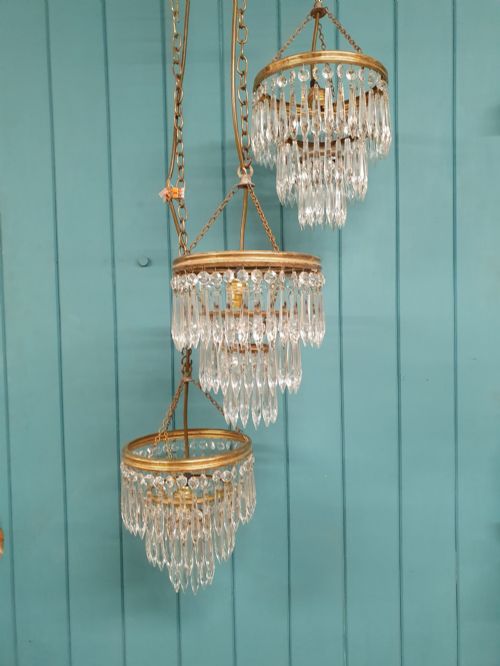
Substantial weight in the metal frame and the use of hand-cut crystal rather than pressed glass distinguish finer examples. The complexity of the design, such as multi-tiered tent and waterfall configurations or figural brass cherubs, points to higher-tier workshop production.
Samuel Pemberton·John C D Engleheart·Chanel
The Vintage Gilt Pendant Glossary
- Gilt bronze
- Metal alloy cast and treated with a gold-coloured finish. This material allows for sharp, intricate sculptural details on chandelier frames.
- Hall lantern
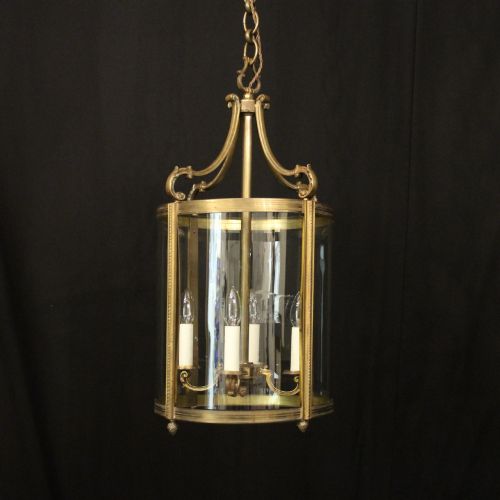
- Enclosed hanging light fixture designed for entryways. These typically feature glass panels set into a brass or bronze frame.
- Coffin prism
- Flat, elongated cut glass pendant with a pointed base. These hang from chandelier arms to refract and multiply the light.
- Tent and waterfall
- Chandelier configuration featuring an upper tent of strings of beads dropping down to a wider circlet. It creates a cascading effect of crystal elements.
Vintage Gilt Pendant: Frequently Asked Questions
How do I hang a heavy antique lantern?
These fixtures require direct anchorage into ceiling joists using a rated ceiling hook capable of supporting the combined weight of the metal frame and crystal elements. Electrical wiring must be fed through the central hanging rod or chain.
Professional installation is recommended for older fixtures to ensure the structural integrity of the ceiling support matches the substantial weight of cast bronze and crystal components.
What rooms suit a French hall lantern?
Compact convex and triple-light hall lanterns work well in narrow corridors, entryways, and stairwells where headroom is limited yet decorative illumination is desired. Their enclosed glass panels diffuse the light evenly.
Larger multi-tiered lanterns suit high-ceilinged vestibules and reception rooms, providing a formal focal point that echoes period architectural proportions.
How do I clean a crystal chandelier?
Dust the metal frame and glass elements regularly with a soft feather duster or dry microfibre cloth to prevent grime accumulation. For a deeper clean, remove crystals individually and wash them in warm soapy water before drying.
Avoid using harsh chemical sprays directly on the gilt surfaces, as abrasive cleaners can strip the historical gold-coloured finish from the bronze or brass substrate.
How do I date a gilt pendant light?
Dating relies on stylistic markers, such as the symmetrical restraint of Neoclassical designs versus the ornate curves of Rococo Revival, alongside construction methods like hand-cut versus machine-pressed glass. Edwardian and 1930s pieces often incorporate transitional Art Deco geometric lines or simpler brass stampings.
Examining the fixings, screw types, and wiring channels provides further clues regarding the manufacturing era of the metal armature.