






Vintage Gemstone Stud Drops
Vintage gemstone stud drops combine a secure post fastening with a suspended stone, offering a compact drop style from periods like the nineteen twenties and nineteen fifties.
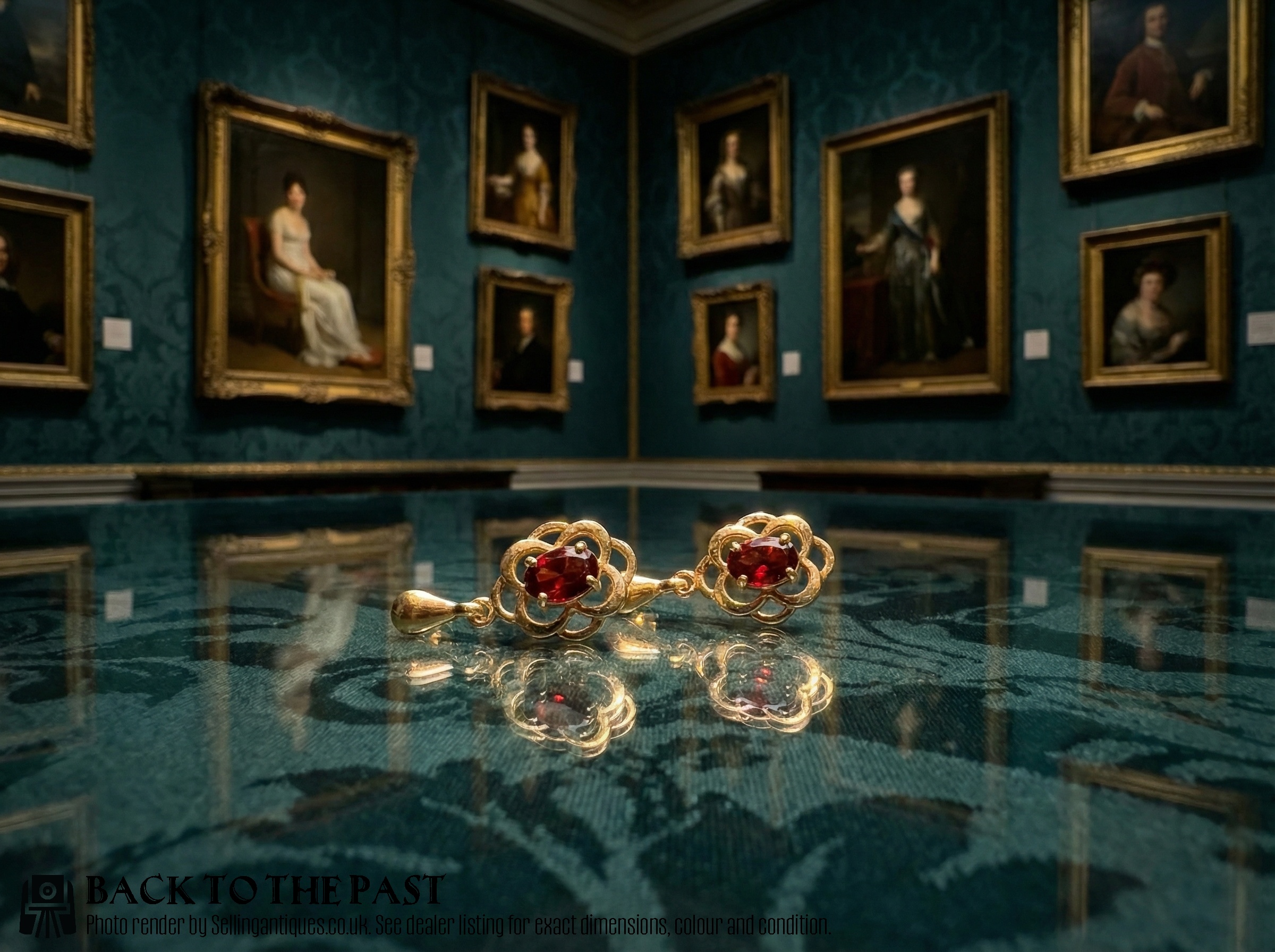
Vintage Gemstone Stud Drops
Vintage gemstone stud drops unite a fixed ear fitting with a suspended element, creating movement just below the lobe. These pieces appear across multiple decades, including Edwardian, nineteen twenties, nineteen thirties, nineteen fifties, and nineteen sixties iterations.
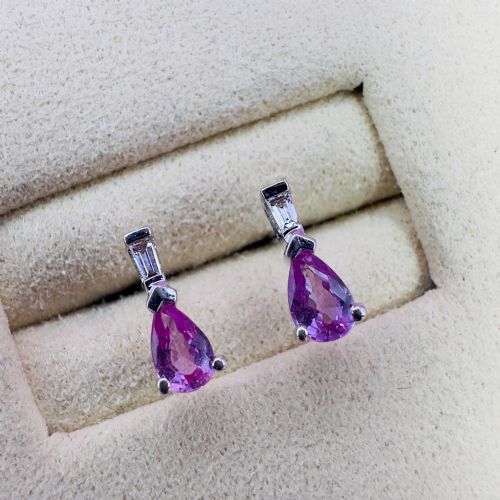
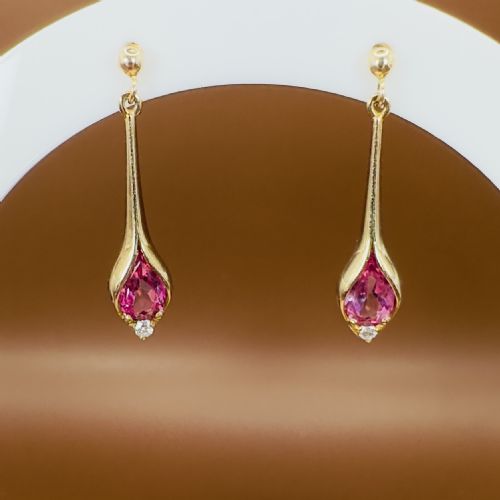
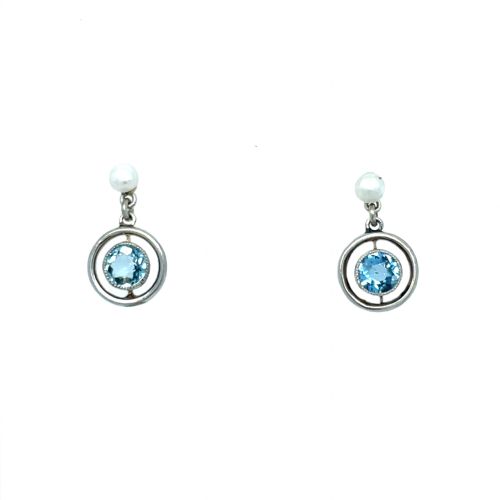
The selection centres on earrings featuring faceted and pear cut stones such as aquamarine, garnet, pink sapphire, and amethyst. Common configurations pair a central stud element with a hanging cluster or drop pendant.
Design influences range from strict Art Deco geometric lines to softer Victorian Revival and Modernist aesthetics. Buyers encounter these items fashioned into simple double drops, cluster arrangements, and trapezoid stone settings.
How they were made
Construction relies heavily upon nine carat gold, eighteen carat white gold, yellow gold, and occasional platinum accents. Metalwork supports varied stone cuts including marquis, square, pear, and faceted profiles.
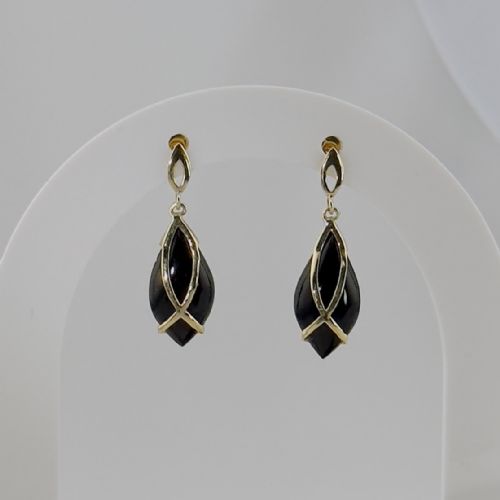
Goldsmiths secured diverse minerals such as diamond, pearl, jadeite, black onyx, amber, and green chalcedony within claw and bezel settings. Drop mechanisms utilise small jump rings or articulated joints to permit natural sway during wear.
Listings feature items spanning the Edwardian era through to the nineteen sixties, incorporating materials from nine carat gold to platinum.
What varies in quality
Quality separates by the precision of stone cutting and the robustness of the metal mountings. Heavier gold gauges and substantial eighteen carat alloys provide superior structural integrity compared to thinner nine carat alternatives.
The choice and match of central gems, from high clarity aquamarines to uniform pink sapphires, dictate the overall visual coherence. Finer examples display meticulous claw work and secure articulation in the drop joints.
The Vintage Gemstone Stud Drops Glossary
- Stud drop
- An earring design featuring a fixed post that pierces the earlobe, attached to a dangling stone or cluster below. This configuration gives the movement of a drop earring with the neatness of a stud.
- Pear cut
- A teardrop shaped gemstone featuring a rounded end and a tapered point. This cut appears frequently in vintage drop earrings.
- Cluster
- A tight grouping of smaller stones arranged closely around a central focal gem. Such arrangements maximise visual impact and light reflection.
- Art Deco
- A design style from the early twentieth century characterised by sleek geometric shapes and symmetry. Pieces from this era often utilise angular diamond and sapphire cuts.
- Bezel setting
- A metal collar that wraps around the outer perimeter of a gemstone to hold it securely in place. This technique offers a clean profile compared to traditional claw mounts.
Vintage Gemstone Stud Drops: Frequently Asked Questions
How do stud drop earrings differ from standard drops?
Standard drop earrings typically hang directly from a hook or wire passing through the earlobe. Stud drops incorporate a fixed post and butterfly fastening at the top, holding the primary stone firmly against the ear before the drop element suspends below.
This hybrid construction provides the secure fitting of a stud while maintaining the swinging movement characteristic of longer drop earrings.
What periods do these earrings come from?
The available selection spans several distinct eras, beginning with Edwardian designs and extending through the nineteen twenties Art Deco period. Later examples originate from the nineteen thirties, nineteen fifties, and nineteen sixties.
Each decade brings characteristic stylistic traits, shifting from delicate Edwardian pearl work to the bolder gold forms of the mid-twentieth century.
Which gold purities are common in these pieces?
Most items utilise nine carat gold, available in standard and yellow gold variations. Higher purity options include eighteen carat gold, eighteen carat white gold, and occasional platinum combinations.
Metal choice often corresponds to the manufacturing period, with heavier white gold and platinum settings dominating earlier twentieth century pieces.
How should I care for vintage gemstone earrings?
Proper maintenance involves gentle cleaning with warm soapy water and a soft cloth, avoiding harsh chemical dips that might harm softer stones like pearls or amber. Regular checks on the drop joints and claw settings help prevent accidental stone loss.
Storing each pair separately in a lined box protects the metal surfaces from scratching against other jewellery.