
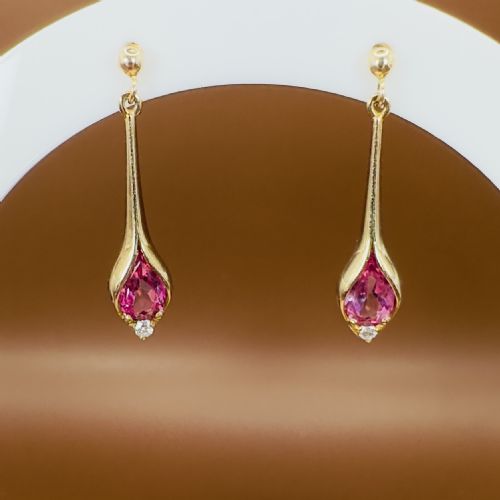


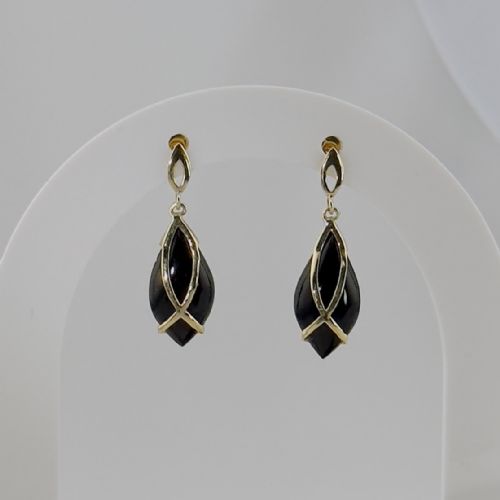


9ct Gold Stud Drops
These 9ct gold stud drops combine secure stud fittings with swinging lower stones, offering an everyday way to wear mid-century colour.
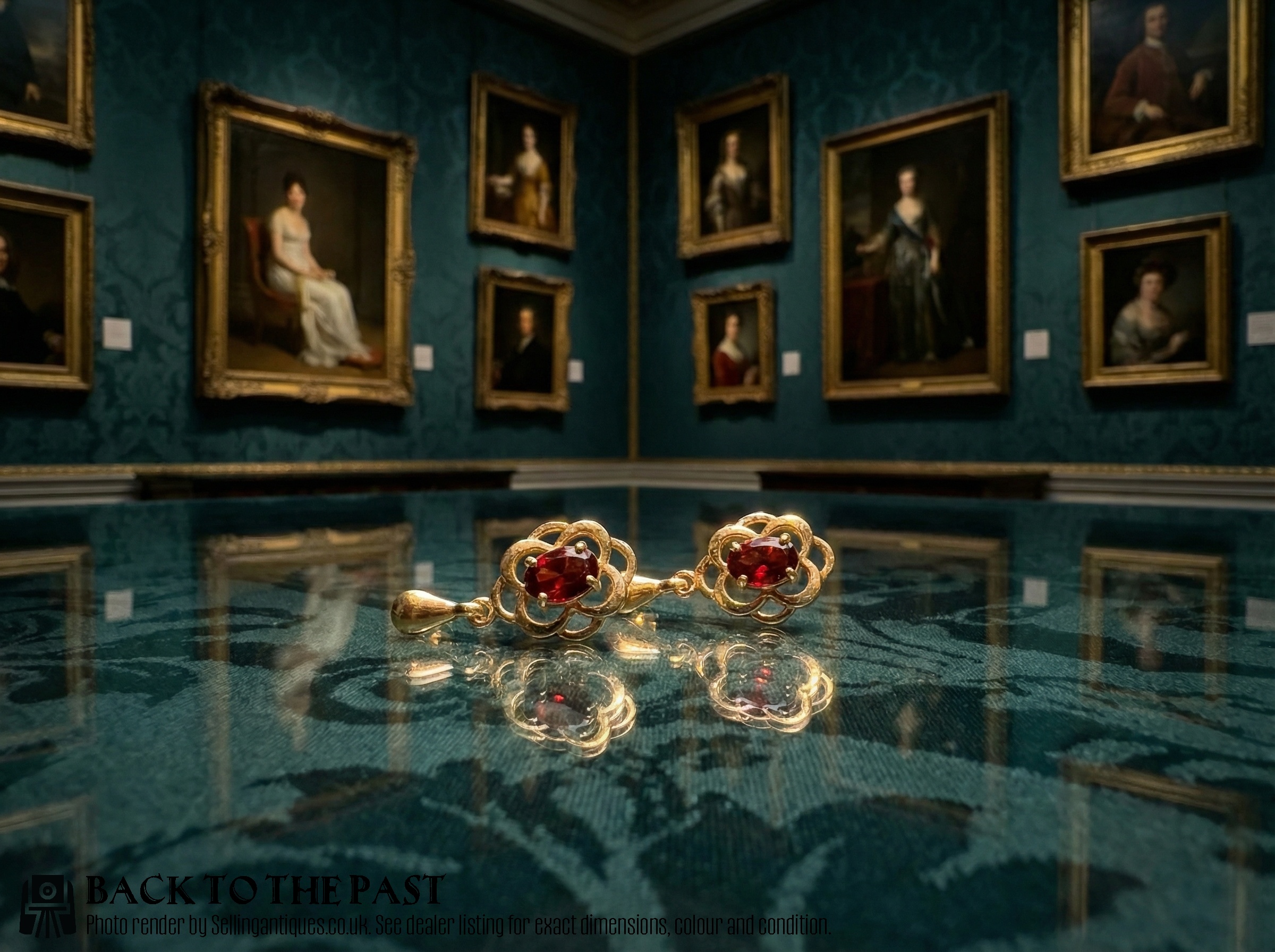
9ct Gold Stud Drops
When searching for 9ct gold stud drops, collectors find drop earrings that anchor directly to the earlobe before suspending a gemstone or decorative element below. The selection spans pieces from the 1920s through the 1960s, capturing decades of changing tastes in mid-century and vintage design.
Most examples originate from the 1950s and 1960s, featuring faceted stones like garnet, aquamarine and amethyst alongside pearls and black onyx. These items bridge the gap between simple studs and elaborate dangling earrings, making them versatile additions to a jewellery collection.
Materials and construction
The framework relies entirely on 9ct gold, often cast in yellow gold variants alongside occasional white gold settings. Goldsmiths utilised traditional claw and bezel settings to secure stones while allowing light to pass through transparent gems.
Stones are predominantly cut in pear, oval, and square facets to maximise brilliance, paired with smooth cabochons for materials like amber, jadeite and black onyx. Drop sections hang from small jump rings or articulated hinges to create natural movement.
Several pairs feature double drops, giving stones twice the opportunity to catch the light while dangling from your lobes.
Quality factors in drop earrings
Superior pieces display thoughtful gemstone matching, particularly in cluster designs or double drop configurations where colour consistency matters greatly. The precision of the metalwork around complex cuts such as pear and quad-stoned arrangements distinguishes finer items.
Construction strength at the junction between the upper stud and the dangling drop determines longevity. Solid linkage ensures the drop moves freely without undue stress on the post or butterfly backing.
The 9ct Gold Stud Drops Glossary
- Drop stud
- An earring design featuring a post that pierces the earlobe while suspending a separate element beneath it. This format keeps the fitting secure while adding length and movement.
- Cabochon
- A gemstone shaped and polished with a smooth, convex surface rather than faceted edges. This style highlights the natural patterns of opaque materials like jadeite and black onyx.
- Pear cut
- A teardrop-shaped gemstone featuring a rounded end tapering to a single point. It appears frequently among the aquamarine, garnet and topaz pieces on this page.
- Cluster
- An arrangement of multiple smaller stones grouped tightly together to create visual impact. These settings often combine coloured gemstones with diamonds or pearls.
- 9ct gold
- An alloy containing thirty-seven point five percent pure gold mixed with harder metals for durability. It provides the structural integrity required for daily jewellery wear.
9ct Gold Stud Drops: Frequently Asked Questions
What periods do these earrings come from?
The available pieces primarily date from the 1950s and 1960s, with occasional examples stretching back through the 1940s, 1930s and 1920s.
Mid-century modernism and vintage revivals heavily influence the designs found in this category.
How do stud drops differ from standard drops?
Stud drops anchor securely against the earlobe via a traditional post and butterfly fitting before suspending a mobile lower section.
Standard drop earrings often use hooked wires that pass loosely through the piercing without a back fastening.
What gemstones appear most frequently?
Garnet, aquamarine and amethyst dominate the faceted gemstone selections, often cut into pear or oval shapes.
Pearls, black onyx and amber provide opaque alternatives within the mid-century and vintage collections.
Are these pieces solid 9ct gold?
The listings consist entirely of items fashioned from 9ct gold, including both standard yellow gold and white gold variants.
This metal composition ensures the durability needed for the delicate hinges and links found in drop designs.