

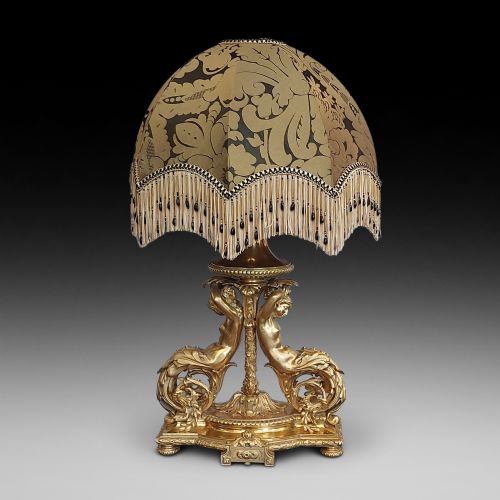
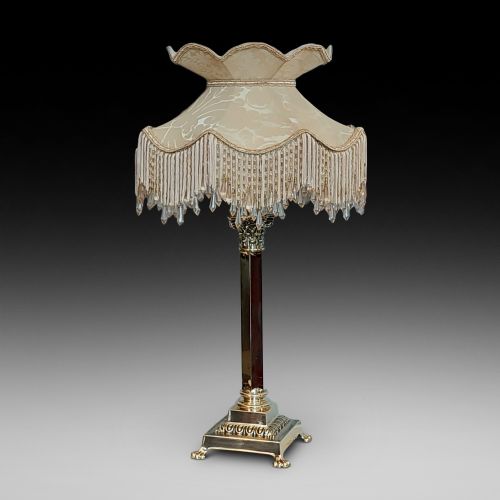
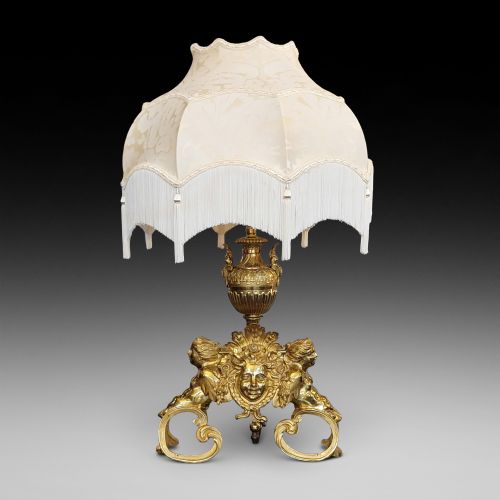
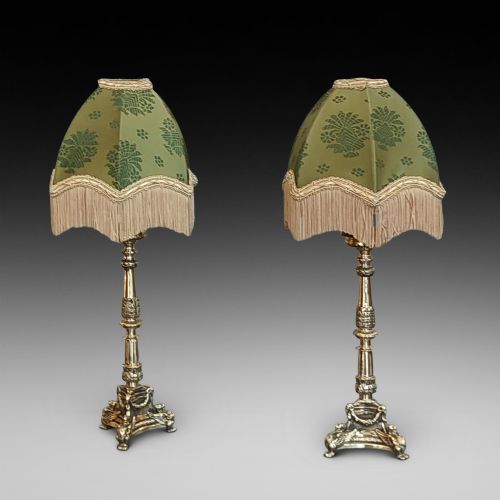
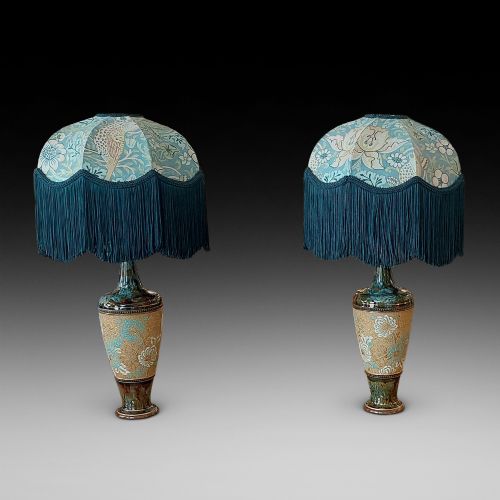
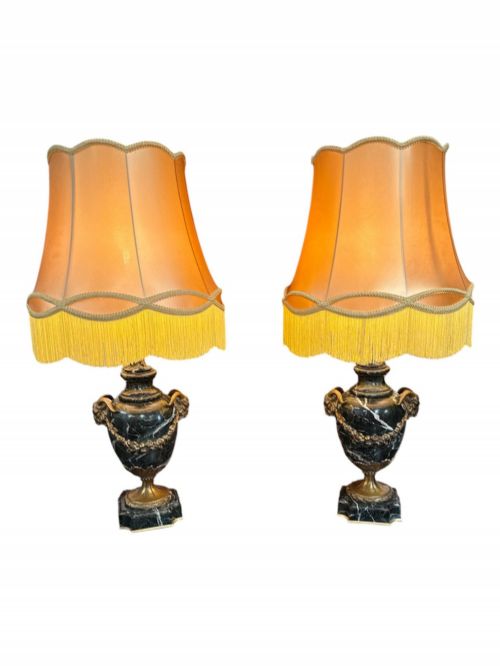
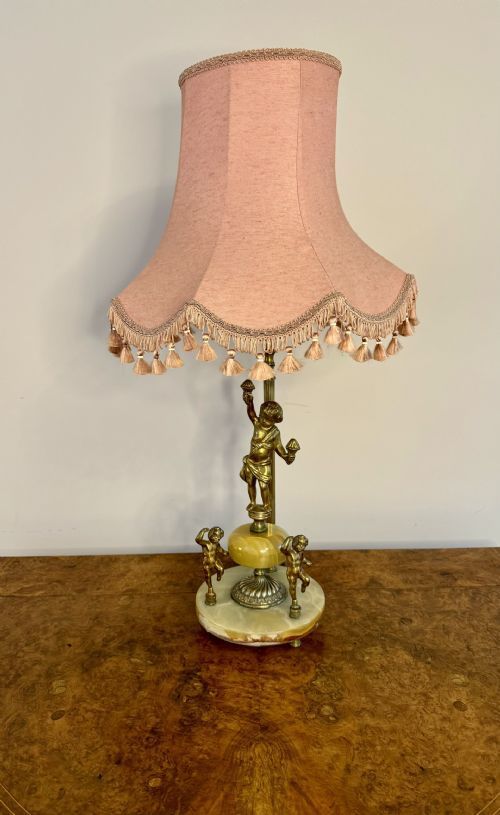
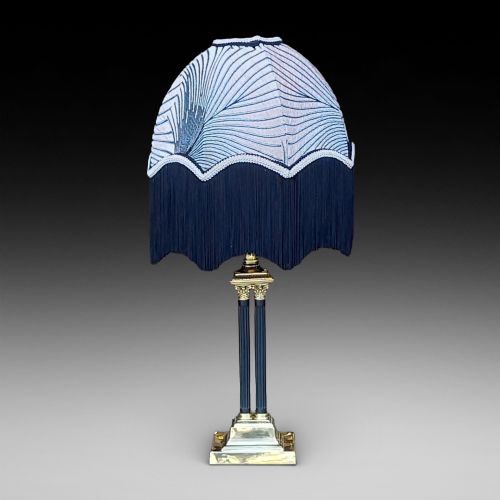
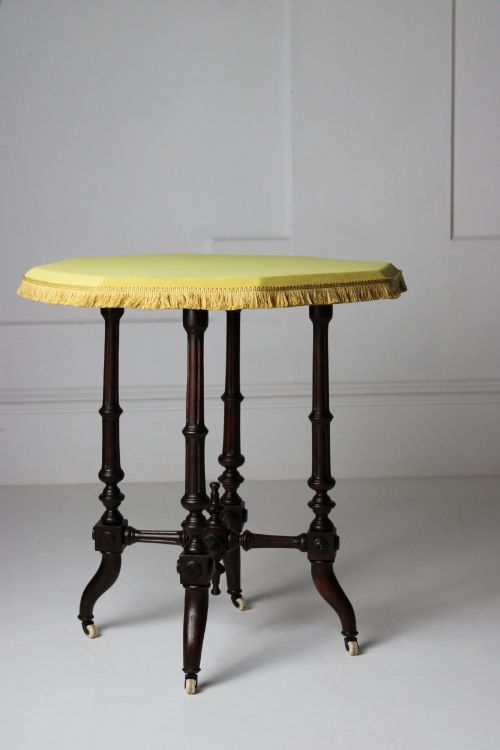


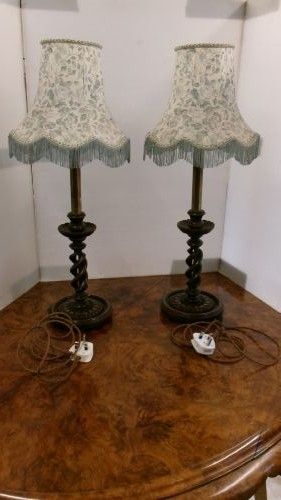
Vintage Fringe Table
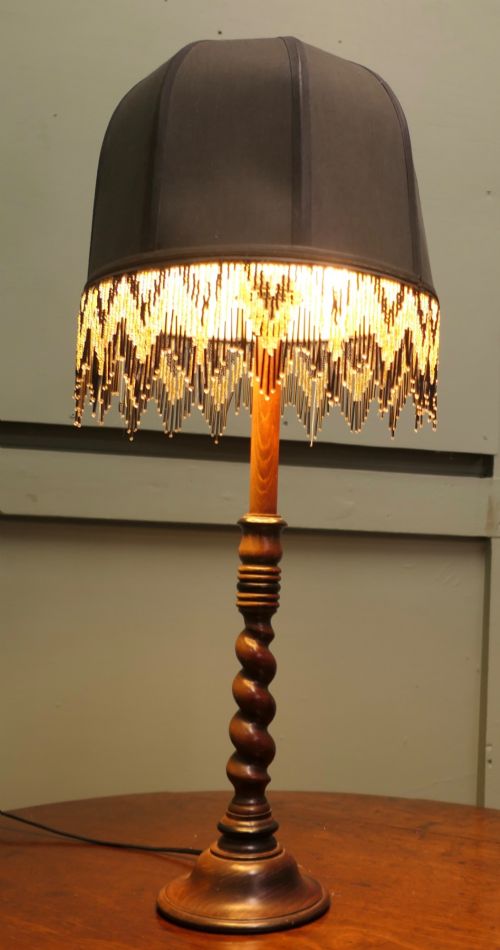
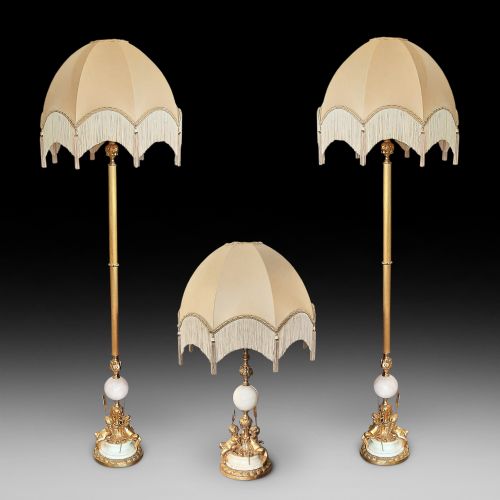
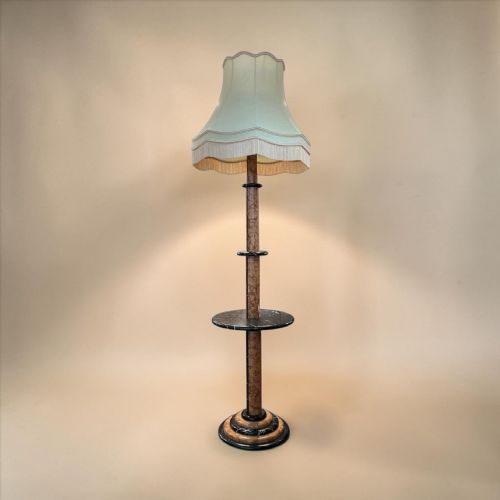
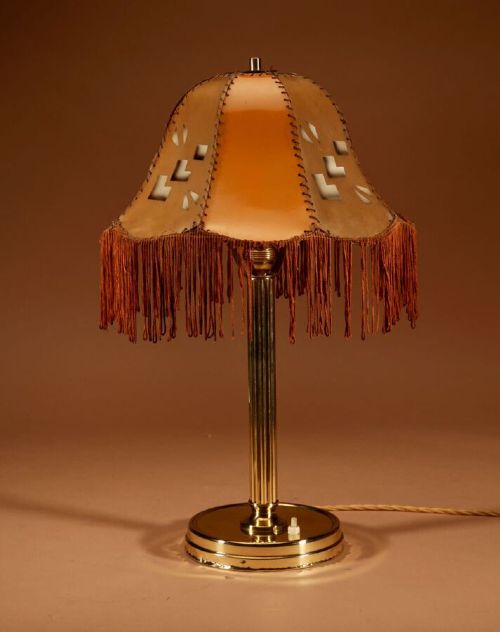
These vintage fringe table items bring period textile detail and structural lighting to a room through decorative fringed shades and bases.
Vintage Fringe Table
A buyer searching for a vintage fringe table piece encounters a selection drawn largely from the Victorian, Edwardian, and early twentieth century periods. The forms appearing on this page span table lamps, floor and table lamps, side tables, oil lamps, footstools, candlesticks, and standard lamps.
Most examples merge functional lighting or small furniture forms with tactile fabric elements, such as beaded or silk shades. The designs reflect broader stylistic movements including Neoclassical Revival, Art Deco, Rococo Revival, Arts and Crafts, and Art Nouveau.
Origins include British, French, and Italian workshops, alongside American examples in spelter and brass. The surviving stock relies heavily on converted oil lamps, altar candlesticks, and column lamps paired with soft textile fringes.
Materials and construction
The construction of these pieces combines heavy structural metals like brass, bronze, gilt metal, or cast iron with softer decorative elements in silk, glass beads, and fabric fringe. Stone bases in marble, alabaster, onyx, and slate provide stability for taller lighting forms.
Many items utilise converted lighting technology, adapting nineteenth century oil lamps and brass or bronze candlesticks for electrical wiring. Shade manufacture involves hand-sewn textiles suspended with hanging fringe, often mounted over wire frames.
Vintage Fringe Table Retail Price Guide 2026
Typical asking prices for vintage fringe table among the pieces listed under this phrase on Sellingantiques today, from the lower quarter to the upper quarter. They describe what is for sale here now, not the wider market.
An eagle and a serpent share the brass column of one Edwardian lamp, keeping watch over your reading corner.
Assessing quality in period pieces
Quality rests in the weight and casting finish of the metalwork, whether crisp ormolu, chased brass, or heavy bronze. Superior examples display clean joints, genuine stone bases without synthetic resin fillers, and original fabric elements rather than modern replacements.
The integration of the electrical conversion also marks the standard of the piece, particularly where original burners or columns are preserved without excessive drilling. Hand-finished details on ceramic bodies, such as Majolica or Royal Doulton stoneware, separate standard production items from finer studio works.
Georges Leleu·Royal Doulton
The Vintage Fringe Table Glossary
- Fringe
- A textile trim consisting of hanging threads or tassels attached to a header tape, commonly used on lampshades and footstools to soften the base edge. It adds movement and a diffused light effect.
- Corinthian Column
- A classical column form featuring ornate acanthus leaves on the capital, frequently cast in brass for nineteenth and early twentieth century table lamps.
- Spelter
- An alloy of zinc and lead used as a cheaper alternative to bronze, commonly gilded or painted to imitate heavier metals in decorative table lamps.
- Alabaster
- A fine-grained mineral stone used for carved lamp bases and urns, prized for its natural translucent quality when lit from within.
- Majolica
- A type of earthenware glazed with tin enamel, featuring colourful opaque pigments often incorporated into Edwardian lamp bases.
- Ormolu
- Gilding technique involving finely ground high-carat gold applied to a bronze base, providing a rich metallic lustre on mid-nineteenth century mounts.
Vintage Fringe Table: Frequently Asked Questions
How do I clean a fringe lampshade?
Dust the fringe gently with a soft brush or a low-suction upholstery attachment to prevent dirt settling into the textile fibres. Avoid water immersion unless you know the fabric and internal stiffeners can handle washing without shrinking.
For beaded fringe, wipe individual strands carefully with a dry cloth. Keep delicate silk and glass bead trims away from direct sunlight to prevent fading and brittleness.
What is the difference between brass and ormolu?
Brass is a solid alloy of copper and zinc with a bright golden hue that patinates naturally over time. Ormolu refers specifically to gilded bronze, where a layer of gold amalgam is fired onto a bronze base for a deeper, richer finish.
Ormolu mounts usually appear on high-end nineteenth century decorative objects, whereas standard brass is common across utility lighting and column lamps.
How do I style a fringe table lamp?
Place the lamp on a solid wood side table or console where the fringe can hang freely without catching on adjacent items. Pair it with darker period furniture to let the warm metallic finishes and soft fabric textures stand out.
Consider the height of the lamp relative to seating so the light source remains hidden behind the fringe shade, casting a warm downward glow.