





Vintage French Street Canvas
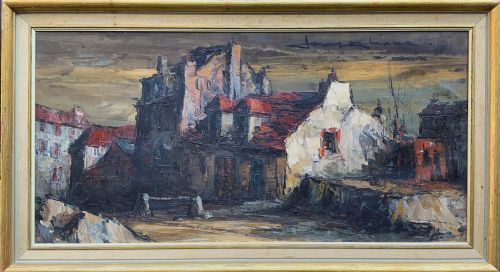
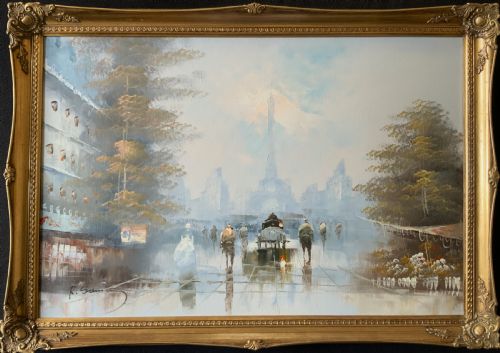
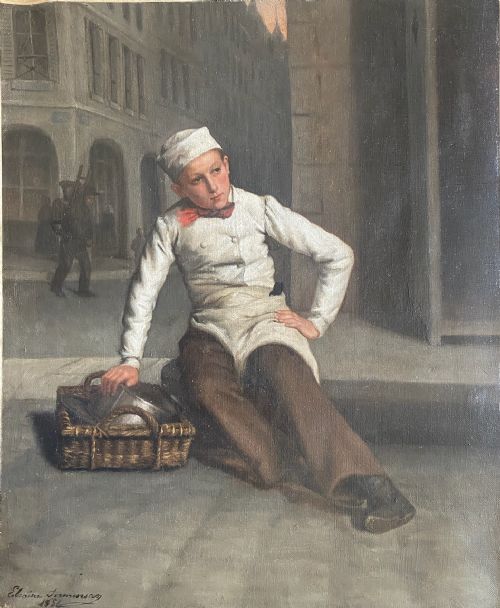
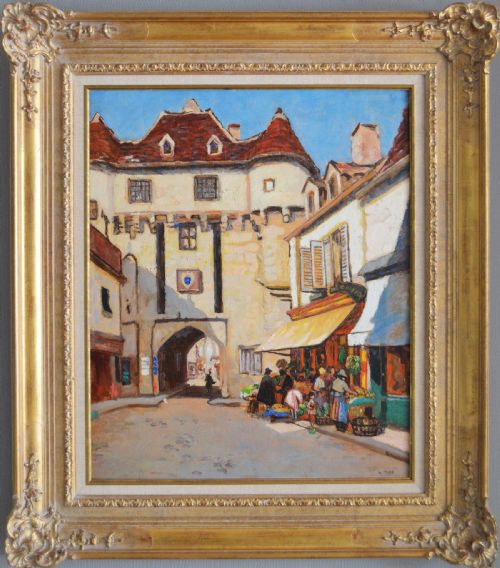
These vintage french street canvas works capture Parisian and provincial scenes through expressive brushwork and rich oil pigment.
Vintage French Street Canvas
When you search for vintage french street canvas, you encounter oil paintings on fabric depicting urban thoroughfares, cafes, and coastal views from the nineteenth and twentieth centuries. These artworks capture the atmospheric light of Paris, the Cote d'Azur, and provincial towns through styles ranging from realism to mid-century impressionism and expressionism.
The pieces you are most likely to meet on this page date from the mid-twentieth century, particularly the nineteen-fifties and nineteen-sixties, alongside earlier nineteenth-century works and Salon-exhibited pieces. They typically arrive mounted in wooden frames, some adorned with gilt or gilded finishes that complement the painterly textures of the canvas surface.
Assessing quality
Quality in these works resides in the confidence of the brushwork and the artist's command of light and atmosphere. Stronger examples demonstrate a sure handling of perspective and human or architectural form, whereas weaker pieces rely on formulaic repetition without observational depth.
The framing also contributes to the overall integrity of the piece, with period-appropriate gilt wood frames offering greater harmony with the painting than later, unsuited replacements.
Vintage French Street Canvas Retail Price Guide 2026
Typical asking prices for vintage french street canvas among the pieces listed under this phrase on Sellingantiques today, from the lower quarter to the upper quarter. They describe what is for sale here now, not the wider market.
Several canvases manage to smell faintly of old linseed oil and Paris basements, no matter how many decades have passed.
Lilian Colbourn·Caroline Burnett·Cecil Rochfort D'Oyly-John·Merio Ameglio·Léon Joseph Voirin·Eduard Leon Cortes·Albert Guillaume·Letitia Marion Hamilton
The Vintage French Street Canvas Glossary
- Impasto
- Paint applied thickly to a canvas, standing out in relief from the surface. This technique adds tactile depth and catches the light.
- Gilt wood
- Wood that has been treated with a thin layer of gold leaf or metallic gilt finish. It is commonly found on traditional frames surrounding mid-century and nineteenth-century oils.
- Salon
- An official art exhibition held in Paris, historically overseen by the Academie des Beaux-Arts. Inclusion in these exhibitions indicates established professional standing.
- Cityscape
- A painting depicting the physical aspects of a city or urban area. These often focus on streets, bridges, and prominent architectural landmarks.
- Post-Impressionism
- An art movement that extended impressionism while rejecting its limitations. Artists prioritised vivid colours, distinct brushstrokes, and symbolic content.
Vintage French Street Canvas: Frequently Asked Questions
What periods do these paintings come from?
The works span from the nineteenth century through to the mid-twentieth century, encompassing periods such as eighteen-fifty, eighteen-eighty, and the nineteen-fifties and nineteen-sixties.
Mid-century impressionist and expressionist interpretations are particularly common among the selections available here.
Are all the canvases framed?
Most works are presented within wooden or gilt wood frames that complement the era of the painting. These frames range from simple wooden profiles to ornate gilded mouldings.
Checking the framing details helps determine whether the presentation aligns with the period of the artwork.
How should I display an oil painting on canvas?
Oil paintings on canvas perform best when hung away from direct sunlight and excessive humidity. Adequate wall space allows the texture of the oil paint and the character of the frame to be fully appreciated.
Ensuring stable room conditions protects both the woven support and the pigment layer over time.
What subjects are typically depicted?
The imagery focuses heavily on Parisian street scenes, architectural townscapes, and coastal views from the South of France. Figures, horses, carts, and urban landmarks frequently populate the compositions.
These subjects reflect the enduring appeal of French plein-air and studio painting traditions.